
Picture Monday morning on the platform. Your new overcoat did up beautifully over a sweater on Saturday. Today there’s a suit underneath, and halfway to the handrail your jacket sleeve is trying to take your shirt cuff with it. Take that suit to the fitting room. A coat that works over it should cover the jacket hem, fasten easily and let you reach and sit without having to put the whole outfit back together afterwards. That trip to the handrail is a useful test whenever you layer a coat over work clothes.
Bring the suit that takes up the most room
If your navy work suit has the broadest shoulders in your wardrobe, wear that one. Add the shirt you usually wear underneath. Fasten the jacket as you would while standing, let the sleeves settle and take a look at the back of your neck. If the collar already stands away from your shirt, it helps to check how the suit jacket sits on its own before you put another collar over it.
Slip on the overcoat and let both arms hang. You should be able to find the coat pocket with one hand while the other holds your bag. Fasten the coat as you would outside, take a breath and look down. If the suit lapels underneath have folded over, straighten them and try again. If they buckle in the same place each time, try a coat with more space across the front. It’s worth doing this in reverse when you’re trying on a new suit. Take the coat you already own.
Follow the back hem for a few steps
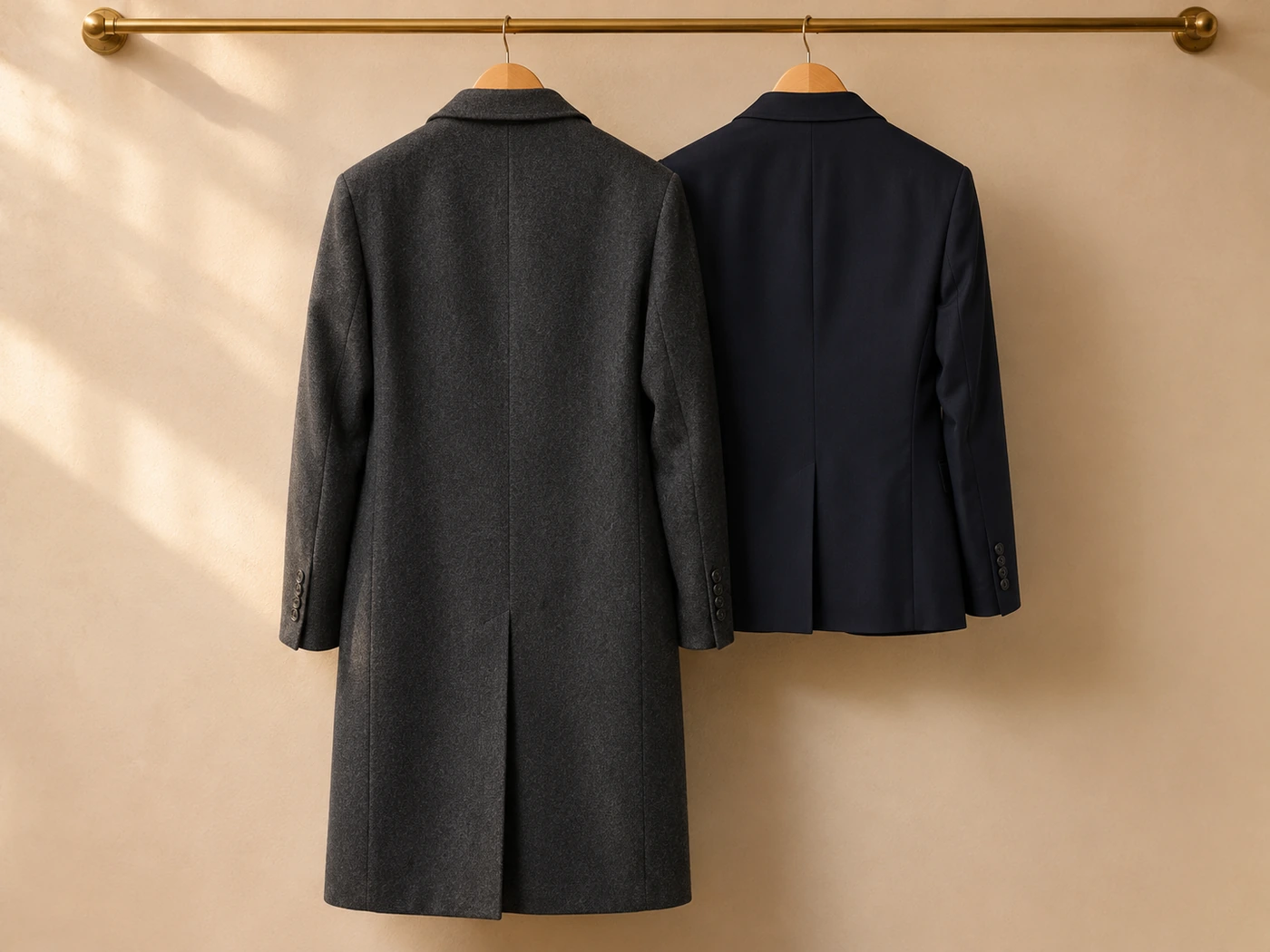
Two garments on hangers give you a quick first look at length. On your body, the shape of the shoulders and the way you stand can change where those hems end up. Face a full-length mirror and look along the bottom edge. Then use a second mirror, or ask someone to look from behind while you walk away and stop.
A flash of navy through an open back vent during a long stride is one thing. A strip of jacket hanging below the charcoal hem when you stop tells you the coat is too short for this suit. If you like a shorter overcoat, try the next length in the same cut. You only need enough length to keep the jacket covered through your ordinary walk.
Give the sleeves a commute
Reach forward as though tapping a fare card, then raise one hand to the height of a rail. Some cuff will move. Lower your arm and see where it lands. If the inner sleeve stays bunched near your elbow, slip the coat off, smooth the jacket sleeve and repeat. Try once with the coat open and once with it closed.
Where does the sleeve catch?
- Catches either way. Feel whether the jacket sleeve twists as you put the coat on. Compare a cut with more upper-arm room or a smoother sleeve lining.
- Pulls only when fastened. Notice whether the tug starts across your back or at the front button. Try a roomier cut and reach for the same spot again.
A size up can change the sleeve length and shoulder width along with the chest. Check all three on the second coat. For a closer look at the room built into a garment for movement, see Seamwork’s explanation of wearing ease.
Take the seat by the window
Try the fitting-room bench with the coat fastened, then unfasten it as you might on the train. Can you sit back and reach into your bag? If you’ve sat on the coat tail, stand up and smooth it out before trying again. A seat trapping the hem and a tight button across your middle can feel surprisingly similar.
If a long outdoor wait ends in a warm carriage, plan where you’ll open or carry the coat before settling on a length. A knee-length coat gives your thighs a little more cover during a long, windy Prairie platform wait. For wet steps on the coast, check how easily you can climb a stair and gather the hem while carrying an umbrella. If dinner follows work, put the coat over one arm. You may have to carry it all the way to your table.
Before you leave, record one sentence you could use at another shop or a fitting. “This length covered my navy jacket, but the sleeves caught when I reached for the rail” gives the next coat something specific to improve on.