A Clothing Care Routine From the Door to the Drawer
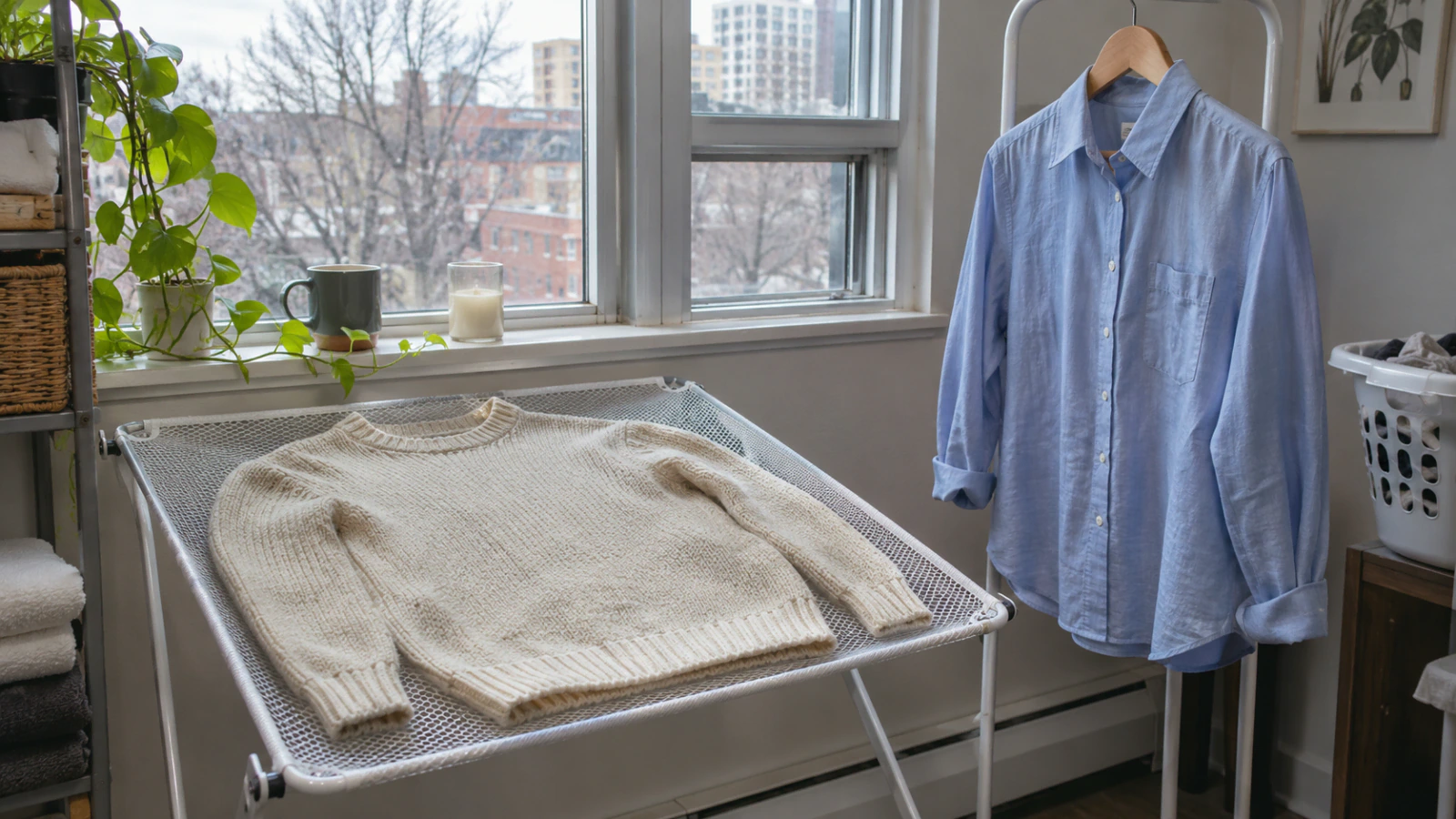
There’s a cool patch in the cuff of a shirt that looks ready for the drawer. Slip two fingers inside and you’ll find it. That small pause is much of what a good clothing care routine asks of you. Give clothes somewhere to go when you take them off, read the instructions for the garment in your hands, and make room for it to dry before you start the wash. A soft cardigan, a damp shell and a shirt you wore for an hour can each take a different route through the same small home.
Where will it go when you take it off?
Start where you usually change. Empty the pockets and open the garment out far enough to see its collar, underarms, cuffs and hem. A shirt with a mark at the collar belongs with the washing even if you’ve had it on only a short while. Trousers you wore quietly to dinner may be comfortable to wear again. Give clean-enough, dry pieces a particular hook, hanger or shelf where you can find them on their next turn.
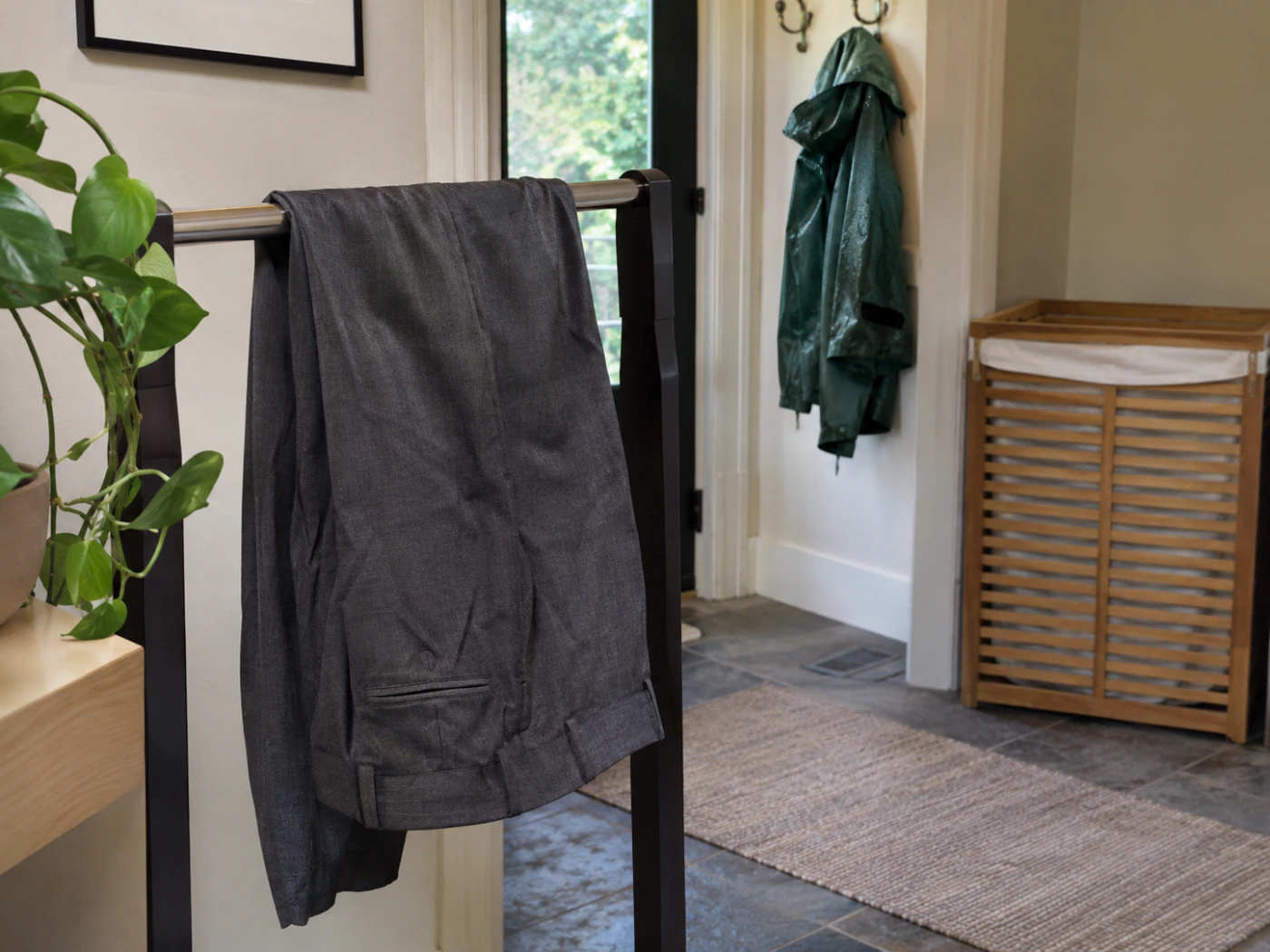
Keep damp pieces out of that little group. A rain shell can bring a surprising amount of water into a closet at the fold of the hood. Give it somewhere to shed that water and dry according to its label. Bring a swimsuit out of its pouch when you get home, even on an evening when the rest of the bag can wait. The job at the door is to open the garment up and choose where it goes next.
Give a repair a home of its own
When you find a loose cuff button, take the shirt to the mending basket while you can still see the thread hanging. If the button has already come off, tuck it into a small envelope with the shirt’s colour and a few words about the job. After a week in a drawer, it can be hard to tell which of three white shirts a little pearl button came from. If the cloth around the button has torn, take the button and the shirt to a mender to see what the repair would involve. Today the shirt stays out of the ready-to-wear pile.
Read through to the drying instructions
Look at the whole care label while the garment is dry. A wash setting is only one part of the plan. A sweater you can wash at home may still need most of the rack to dry flat. Have a look at the drying instructions before you fill the machine. Two sweaters may fit in the same wash even when you only have room to lay one of them out.
Check separate pieces, too. A removable belt can carry different instructions from its dress. A coat with a detachable lining might offer care directions for both. Give the label a quick photograph if it’s in an awkward side seam or the printing is beginning to fade. Save it under words you’ll remember in the laundry room, such as “cream cable cardigan,” and keep the instructions for the components together.
When a label is missing from a second-hand piece, look for the maker and exact style first. A care answer for a different jacket can leave you guessing about a bonded layer or a trim. If the piece matters to you and you can’t establish how to clean it, take it to a cleaner who can assess it in person. You can still give it a good hanger and keep strain off the worn parts while you decide.
Make a load the drying rack can handle
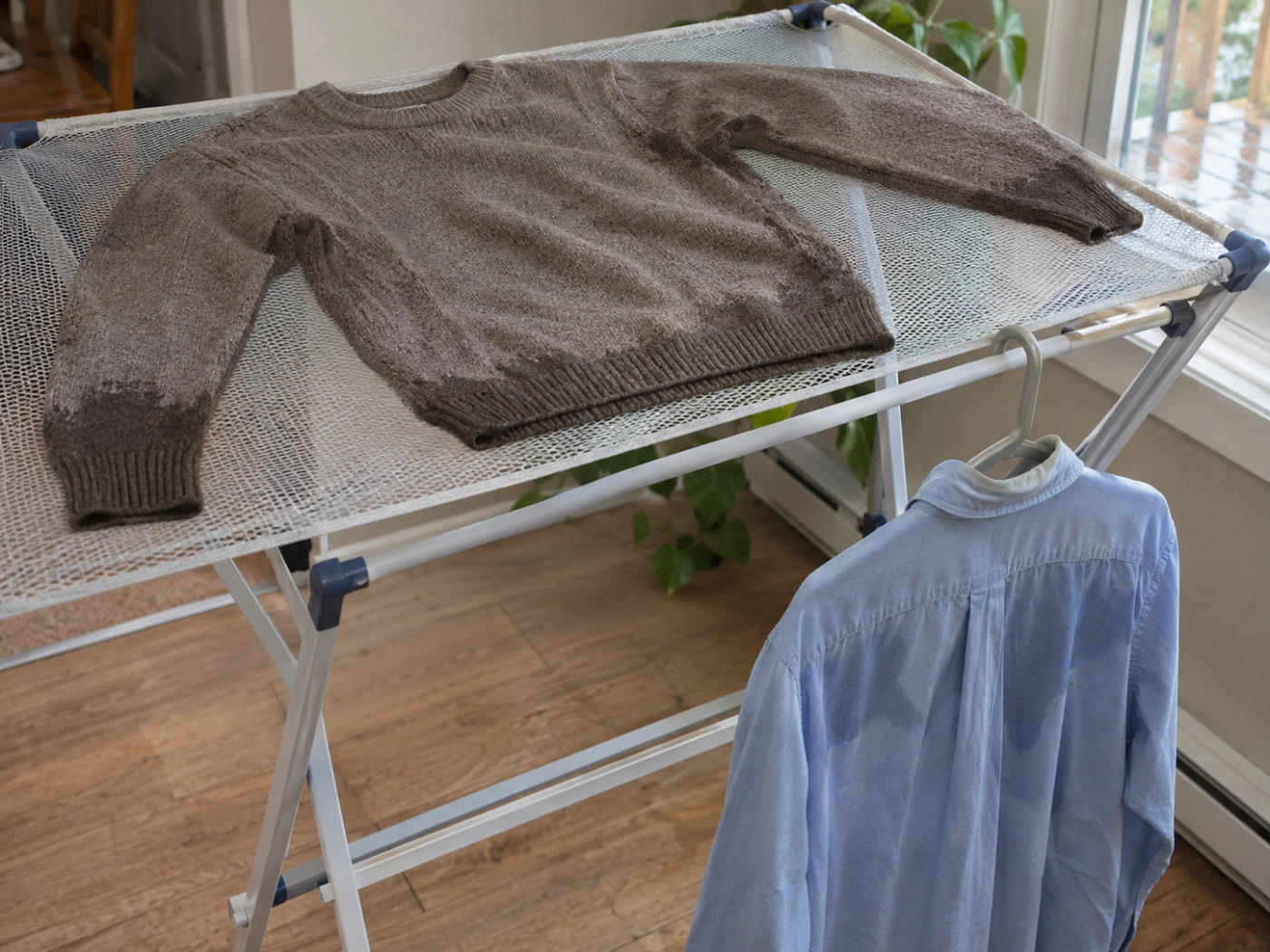
Imagine a wash with jeans, a shirt and a thick knit, all allowed the same wash conditions by their labels. Unfold the rack first. Reserve the flat area for the sweater first, then look at the narrow spaces left for the jeans and shirt. If the wet waistband would sit against the shirt sleeve, give one of them the next load. You can do a better job with one fewer garment than with three garments sharing the same damp crease.
Use a quick circuit before those clothes go into the machine.
- Empty the ticket, tissue and coins from the pockets. Turn the pocket bag out where the garment allows.
- Check fastenings that could catch the other pieces. Close hook-and-loop tabs fully and look for a rough corner still exposed. Separate it from a fine knit if the corner won’t stay covered.
- Check colour and care compatibility, including any instruction to wash separately. Follow both the garment instructions and the detergent directions for the load you’re doing.
- Put the drying surface, hanger or towel you’ll need within reach. A wet sweater is much easier to support if you can lift it with both hands.
Notice how much of the garment is touching
For a label that calls for flat drying, support the full piece as you move it, ease it back towards its usual shape and lay it on a suitable flat drying surface. Unfold the cuff that curled over itself. Smooth out the patch where one sleeve overlaps the body. If your rack has only thin bars, use a suitable flat mesh surface for a knit that would slump into the gaps.
A shirt that can hang to dry needs space around its sleeves. Thick waistbands, pocket corners and double layers can stay cool and damp after the rest feels dry. Check both sides before folding it away. A bra with shaped cups has another bit worth a touch where the band meets the cup. Look at how it sits in the drawer, too. A dry cup can still spend the afternoon crushed beneath a stack of tees.
Set aside five minutes for the clothes that came back
When clean clothes come off the rack, you can see wear before the next morning’s rush. Hold a favourite jumper near the daylight. If you see a few little bobbles at the shoulder, look underneath them and then at the underside of your usual bag strap. A rough patch on the strap may need attention even if you decide to leave the bobbles alone. Thin cloth, a pulled loop and a loose surface pill deserve different handling. Give the piece time if you’re unsure which you have.
Lay trousers along the crease already in each leg before you consider pressing. Read the iron instructions, including any limit on heat or steam. A textured or shiny finish is a good reason to try the permitted method somewhere discreet first and let the area cool before you judge it. If a folded pair already falls the way you like over your shoes, put it away ready for wear. Your routine can be quite short on that side of the basket.
Choose a resting place that suits its shape
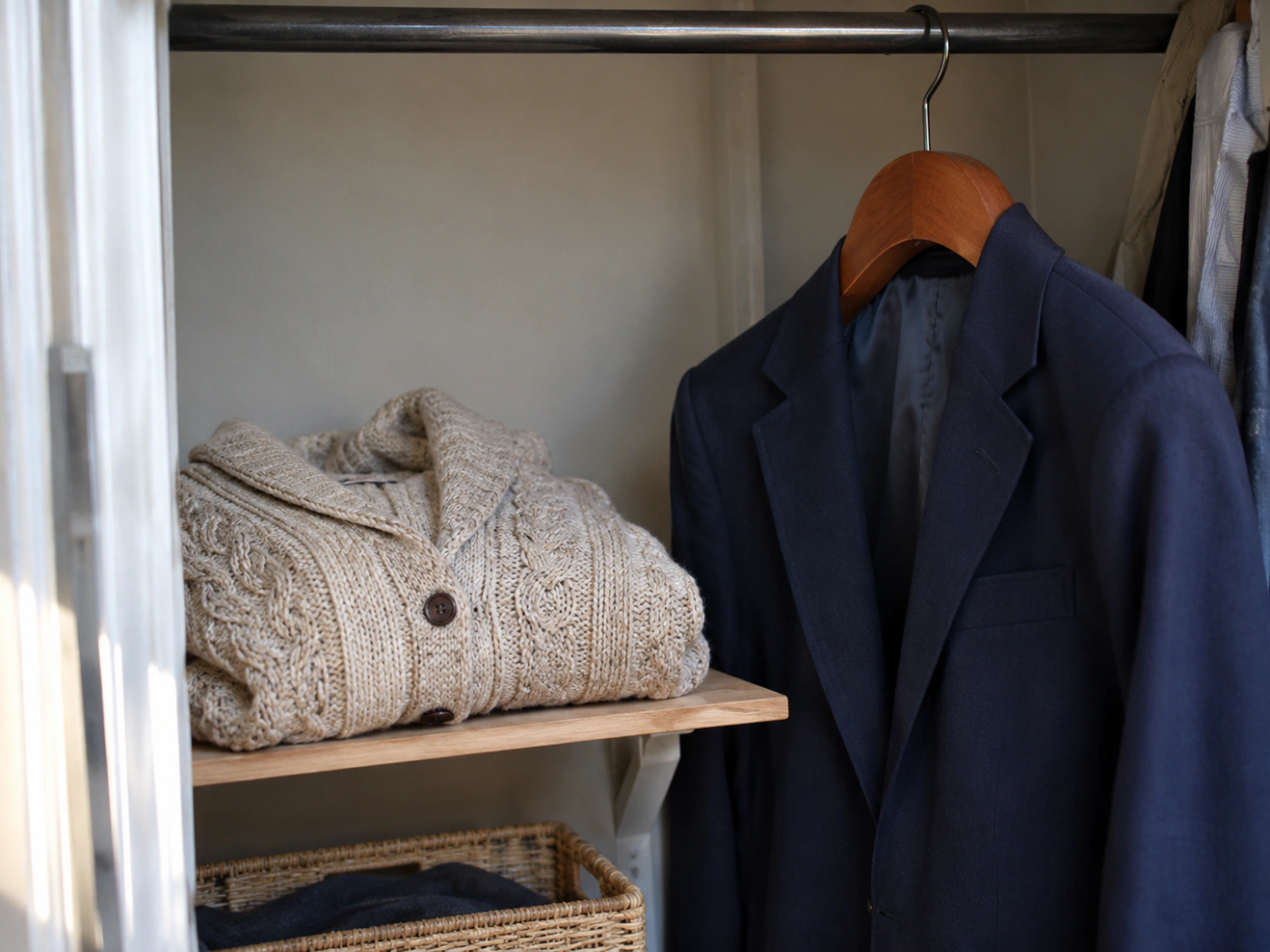
Lift a dry knitted cardigan by supporting its body and sleeves. A shelf gives a heavy knit somewhere to spread its weight. Keep that space in mind when you choose a cardigan or pullover for everyday wear. Fold it loosely enough that you can take the top one without pulling at its neighbour. A shaped woven jacket benefits from a hanger that reaches into the curve of the shoulders. Look for a sleeve that falls cleanly off the end, then leave enough space to lift the jacket out.
Special surfaces deserve a little breathing room. Run your eye along a velvet skirt in side light and you’ll see where the pile changes direction. Avoid crowding it between two heavy coats. On a pleated skirt, find the set of the pleats while it’s lying naturally and choose a place where the fabric can hold that arrangement. Follow any storage directions supplied for the garment, especially if its weight hangs from narrow straps.
The next time you get dressed, let the drawer tell you where to adjust. If both cuffs are dry but you had to unfold four sweaters to find the blue one, move the blue one up a shelf. If you find yesterday’s trousers clean enough for another outing and waiting exactly where you left them, you can put them on and get on with your morning.