How to Tell If Clothes Fit, From the First Button to the Last Step
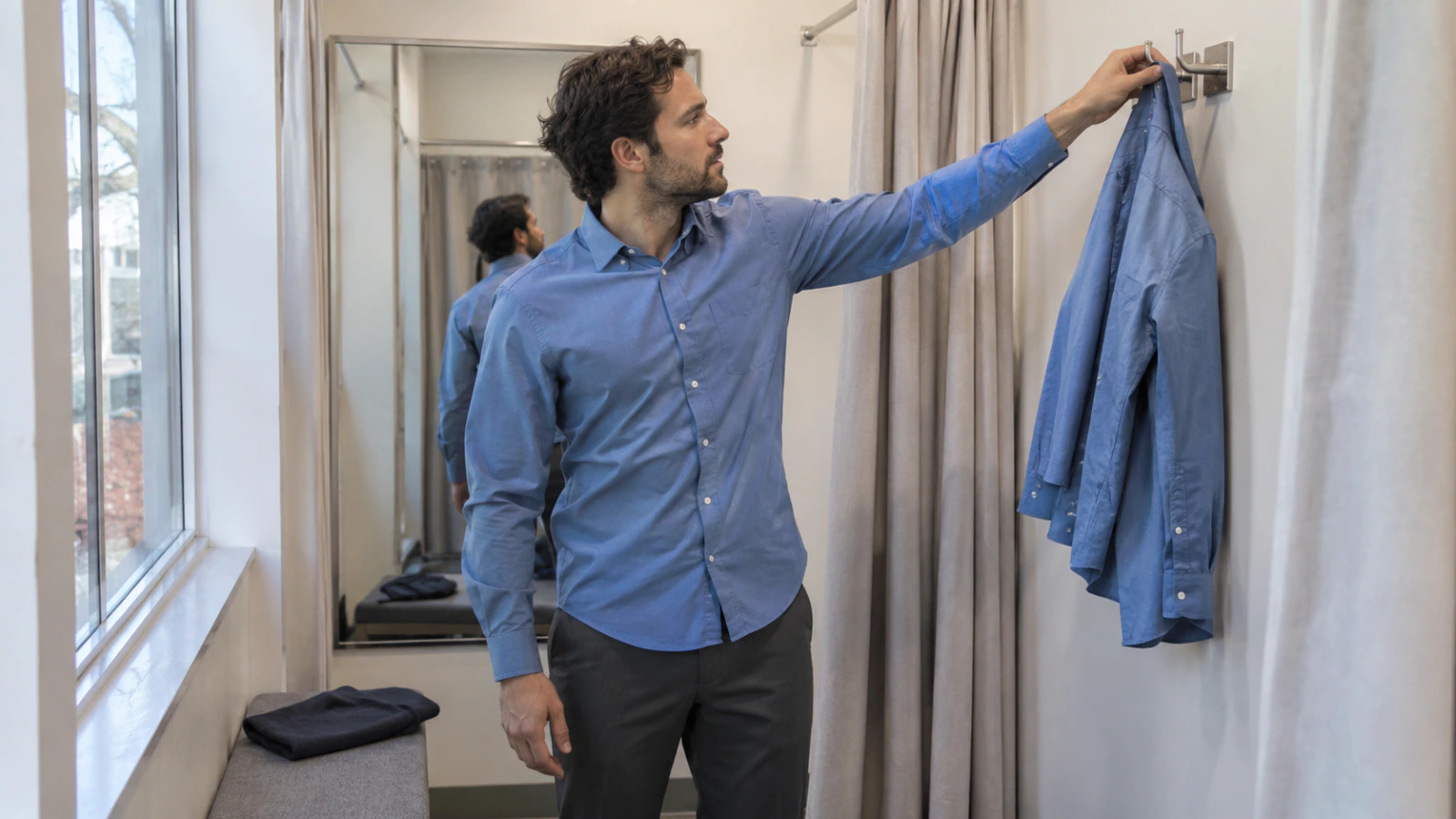
Pull two blue shirts from the rail and button them over the same trousers. One feels roomy until you reach for your glasses. The other looks closer through the chest and lets you reach the top shelf. Which fits? Start with where each shirt holds still, then follow the cloth through a movement you make every day. That will tell you more about the size, shape and length you want than the view from straight ahead.
Pick something from your closet to compare
Choose a garment you would happily wear today. A pair of jeans you need to unbutton at your desk can still be a useful reference, provided you make a note of that. A pair you pull on for a long train journey tells you something else. Match the job and the fabric as closely as you can. Loose jersey trousers are poor company for a pair of fitted, woven jeans on the measuring table.
Put the reference garment on once before you measure. Find where the waistband actually sits, where the shoulder turns down into the sleeve and how much of your shoe the hem covers. One person’s high rise can sit quite differently on someone else. A hand on the point you care about makes it much easier to find again when the garment is lying flat.
What is the seller measuring?
Read the heading above the figures. A body chart describes the person the size is intended to fit. Finished measurements describe the actual garment. Follow the diagram for that particular item. For example, a shop may measure a shirt sleeve from the shoulder seam while another starts in the middle of the back. Matching the two numbers would still leave you with sleeves of different lengths.
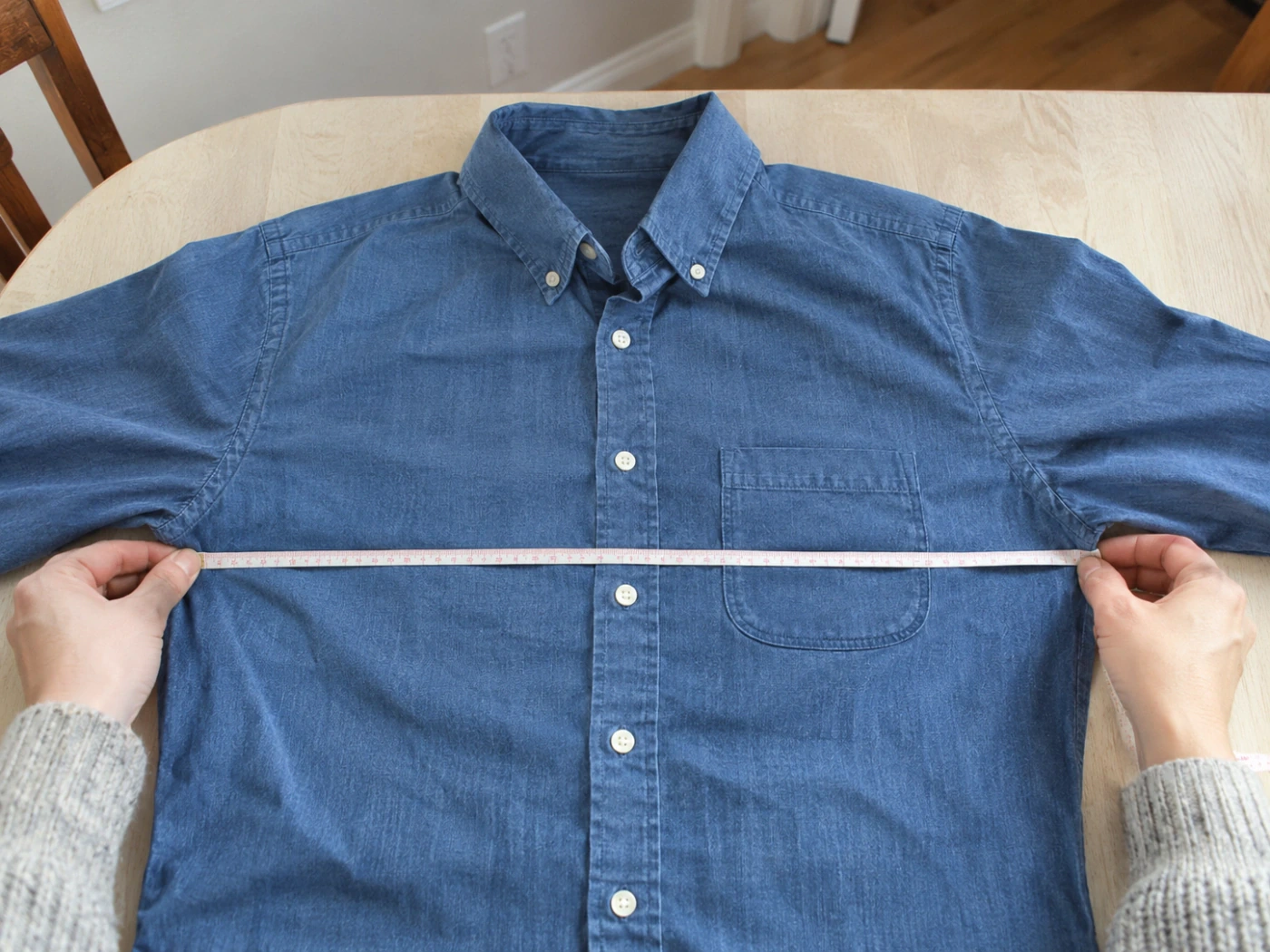
When a listing gives a flat chest width, fasten your own shirt and lay it on a table. Smooth it gently. Measure straight across at the same depth below the armhole. If the supplier lists a full chest circumference, use the method in its diagram. Note the units and whether a stretchy waistband was resting or extended. One careful number beats a phone full of measurements with no explanation.
Find out where the garment hangs from
A skirt hangs from its waistband. A dress may rest on the shoulders and follow the body down to a fitted waist. A dress with a heavy, full skirt can feel quite different again where the weight sits. Before studying a wrinkle, settle the garment in the place you intend to wear it. If you have to keep pulling it back to that spot, that is the first observation to keep.
On tops, find the neck opening, shoulder and underarm. A deliberately dropped shoulder puts the sleeve seam partway down your arm. Give the arm a gentle forward reach. A roomy sleeve that lets you reach and drops back where you like has earned its shape. If the neckline moves backwards and needs fetching every time, try another cut with a similar amount of fullness and a differently placed armhole.
On trousers, settle the band, fasten it comfortably and empty the pockets. Walk to the end of the room. If the band slips until it catches on your hips, the leg length you first saw in the mirror may change on the way to the door. If the band stays put and only the hem drags, the question is a good deal smaller.
Check how much room the cloth gives you
The difference between a body measurement and the finished garment measurement at the same point is called ease. Some room lets you reach or sit. A designer can also add room to get a particular shape, such as the swing in the back of a loose shirt. A stretch tank may measure smaller around than the person wearing it. When you’re choosing between two sizes on a chart, check whether the numbers describe your body or the finished piece before you allow for that extra room.
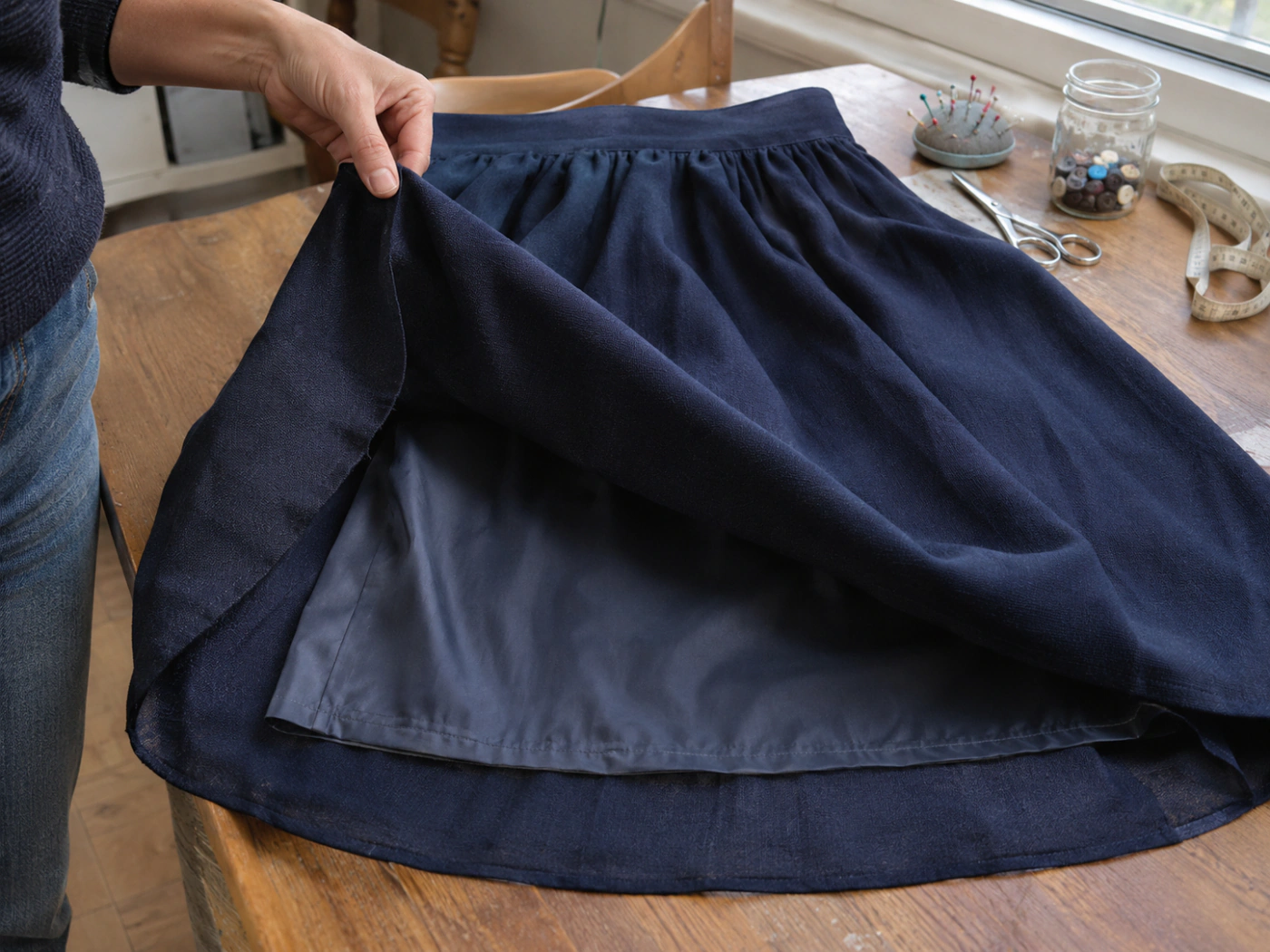
Suppose the hips on a straight woven skirt feel easy until you sit. Look inside. The outer layer may spread over your lap while a narrower lining pulls tight beneath it. Slip your hand between the layers with the skirt off and follow the lining to its hem. That observation gives you a better question for the next skirt on the rail. Does the inside open out where you want the outside to move?
Sit, reach and let the fabric return
Try the movement most likely to matter first. For a shirt you wear at a desk, put both hands where a keyboard would be. For shorts, take a seat and give the opening around each leg a moment. For a long dress, try a step at the height you usually climb if one is available. Keep the shoes and underlayers you plan to wear with the piece.
Look once during the movement and once afterwards. Folds across a bent elbow or a lap are an ordinary part of wearing fabric. Does the cuff stay caught on your watch once your arm is back down? Does one side of the skirt stay higher after you stand? Where you adjust the garment a second time often tells you which part deserves the next try.
Decide what to change on the second try
Carry one observation to the next hanger. Changing several things at once may find you something lovely, but it makes it hard to tell what to look for on your next shopping trip. These are three different reasons to ask for a second piece.
- Try another size when several areas feel close at once. Keep the same cut and colour if you can, so the comparison means something. Repeat the movement that first felt tight.
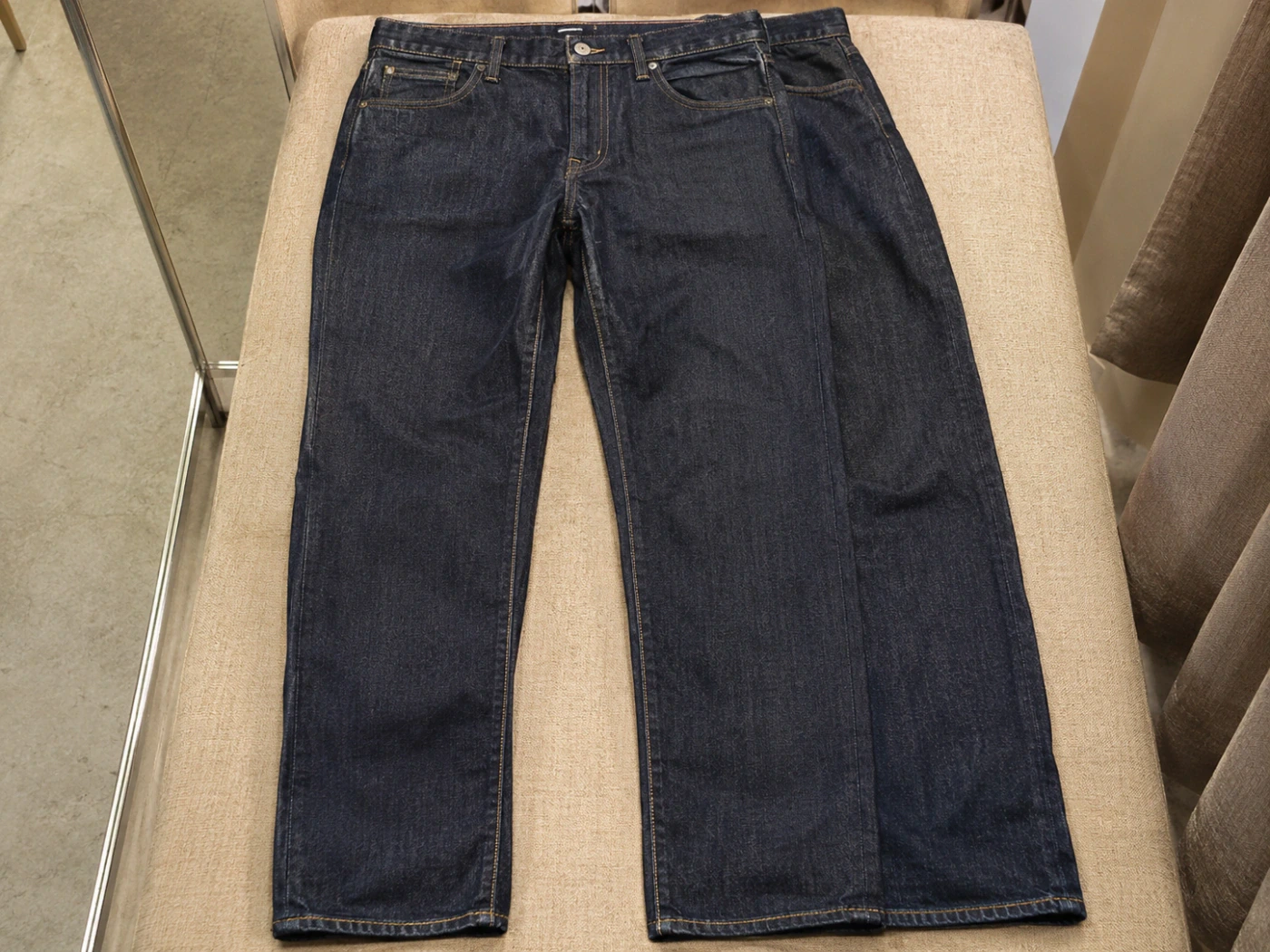
- Try another cut when one part fits and another consistently needs more room. Jeans may sit beautifully at the waist and catch across the thigh. Keep the waist you liked in mind as you try a fuller leg.
- Try another length range when several details land too high or low together. On a dress, look at the waist seam, pockets and bust shaping as well as the hem. Simply shortening the skirt would leave the other three in place.
You can also like the larger size for the amount of cloth it gives you. Check it under your usual coat and see whether the generous sleeve still feels pleasant there. With a smaller size, sit in it long enough to take an easy breath. A preference is easier to act on when you know which parts of your day the choice will suit.
Take a useful note home
Record the make, style, range and size while the label is handy. Add the job you tried it for, one measurement you could repeat and a sentence about wearing it. “Medium blue woven shirt, 54 cm flat across chest, comfortable driving, cuffs catch my watch” leaves you with two features to look for separately. A single size letter would lose both of them.
For an online purchase, photograph the garment flat with the tape in place if you might need to ask the seller about the measurement. Keep the tags attached and follow the shop’s try-on instructions while you decide. If the measurement matches the listing but the garment still pulls, tell the seller where the pull starts and which cut you tried. They may know another style with the same shoulder and a little more room through the back.
An alteration makes sense when the part to change is clear and the rest feels good. If you like the way the trousers sit, walk and bend, showing a tailor the extra cloth over your shoes is a specific request. If your shoulders, pockets and waist are all fighting for different places, put the garment back and take the note with you. Next time you can start at the rail where the shapes are closer to the clothes you already reach for.