How to Choose Knitwear That Fits, Layers and Wears Well

Pull your favourite sweater off the shelf and slip it on over the shirt you wore yesterday. Can you still feel the shirt cuff? Does the neck sit where you want it? Now put on your coat. You’ve learned three things about the knitwear you like before looking at a single label. The sweater that earns its place in your wardrobe has a surface you enjoy, enough room for the layers you wear and a way to get clean and dry in the home you actually live in.
Give the sweater a job before you choose it
Think of a morning when you’d like to find that sweater clean. Perhaps it’s the blue crewneck you wear on the bus with a shirt collar showing. You keep it on all day, so you care quite a bit about the feel of the neck and the room at your elbows. For an office that gets chilly after lunch, a cardigan you can pull on in your chair asks less of the shirt and earrings you put on at home. Both would fill a space on the shelf. Only one would solve that particular afternoon.
Bring the clothes that do the other half of the job. A sleeveless dress, a checked shirt or the coat you’ll be wearing until April tells you more in a fitting room than an armful of unfamiliar pieces. With a sweater you already own, take the same things to a mirror at home. If a combination falls apart, try changing the piece that actually gets in the way. A shirt with a narrower cuff could give a much-loved sweater another season of desk days.
Compare the knit as well as the yarn
Set a finely knitted sweater beside a deeply ribbed one. Look at the little V shapes on the smooth surface, then at the raised columns on the rib. Stroke a sleeve in each direction and turn back a cuff. Which would you like against your wrist? Which will slide into the sleeve of the coat on the hook? A fibre name tells you what a garment contains. Those few minutes with the garment tell you what wearing this particular version might be like.
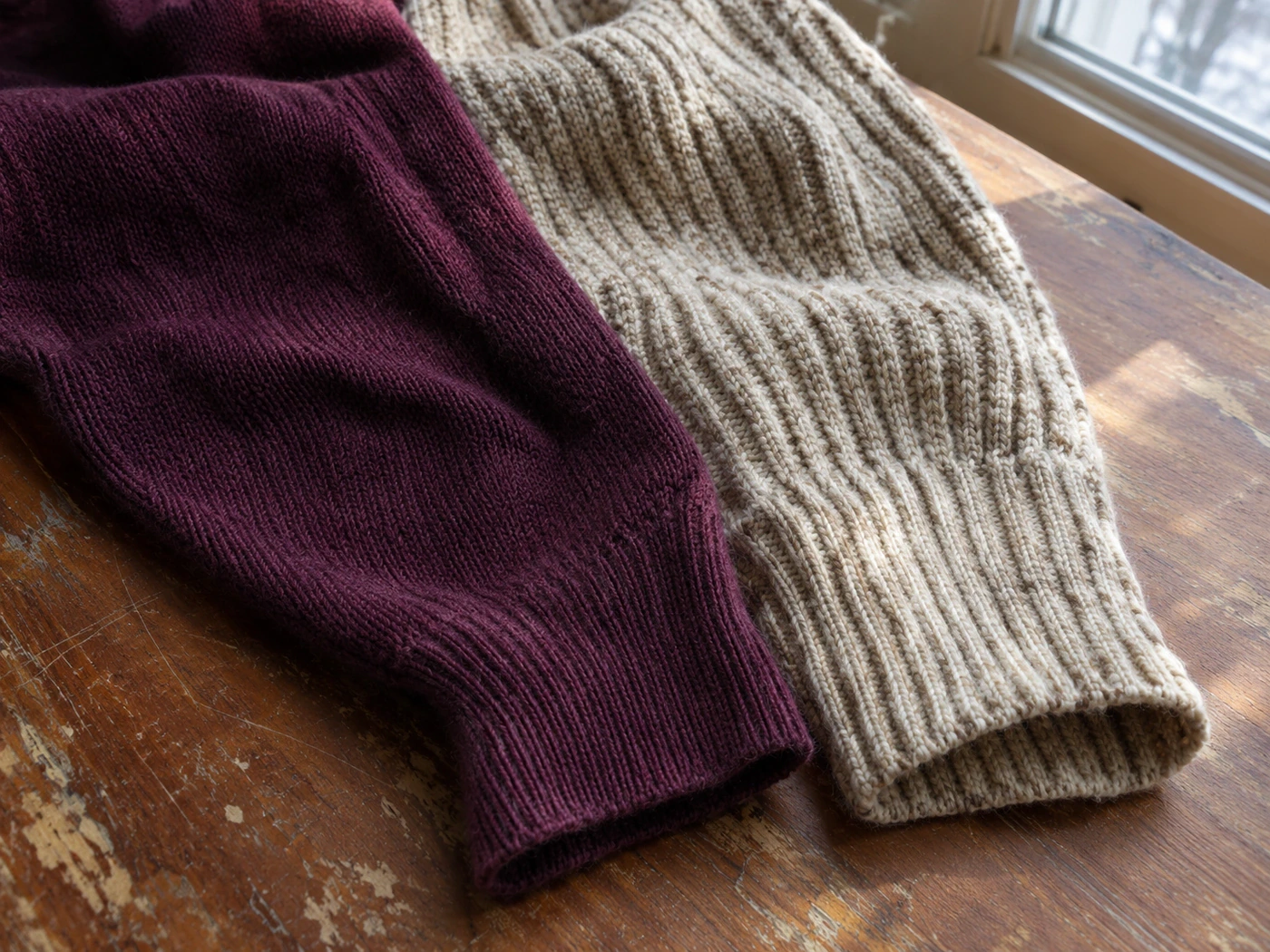
Read the fibre label and the care instructions on the same piece. Two cotton-blend sweaters can have quite different surface textures and drying directions. Look for a separate entry for trim, too. The elbow patch on a cardigan might account for a material you couldn’t find in the body. If you’re buying second-hand, ask for a clear view of both labels and a close photograph of a cuff. A picture of the whole front tells you surprisingly little about the place you’ll feel all day.
For a sensitive neckline, give the sweater a few minutes on your own skin if the shop allows it. Turn your head as you would to answer someone beside you. A high fold that feels fine for a moment may keep brushing the same spot under your jaw. A lower crewneck over a tee might give you exactly the colour and warmth you liked, with a little more room at the throat.
What will fit under your coat?
Put the sweater over the shirt you brought, then ease one arm into your coat. If the shirt sleeve has rolled up, straighten it and try again. Do the coat up and reach for your bag. Pressure at the upper arm that appears only when the coat goes on gives you something specific to change. Try a finer sleeve in the same warm colour, or keep the roomy sweater for the jacket with the wider armhole. For a day spent between a cold stop and a warm room, it helps to plan which layer will come off first.
Where should a cardigan end over a dress?
Find where the dress changes shape. On a gathered dress it may be the waist seam where the skirt begins to open. Pull on a short cardigan and let its lower band settle on its own. If the band meets that seam, the skirt can open below it. Look at the same dress with a longer cardigan unbuttoned. The open fronts let you see the waist down the middle, even if the sides of the knit come well past it.
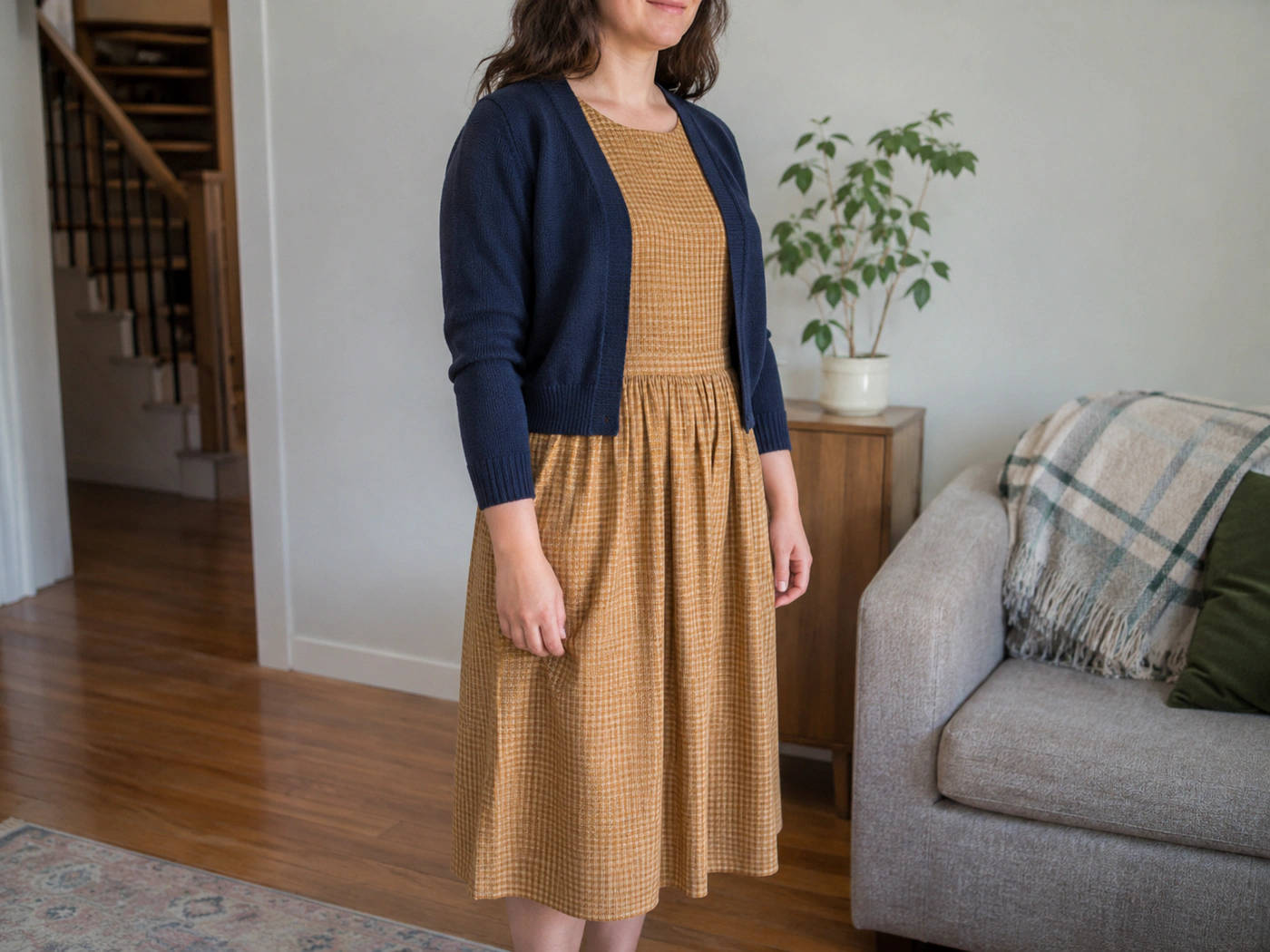
Take a seat before choosing. A firm band can catch on the fullest fold of a skirt and stay there when you stand. A soft, straight edge might drop back by itself. If you love the colour of the first one, undo the bottom button and take the same seat again. Make the choice with the bag you’ll carry, too. A crossbody strap can hold one cardigan front against the waist and let the other swing free.
Try the other half of a matching set
Lay a knit skirt and its matching pullover on the bed. Keep your usual shoes on and give each piece one new partner. With the pullover, try a pair of woven trousers. Let the hem fall first, then turn just a little of the front under to uncover the waistband. With the skirt, try a soft button-up shirt. Sit down and see whether a tucked shirt tail makes a ridge under the knit. Leaving the shirt open over a tank is another perfectly workable way to wear that skirt.
Give the collar and cuffs a turn at the table
A shawl-collar cardigan, a fine V-neck and a knit polo leave quite different amounts of shirt showing. Start with the one detail you want to see. An ivory tee gives a thick brown collar a quiet background at dinner. A fine V can leave room for the stripe and open collar of a shirt. If the polo is the piece you’d like people to notice, put it under an open jacket and check that its collar feels comfortable when you turn to talk.
Pull a chair up to the table for one last look. These are the small adjustments worth trying there.
- At the neck, open a shirt button or ease the polo collar flat before changing the outer layer.
- At the wrist, reach towards a glass. Turn back a cardigan cuff if it trails, then see whether it keeps its fold.
- At the waist, look where the lower band rests as you sit. An open cardigan or a straighter pullover hem may give you the room you keep making by hand.
Give a sweater somewhere to dry
Look at the drying directions before you fill the sink or start a load. For a sweater marked dry flat, spread a clean towel on a supported surface with room for the body and both sleeves. Check the space with the sweater still dry. Half a sleeve hanging over the end of a little rack is a good reason to move the rack top or leave the second sweater for tomorrow.
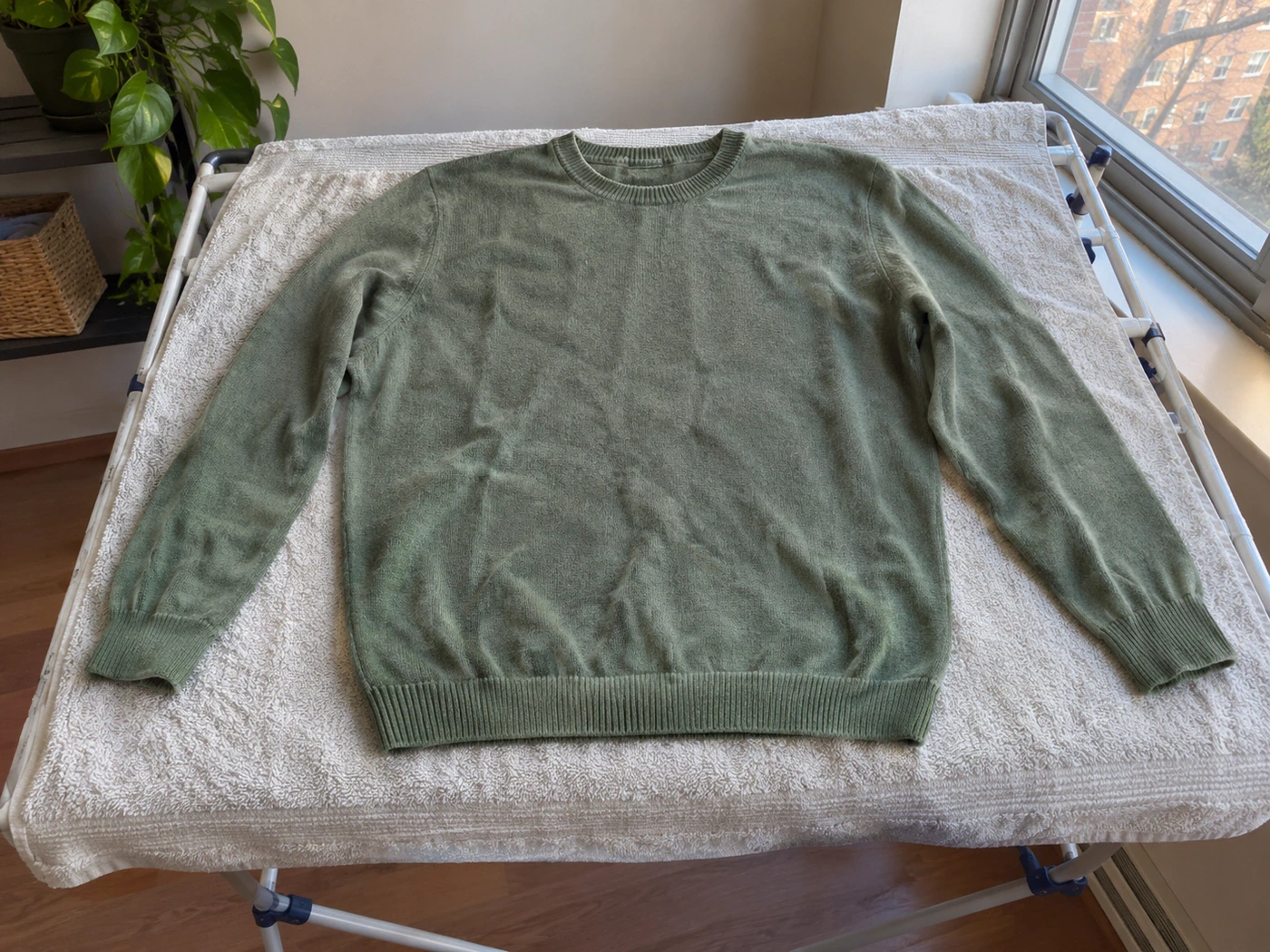
Follow the washing directions on that garment. Support its weight as you transfer it, ease the cuffs and hem back into their usual shape and leave room for air around it. Before folding it away, feel inside the thickest rib and at the join under the arm. When several pieces need different treatment, a clothing care routine that fits your drying space makes deciding what to wash together a good deal easier.
While the knit is dry and in good light, look at the places a bag or desk edge touches. Little surface bobbles, a loop drawn out of place and a thinning elbow deserve different attention. Follow a row of stitches past the rough patch. If the knit is growing thin or you see an open stitch, leave the surrounding yarn intact and take the sweater to someone who mends knits. A heavy cardigan can spend the time between wears folded on a shelf where you can lift it out with both hands. Leave the colour you enjoy most close enough to reach on that morning you first had in mind.