How to Layer Clothes for the Trip and the Room at the Other End
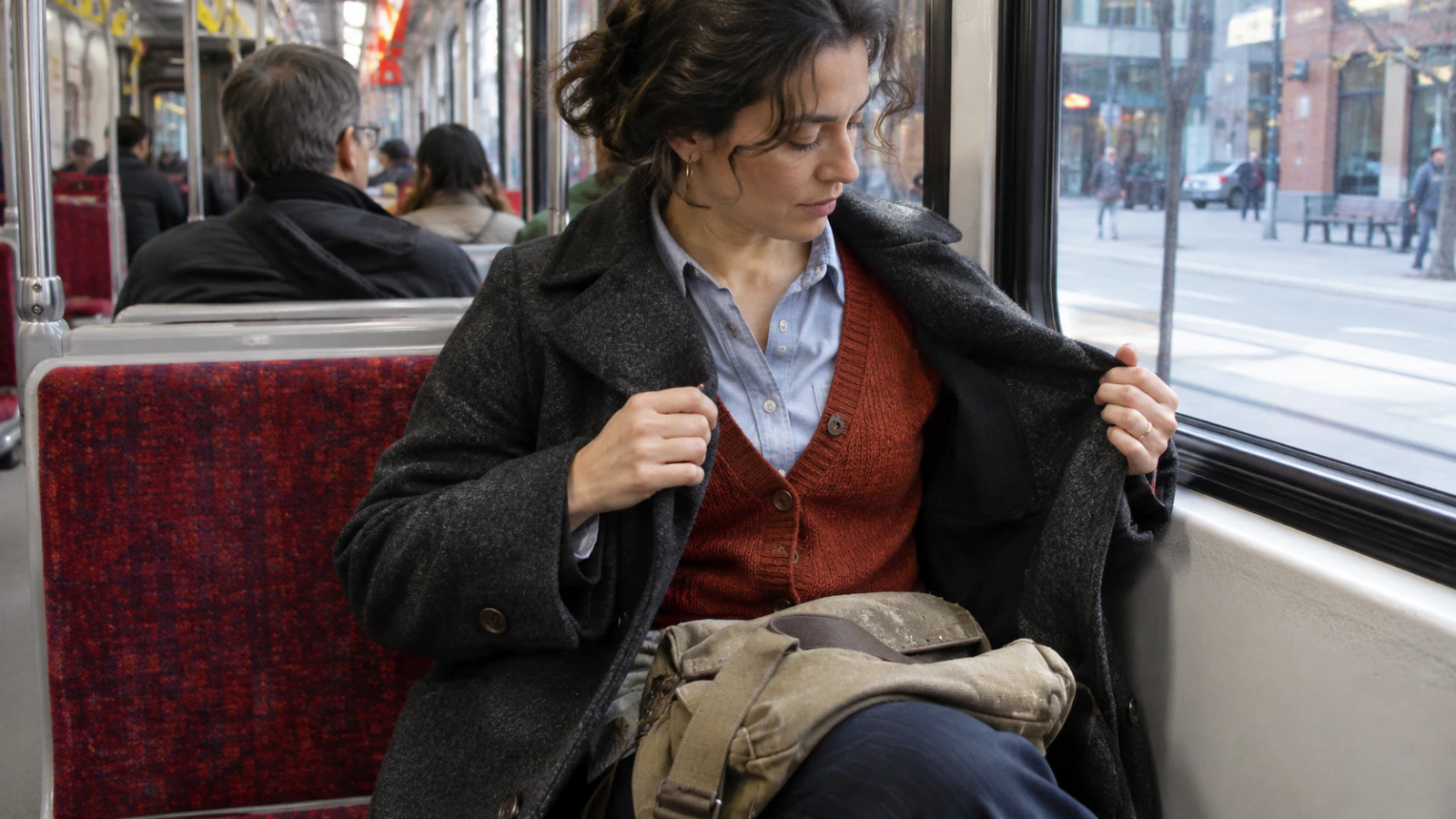
Imagine getting onto a warm streetcar with a coat buttoned over a sweater, a work shirt and a shoulder bag. There’s a seat by the window. Before you can settle into it, the bag has to come off, the coat has to open and the sweater has suddenly become a commitment until the next stop. When you decide how to layer clothes, give some thought to the piece you can take off first. A morning outdoors and an afternoon indoors can share an outfit if the change between them is easy enough.
Dress for the longest stop first
Put yourself in the place where you’ll spend most of the day. That might be the desk under the air vent, a busy shop floor or the kitchen at a friend’s place. Pick a shirt or light knit you’d be happy wearing there with your coat hung up. Try it with tomorrow’s trousers or skirt and sit for a minute. Is it comfortable on its own? Would you enjoy keeping it on if your sweater spent the afternoon over the back of a chair?
Now picture the part of the route that asks for more warmth or weather cover. A brisk walk to a nearby station feels different from waiting on an open platform, even if the clock says both take fifteen minutes. For a cold walk followed by a warm train ride, try layers you can remove on the commute. A long, slow walk home after dark may make a different demand again. Decide what you’ll put on for the stretch that concerns you and where you can open it when you warm up.
What job does each layer have?
For outdoor dressing it helps to think about next-to-skin clothing, insulation and weather protection. On an ordinary city day, some of your clothes will do two jobs. A lined coat may give you enough warmth and wind cover over the shirt you already need for work. A light rain shell has room for a separate warm layer if you choose the fit with that sweater on.
Lay the clothes on a chair in the order you’ll put them on. Ask what you’d miss if one piece stayed behind. The thin blue cardigan might earn its place because you can put it on in a cool room. A second pullover underneath it might have been your way of getting through the wait for the bus. If the coat already takes care of the wait, that pullover can have the morning off.
Get the sleeves through the coat
Put the middle layer on over the first. Rest a hand on the opposite shoulder and feel the fabric at the elbow. A shirt sleeve that has rolled halfway up your forearm makes a fairly lumpy neighbour inside a close knit. Straighten the cuff, then try the coat. Hold your shirt and sweater cuffs loosely together as you slide your arm through. Let go and reach as you would for the handrail.
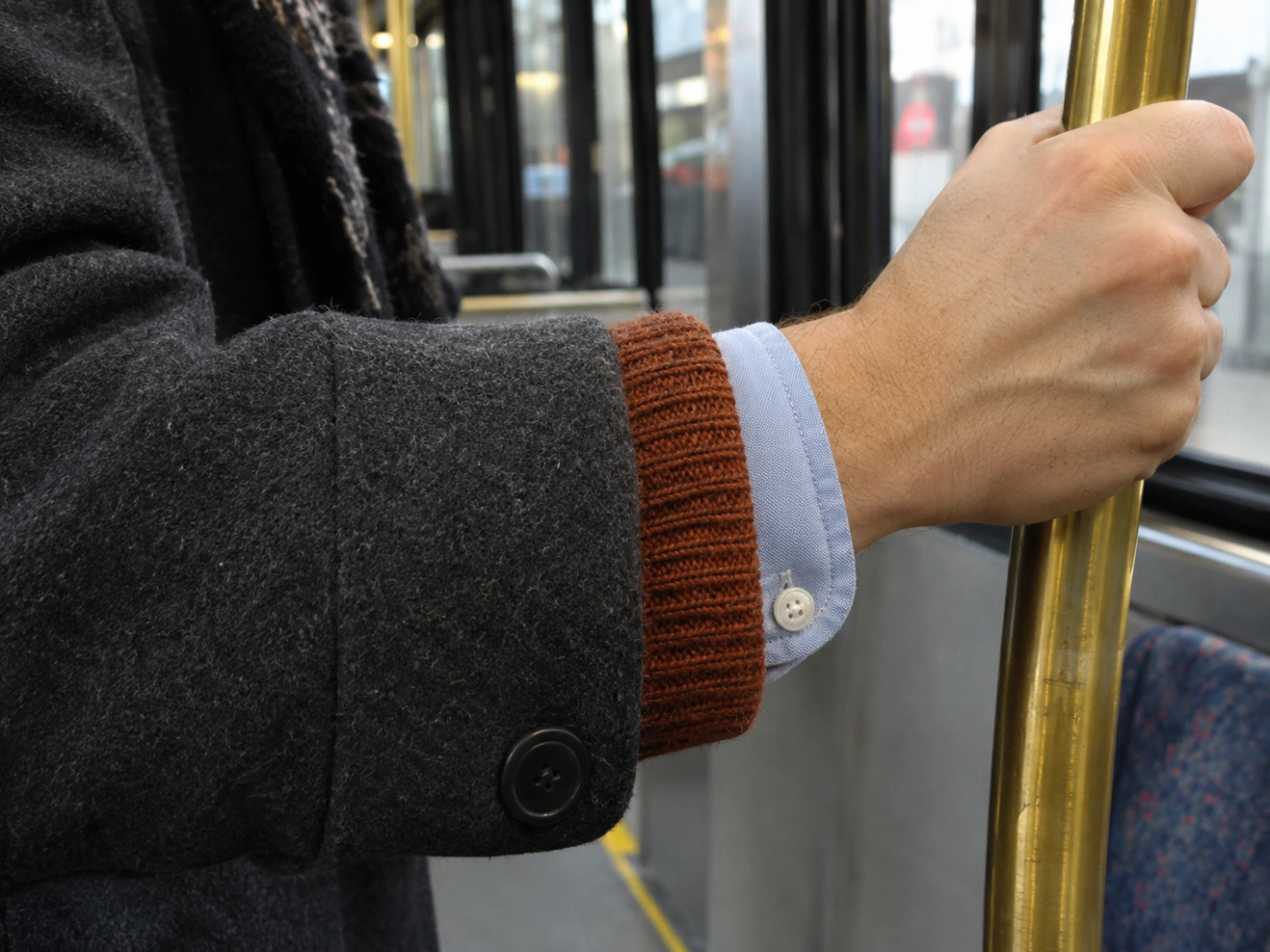
If you can feel a tight band around the upper arm, take off the coat and repeat the reach. An easy reach in just the sweater tells you which two garments to compare next. A fine cardigan may move freely where a chunky knit gets caught in the coat’s armhole. If it’s the chunky knit you love, put your roomier coat over it and try the same movement. Look for the combination that lets you get both hands into your bag without first shrugging everything into place.
Leave space around a collar
Fasten the coat to the height you’d choose outside. A rollneck, a scarf and a high zipped collar can each feel lovely alone. Together they may give your chin very little choice about where to go. Turn your head to look down the street. If the scarf ends are taking up the space, try tucking them flat down the coat front or leave the scarf in the bag for later. Raise the hood too if you’ll use it.
For a shirt under a crewneck, button the shirt as far as you like. Ease the collar into the neck opening and look from the side. Some shirt collars stay inside neatly. Others work their way out a point at a time. A cardigan with an open front gives a collar more room and leaves you free to peel off the layer without pulling it over your head in a crowded room.
Match the layers to a particular journey
A wet walk and a warm room
Suppose it’s raining just as you leave for a shift in a heated shop. Put the rain layer over the clothes you’d wear for work. Close it and take an ordinary step up. Does the front pull high enough to uncover the hem of a skirt or the tops of your thighs? You might welcome a longer coat, particularly for the return walk with a bag of groceries. If the lower fastening makes the step awkward, try the vent or a different coat that lets you stride comfortably.
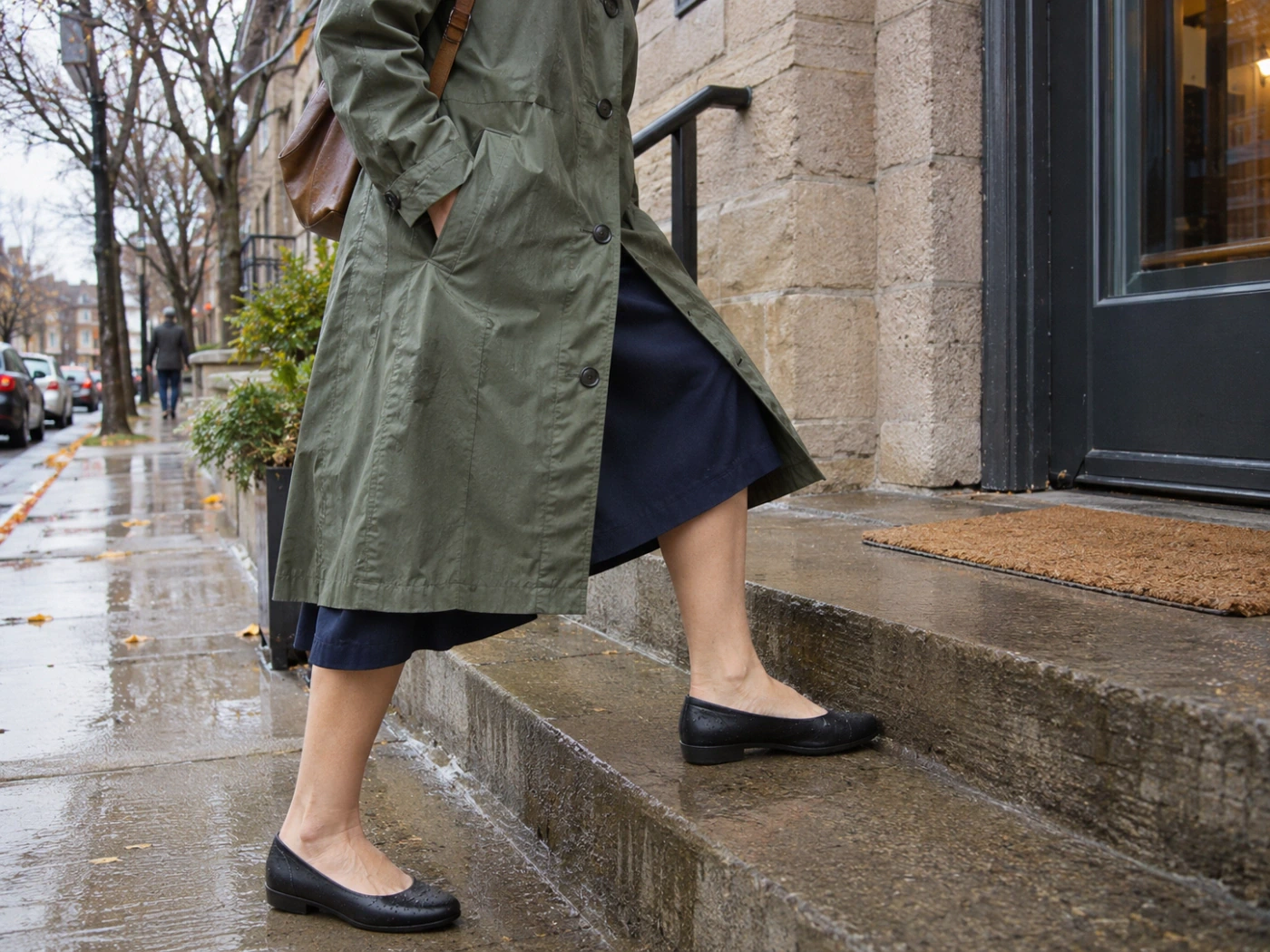
Think about the far side of the entrance mat. A dripping shell needs somewhere to hang or somewhere separate to travel. If you fold one into a bag for the ride, take it out to dry when you arrive and follow its care label. A dry shirt packed against a wet sleeve won’t be much of a change. A folding umbrella can stay in its own compartment when there’s room to carry it and the route suits an umbrella.
A cold wait followed by a crowded ride
Wear a warm middle layer and an outer layer that opens easily. Before heading out, put on your usual gloves and try reaching the zip with your bag on. A fastening hidden under a closely crossed strap can look perfectly accessible until your pass is in the same hand you need to open it. Move the strap or the pass while you’re still at home. Try the same manoeuvre seated, with the coat gathered around you.
Give the legs a turn, too. If you often add a thin layer under trousers for a cold wait, wear the whole outfit long enough to find out how it feels in the warm room. Can you bend at the knee and sit comfortably with both waistbands fastened? If you expect to change on arrival, put the spare layer, socks and a bag for the change where you can reach them without unpacking your lunch.
A warm street and a chilly office
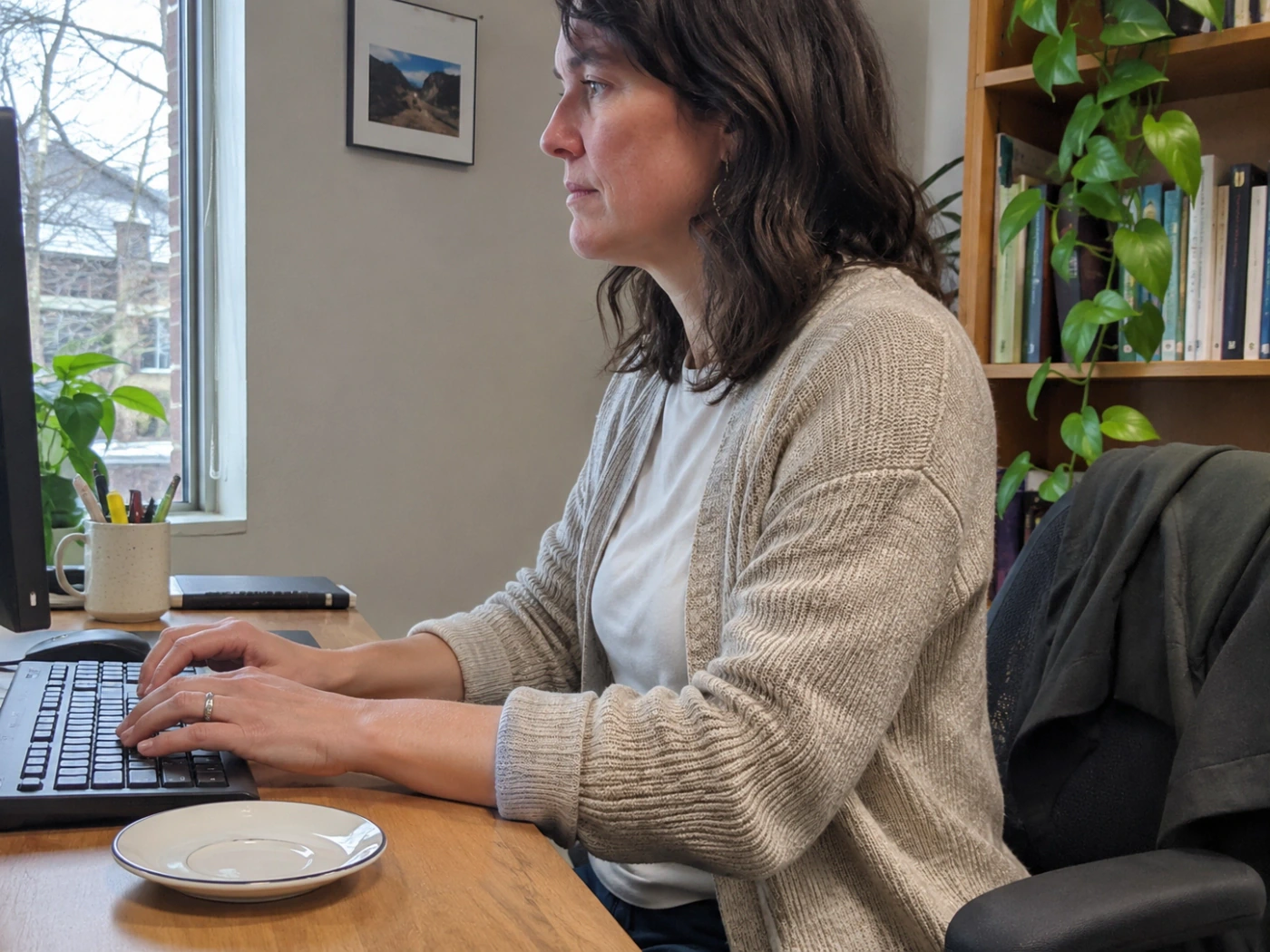
The extra layer may be for the destination. Wear a light top on the way in and try a cardigan or overshirt for the desk. Sit down, put both arms forward and imagine typing for a while. A broad cuff can look terrific on the street and sweep straight through the saucer beside the keyboard. Fold it once or give a closer cuff the same chair test. When you leave for lunch, see whether the layer folds into your bag or can reasonably stay in the office.
Set up an outfit you can adjust on the move
Try a short dress rehearsal with the things that normally occupy your hands. A minute at the front door will do. Pack the lunch container, glasses case or library book that usually takes up the space you’ve been counting on for a sweater.
- Leaving home. Fasten the outer layer over the whole outfit. Turn your head, pick up the bag and check that the pocket with the keys is still accessible.
- Coming indoors. Open or remove whichever layer you’ll shed first. Find a place for it while keeping your pass or keys within reach.
- Heading back out. Put it on again over sleeves that have been rolled or pushed up. Smooth the cuffs and look for a hem caught under the bag strap.
If one transition is awkward, change the piece involved before changing the whole outfit. You may simply need a cardigan that buttons at the front for days when you use the streetcar, or a roomier raincoat over the sweater that stays at the office. Set tomorrow’s indoor top out first. Hang the coat with the bag you’ll carry, slip the gloves into a pocket and leave the top button or zip pull ready for the first cold stop.