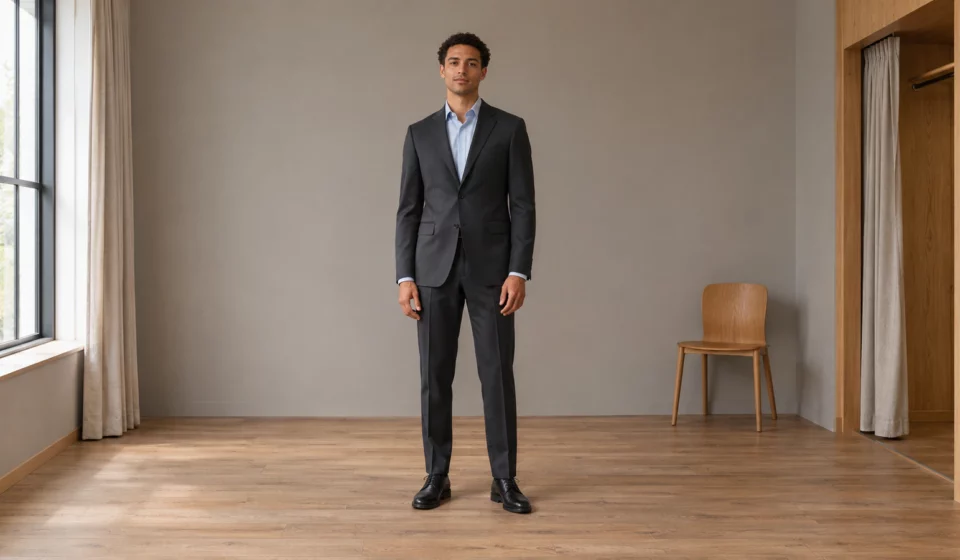

You can love the colour of a charcoal suit and still want to get out of the trousers before the wedding speeches. Give the chair in the fitting room as much attention as the mirror. A promising suit sits comfortably across your shoulders, closes easily over your shirt and lets you take a seat without looking for a way to undo the waistband. Once those things feel right, it’s worth talking about a hem. For a wedding, think through the ceremony and reception to decide which shoes and shirt to bring to the fitting.
Take your shirt and shoes into the fitting room
Wear a shirt that already fits comfortably at the neck. If you’ll wear a tie, button the collar and put it on. This gives the jacket collar something familiar to sit against. Let the shirt sleeves settle at your wrists before deciding how much cuff you’d like to see below the jacket.
Bring the shoes you expect to wear most often. If the wedding suit will do office duty afterwards, it helps to map the journeys in an ordinary week. The lace-ups you can walk home in may give the trousers a different resting place than the loafers you wore to the shop.
Let the jacket settle
Stand the way you would while talking to someone, with your arms hanging easily. On a conventional shoulder, look for the sleeve to begin near the edge of your own shoulder and fall smoothly from there. Some jackets deliberately extend that line. If a hollow in the upper sleeve bothers you, try another cut and see how the cloth falls before asking anyone to change the shoulder.
Fasten the upper button of a single-breasted, two-button jacket and leave the lower one open. Take an easy breath. The lapels should rest against the shirt. If the fronts pull into a deep X at the button, try the next size and check the shoulders again. A larger jacket that still pulls in front and now slips at the shoulders is a good reason to try a different shape.
Ask for a second mirror so you can see the back of your neck without twisting. Look for light contact between the collars. If a gap opens as you reach, lower your arms and see whether it closes again. Proper Cloth illustrates what to look for in its guide to jacket collar contact.

Give the trousers their own turn
Take the jacket off. Set the waistband where the cut feels comfortable and see whether it stays there without a tight belt. With empty pockets, check how the fabric hangs over your hips. Pockets that pull open and a seat that feels stretched when you step forward are two observations worth mentioning together. Keep those notes when you compare the fit and cost of two suits. A second cut might save you the cost of changing the first.
Now look down at the shoes. The break is the fold that forms where the trouser front meets the shoe. A small fold gives a softer finish. A hem that just skims the shoe gives a straighter line. Ask to see one leg pinned at each length, then look in the full-length mirror from a few steps away.
Take a seat
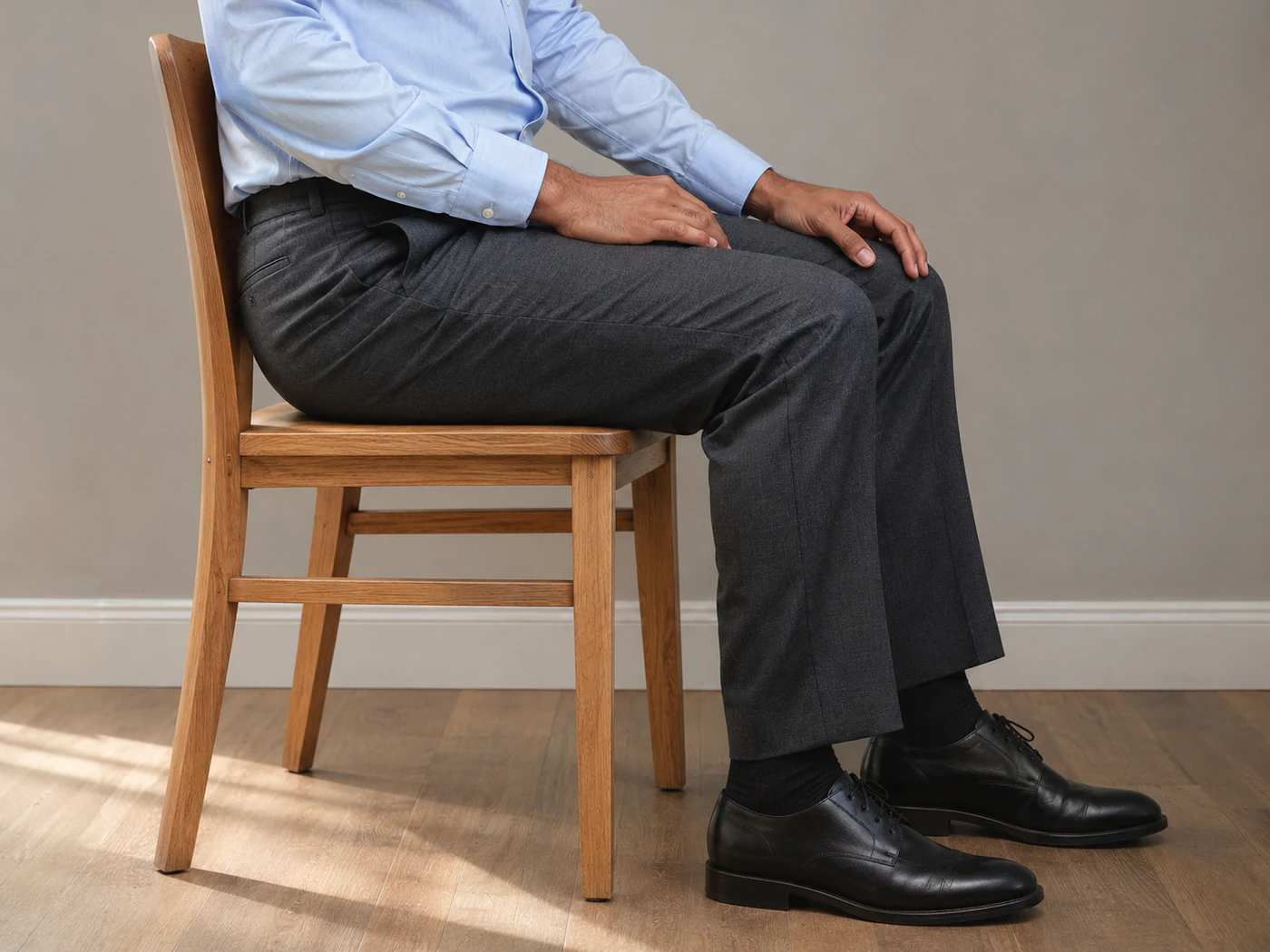
Release the jacket button if you’ve put it back on. Sit with both feet down and stay there long enough to picture dinner. A few folds at the hip and knee come with bending. Notice pressure instead. Can you slip a hand into your pocket? When you stand, do the trouser legs settle again, or do you have to tug them down from your thighs?
What to ask before you buy
- Another size. If the shoulders, fastening and waistband all feel snug, compare an adjacent size in the same suit. Repeat the chair check.
- Another cut. If a size up clears your thighs but leaves a loose waist, ask for a fuller leg or for suit separates. You may like the jacket you already have on.
- An alteration estimate. If the suit feels easy everywhere except for fabric pooling over your shoes, have the tailor pin the hem and quote that specific change before you pay.
Take a note in your own words. “The collar sits well, and I’d like a little more room when I sit” gives you something precise to carry to another shop or to a first appointment for a made-to-order suit.