
Imagine trying on an olive jacket with a pocket just big enough for your phone. You reach in for it and your fingertip goes straight through the bottom. That’s quite a lot to learn before you’ve even looked in the mirror. Give a jacket five minutes in the fitting room. Work the zip, use a pocket, follow the seams and sit down in it. You can find out what needs attention today. How many winters it will last is still an open question.
Get dressed for the walk home
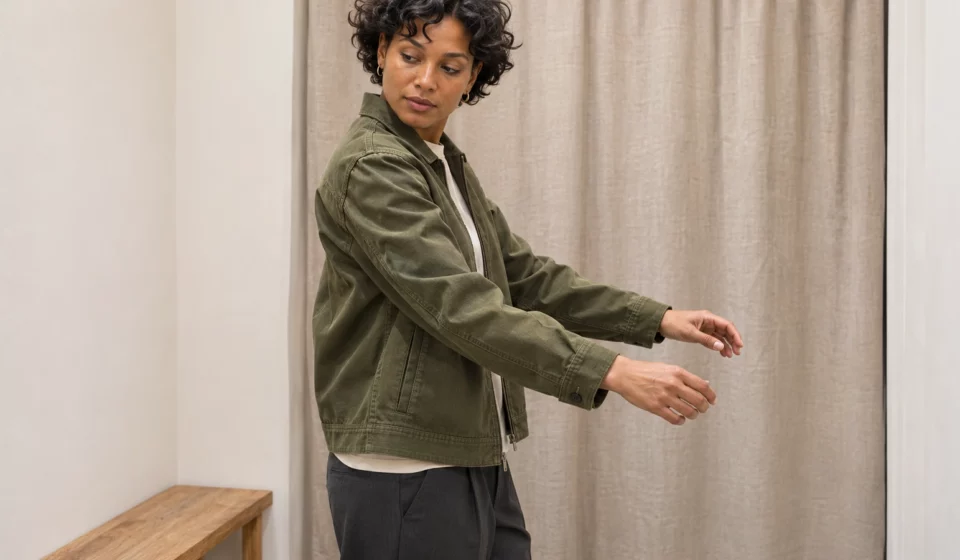
Put the jacket on over the layer you’d wear tomorrow. Close it and pick up your bag. Reach forward with both arms as though taking a parcel across a counter. If your sleeves ride up a little, see where they settle when you let go. A tug you feel every time you reach deserves a closer look while you have the jacket on. If you make that reach all day at work, the tug deserves a place beside the price when you decide whether to buy the jacket.
Now run the zip down and up twice. Seat the bottom pin fully, hold the fabric clear and use your usual hand. If the slider keeps catching at the same spot, look for a bit of lining in its path or teeth that separate below it. Stop if it jams. Ask to try a second jacket in the same size so you can see whether that one catches too.
Try a cuff button. Can you push it through the hole and undo it without hauling on the threads? If it hangs loose, look for a matching spare inside the jacket. Check the cloth around the attachment. A button you could sew back onto sound fabric is a different job from a button pulling through a torn cuff.
Follow the pocket all the way down
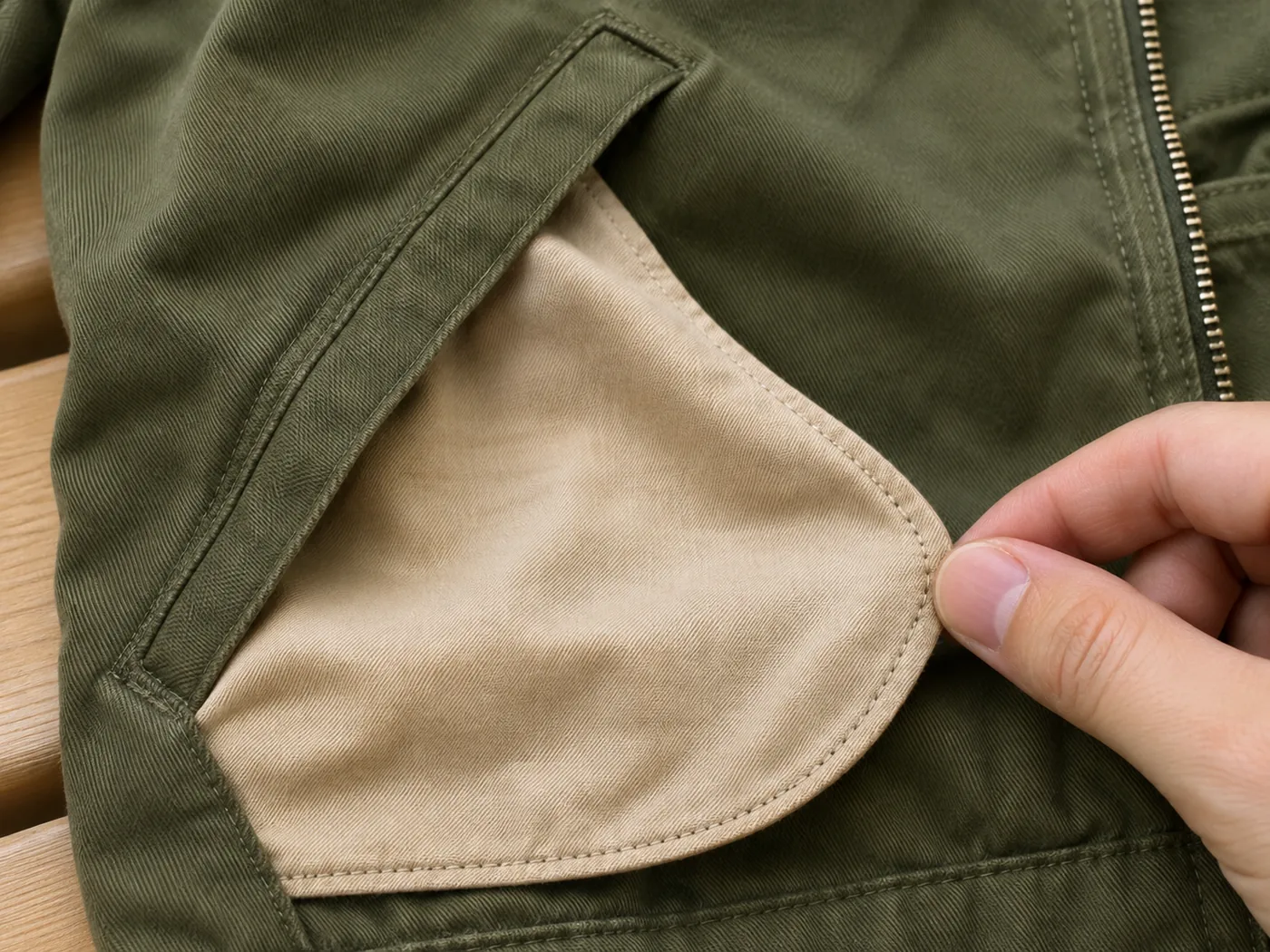
Feel along the bottom and corners with empty hands before trusting the pocket with anything. The pouch of fabric inside is the pocket bag. If it turns out easily, bring it into the light and follow the curved join with your fingertip. You’re looking for a gap where two edges should meet. If the opening is stitched shut, ask the shop whether there’s a usable pocket behind it.
Take the jacket off and follow a side seam up towards the underarm. A loose thread end beside an intact row of stitches is one thing. A break in that row with the cloth parting underneath is worth showing the shop. If one seam puckers, lay it flat and compare it with the other side. A deliberately gathered panel usually has that fullness built into the cut. The University of Kentucky’s clothing construction checklist also points to pocket openings and fastenings as places to look for secure stitching.
Take the jacket to the bench
Slip it on again and sit. Reach down for your bag, then stand up. If the outside has room but something inside goes tight across your back, feel whether the lining has twisted in a sleeve. Smooth it once and repeat the reach. A lining that still cuts the movement short would get old on a grocery run. On a buttoned blazer, you can also trace where the front pulls when it closes before blaming the stitching.
At the hem, turn back only what lifts freely. Is one section coming unstitched or rolling towards the outside? On second-hand trousers, give the seat seam, pocket corners and cuffs the same look. There may be spare cloth folded inside the hem if you want them longer. Ask how much a tailor could use before counting on the change.
At the till, buy, ask or leave
- Buy if the pocket holds the phone, the closures work in your hands and you can reach and sit comfortably. A sound jacket in a colour you’ll wear has earned its turn.
- Ask if you’d buy it with one specific fix. Who will reattach that button, what would it cost, and what are the return terms? For a pricier repair, weigh the quote against the wears you expect.
- Leave if the seam is opening in frayed fabric or the jacket still stops your reach. Hang it back up. On the next one, start with the part that let you down.