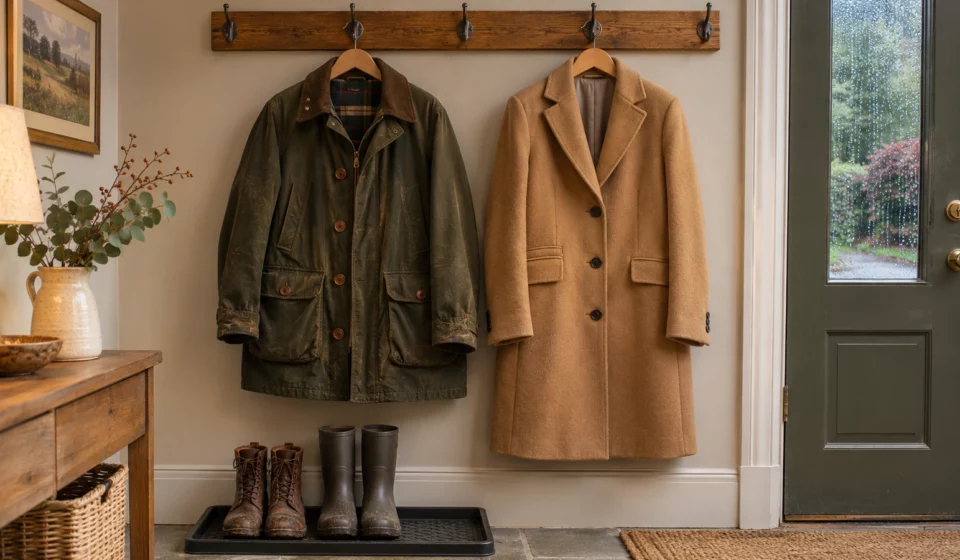

Suppose a camel coat is half price. You can already picture wearing it to dinner on Friday. The olive coat by the door, meanwhile, has a torn pocket that feeds loose change straight into the lining. Which one earns the next dollar? Add what each coat would cost you from today, including care and repairs, then divide by how often you’d actually wear it over the same stretch of time.
Give the coats the same winter
Start with last week. Which coat would you have reached for on the walk to work, at the rink or on the way to dinner? It helps to map a week of outfits and journeys. Cross out the day you stayed home and the wet morning you’d have worn your raincoat whichever coat you bought.
Say that leaves three likely coat days a week for sixteen weeks, or 48 wears. Count the trip to work and back as one wear and use that convention for both coats. You’re comparing two ways to cover those same 48 days. If you plan to keep both coats in rotation, give each day to the one you’d pick. The dinner reservation only happens once.
Put a number beside the loose button
Copy the following lines into a note, once for each coat. Use one currency and include tax and any delivery charge in what you’d actually pay. For a lifetime cost per wear, count all spending since purchase and all the wears since then. For a decision about the coming winter, the olive coat’s original price is money you’ve already spent. Start its purchase line at zero. On the sale coat’s line, include any work it needs before its first outing when you weigh the true cost of a clothing purchase.
- Coat and period. Which coat? From which month to which month?
- Money still to spend. Purchase ___ + alterations ___ + repairs ___ + care ___ = total ___.
- Wears. Likely outings ___ or, in a quiet winter, ___.
- Cost per wear. Total ___ divided by wears ___ = ___ per outing.
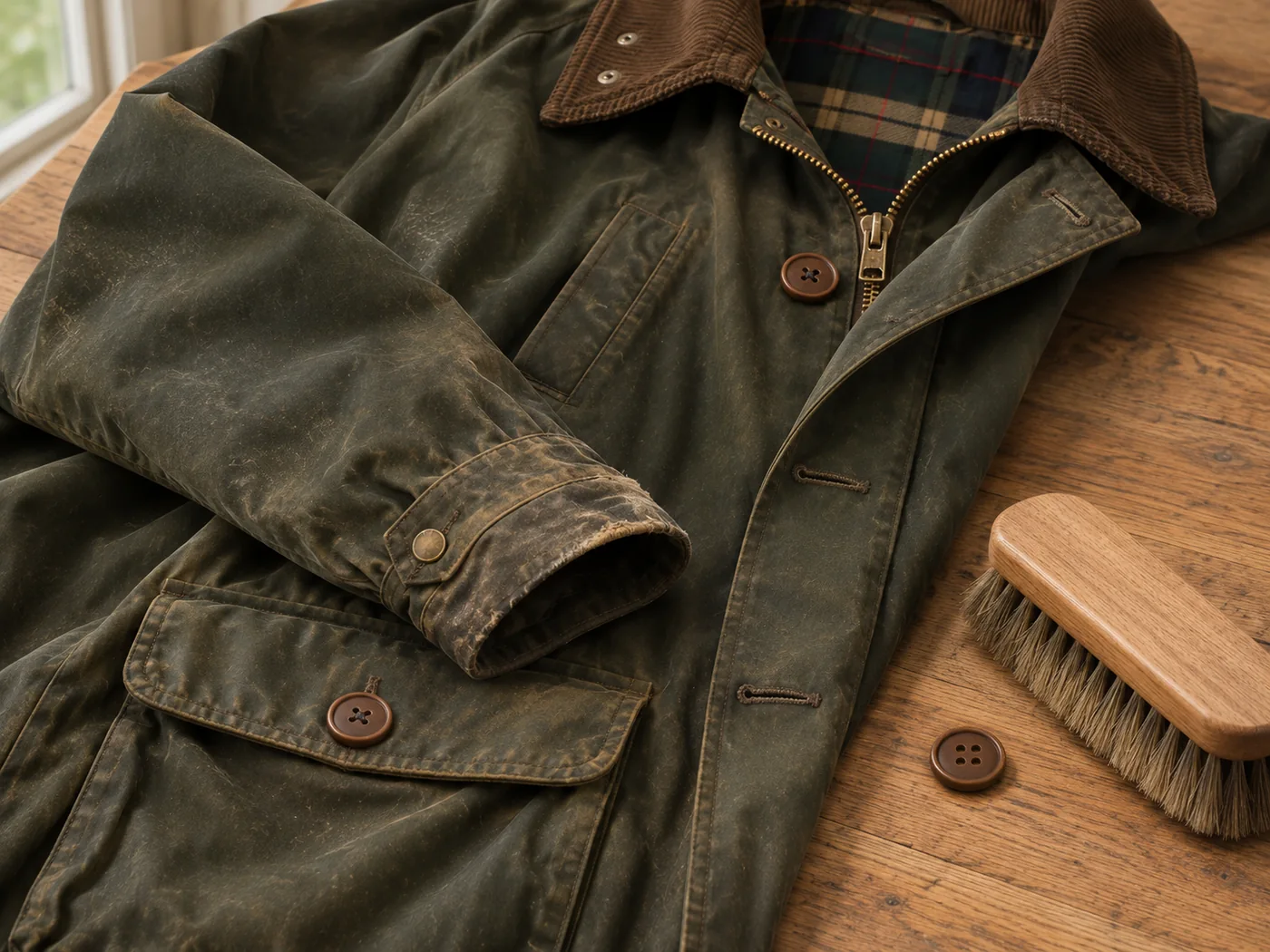
Turn out the pocket, look at the cuff edges and find the spare button. A loose button you can sew back on is a different entry from a lining that needs a repair quote. Before pricing cleaning, check what the coat’s care label allows. If you’d take it to a cleaner, ask what that particular coat would cost.
Do the sums with both coats on the hook
Here’s a worked example in Canadian dollars. The amounts are invented so you can replace them with your own quotes. Allow $78 for the olive coat’s pocket and cuff repairs and $18 for its care over the winter. Keeping it costs $0 + $78 + $18 = $96. At 48 wears, that’s $96 ÷ 48 = $2 per wear.
Now give the camel coat the same 48 outings. Say the sale price comes to $60, a sleeve adjustment is $12 and you budget $12 for care. You expect no repairs this winter. That makes $84 in all, or $84 ÷ 48 = $1.75 per wear. If you’d happily wear either one three days a week, the sale coat edges ahead.
What if the camel coat only goes out half as often?
Look at those dates again. Maybe you like the camel coat with your good boots but would reach for something else when you’re taking a muddy dog out. Give it 24 wears and hold the $84 total steady. Now it costs $3.50 per wear. The repaired olive coat still comes in at $2 across 48 days. You’d also need something to wear on the other 24 days, so include any extra spending that would take.
What’s the most you’d pay?
You can work backwards to a price you’d accept. At 24 outings and $2 a wear, you have $48 to spend in total. Take away the $12 sleeve adjustment and $12 care allowance. That leaves $24 for the camel coat itself. You may still want it for dinners, and you can decide what those evenings are worth to you.
Before heading back to the shop, try the olive coat on with tomorrow’s clothes. If a sound pocket would put it straight back on your shoulders, take it along for a repair quote. That’s one line of the worksheet you can fill in for real.