
Reach inside yesterday’s shoes before you put on your socks. The leather can look dry while the lining at the toe still feels damp. A rainy day shoe rotation starts with a choice about the second pair. If it can handle the same walk, keep it dry at home for tomorrow. If it’s an indoor shoe, take it to work today and make a separate plan for tomorrow’s walk.
Which part of the journey gets your feet wet?
Think of the last rainy trip you made. Perhaps you walked two blocks to a covered bus stop, then crossed an open parking lot at the far end. Or perhaps you spent half an hour on foot and arrived with water coming in over the tops of your shoes. Choose the outdoor pair for the longest exposed stretch, including the return journey.
Start with shoes you own and know from a similar walk. Try them with your usual socks and trousers. Take a few steps and look at the back hem. If it trails on the pavement in low shoes but clears it in ankle boots, wear the boots or turn up the hem before you leave. A wet trouser cuff will still be there when you change into dry shoes.
Choose where to keep the dry pair
- At home. If both pairs suit the route and your workplace, wear pair A on Monday. Leave pair B by the door for Tuesday. Pair A gets the whole of Tuesday to dry, and you can check it again before Wednesday.
- At work. If your loafers are strictly for indoors, wear the boots for the journey and change at your desk. A dry pair of socks belongs with the loafers. If you need a dry pair for the walk home as well, choose a second pair that can make that walk and leave it at work before the rainy spell.
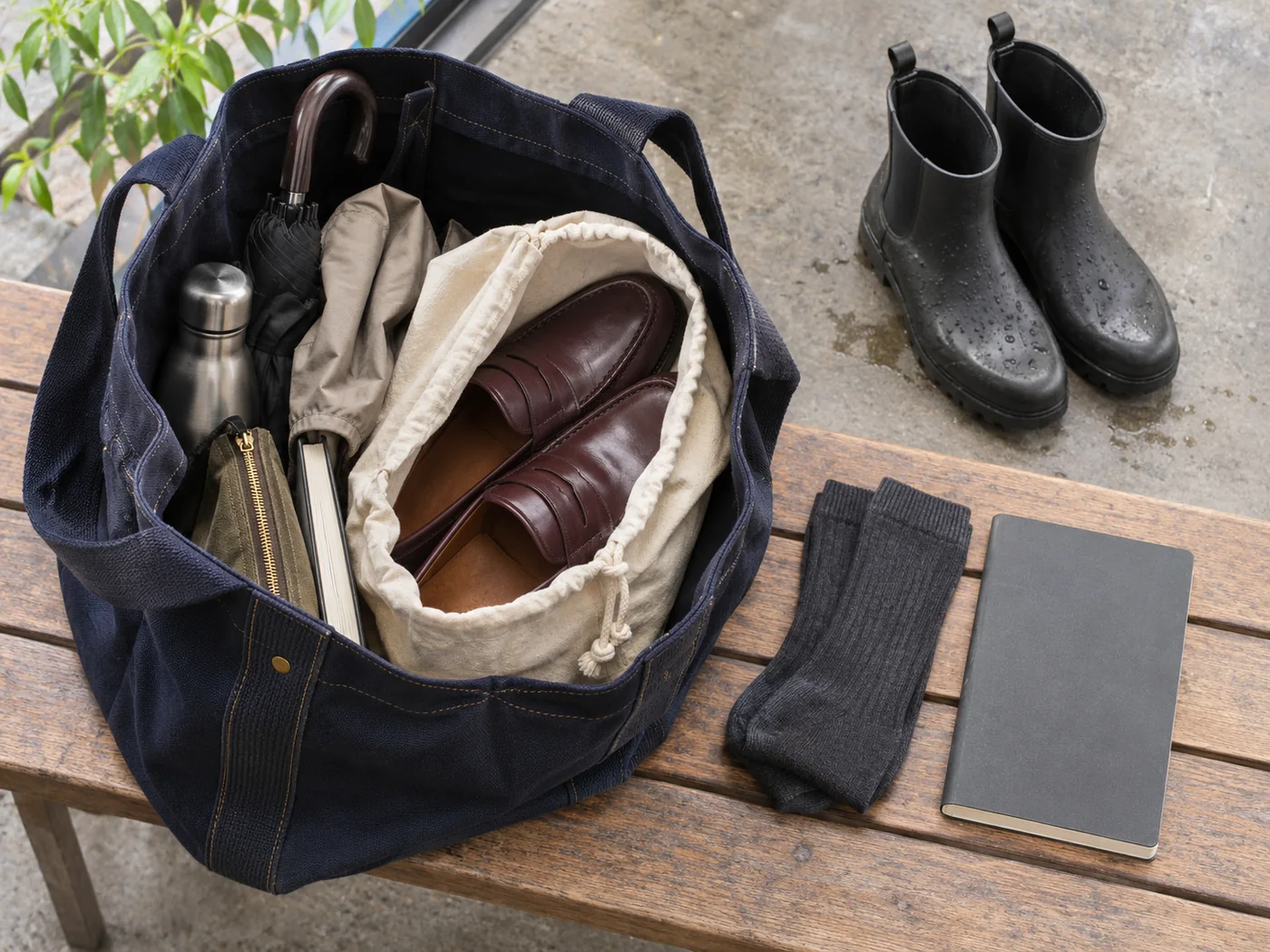
If you wear the spare home, bring the first pair back in its own bag and unpack it at the door. That gives you both pairs to choose from in the morning. Without a locker, pack the dry shoes toe to heel in a clean shoe sack. Put the socks in a separate pocket you can reach when you arrive. For the return trip, take a bag with a wipeable, water-resistant lining for wet soles. Keep your lunch, notebook and clean clothes outside that bag. If the spare shoes leave you carrying an extra bag, try the one-handed coat check for a cold commute with both bags packed.
Set up the drying place before you need it
At work, change out of wet socks first. If there’s an open spot where boots can stand until the trip home, use it. If you have to carry the wet pair between rooms, bag it for that stretch and unpack it when you get there. A closed tote under a desk is an easy place to forget a pair of wet shoes until five.
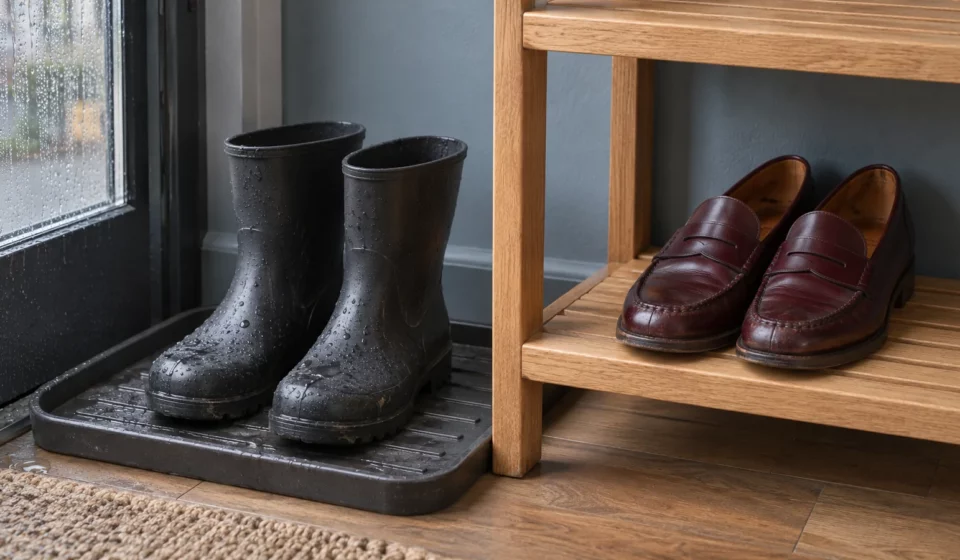
At home, put a shallow tray where air can circulate around both shoes. Leave space between them and tip standing water out of the tray. Check the maker’s care directions for the upper, lining and sole before removing anything or applying a treatment. Two black ankle boots can have quite different linings.
For example, Kamik advises drying its boots at room temperature away from heaters. On a model with a removable liner, take it out so the two pieces can dry separately. A sewn-in lining stays in place. The maker covers both steps in Kamik’s product care questions.
Check the toe again in the morning
Feel inside both shoes, including under a removable liner if your pair has one. Put the liner back only when it and the boot are dry. If Monday’s pair is still damp, take the dry outdoor pair you set aside. If the boots are your only rain pair, check them before leaving work on Monday. When the lining is soaked, take the dry office shoes home too. A covered route or a ride for the exposed stretch can make those shoes a workable choice the next morning.
At the end of that second day, put the dry socks back with the shoes that will travel next. Leaving them together is one less thing to remember when you hear rain against the window.