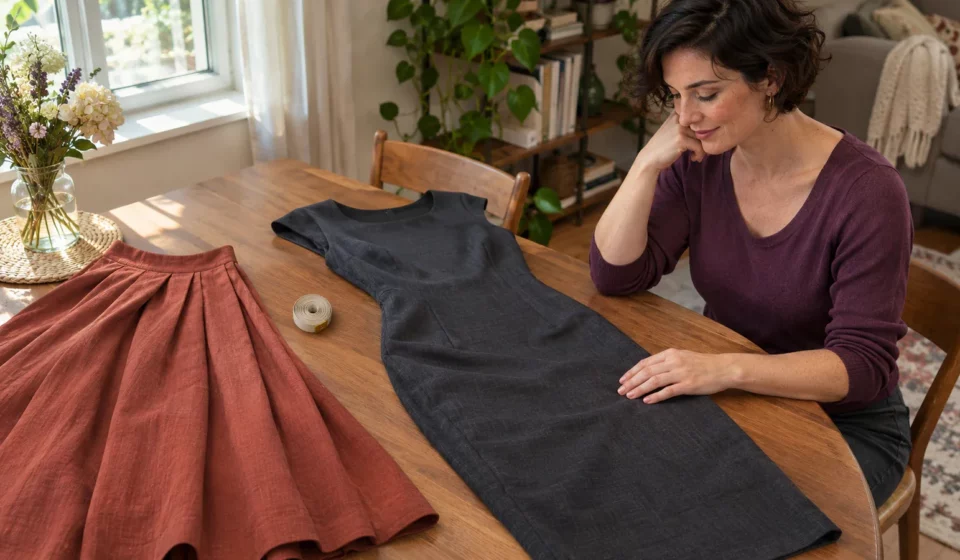

A full skirt can feel lovely when you sit down, even if the waistband is the first thing you want to undo after lunch. That’s a useful clue when you’re reading a women’s size chart. If your measurements land in different columns, start with the part of the garment that has the least room to spare. On a full skirt that may be the waist. On a straight dress it may be the hips.
Make a measurement card you can use again
Open the size guide attached to the item and follow its diagram. Some charts give the measurements of the person a size is designed for. Others give the dimensions of the finished clothes. Look for that heading and the units before you pick up the tape. If there are separate petite, regular or tall ranges, use the chart for the range in your basket.
For a body chart, wear the underlayer you expect to wear with the garment. Stand comfortably. Follow the guide’s measuring points and keep a soft tape level without pressing it into your skin. A mirror helps you see whether it has slipped down at the back. Take those measurements to the fitting room. You can check the room a garment gives you by sitting and reaching in it.
Here’s a card you can copy into your phone. Date … · units … · bust … · waist … · full hip … · underlayer … Fill it in once and update it when you want a fresh reference. The underlayer note is handy if you sometimes switch bras with a particular neckline.
Read the shape as well as the columns
For a worked example, suppose your bust is 88 cm, your waist is 74 cm and your hips are 106 cm. On OKAYOK’s body measurement chart, those numbers fall in S, M and L respectively. Its guide takes the bust and hips at their fullest points and the waist at the natural waistline. Now imagine using that spread of sizes for two different dress cuts.
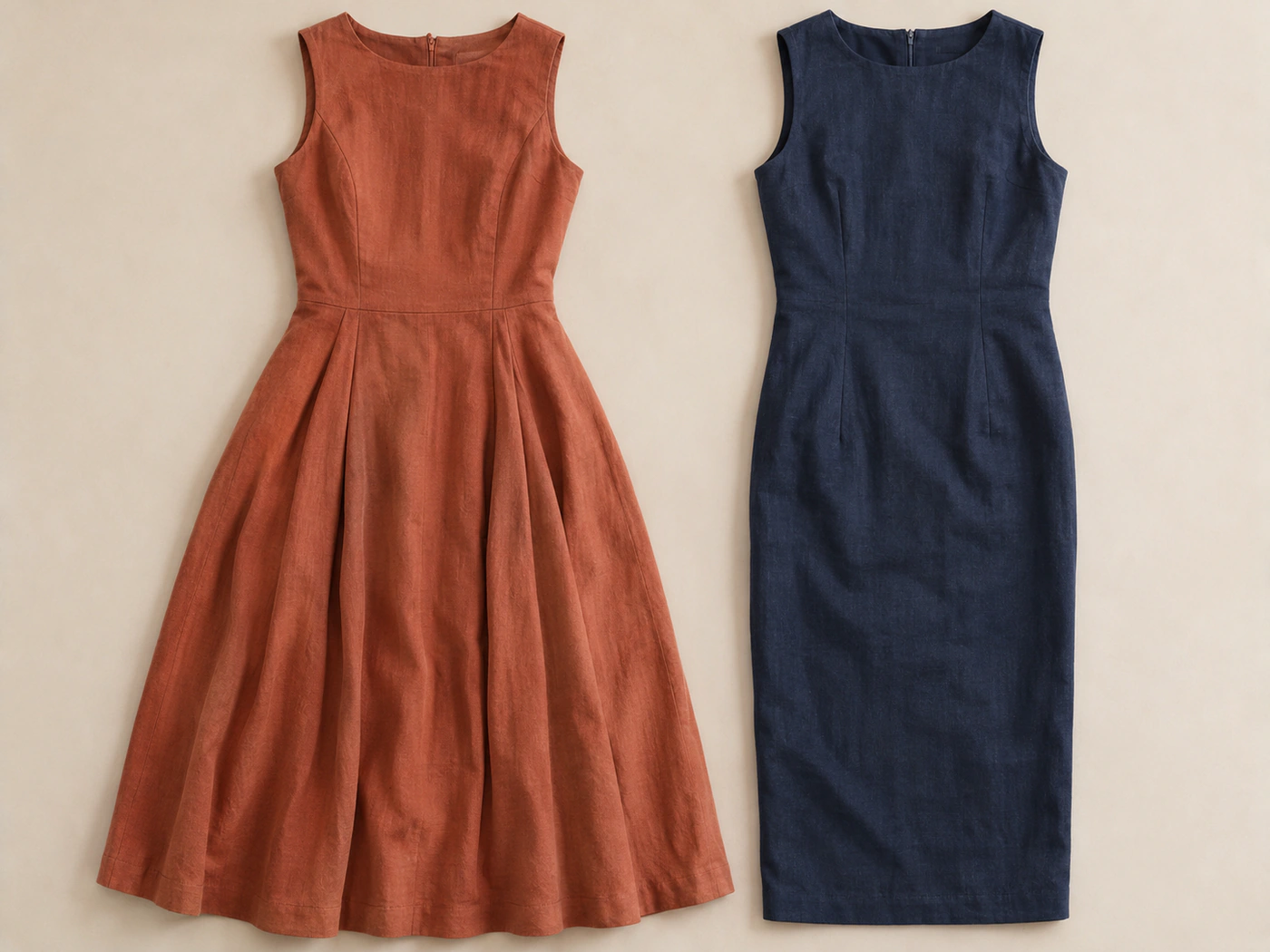
On the rust dress, the bodice follows the torso closely and the skirt opens into pleats. Try M first if its finished bodice gives you room at the waist and sits close enough at the bust. Your hips may have all the room they need under those pleats, provided the lining also opens out. On the straight navy sheath, the fabric stays close right through the hips. Start with L and check whether the bust and armholes would feel too loose.
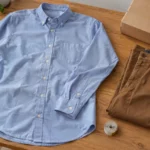
Separates let you make that choice twice. For a loose button-front blouse, start with your bust column and check that the finished width leaves room for the buttons to sit easily. For a skirt with a fixed waistband, start with the measurement where that band will sit on you. A low-slung band needs a measurement taken lower down than the natural waist on your card.
Borrow a number from a dress you love
Pick a woven dress you like wearing through a whole dinner. If the seller gives a flat hip width, fasten your dress, smooth it on a table and measure straight across at the same distance below the waist. Compare flat width with flat width. For a simple straight skirt with equal front and back widths, 55 cm laid flat is roughly 110 cm around. Against the example 106 cm hip, that leaves about 4 cm of room.
Those 4 cm tell you something about your particular dress. A stretchy knit may feel easy with less room, while a firm lining can limit how much a skirt gives. The difference between body and garment measurements is called ease. Seamwork shows how it works in its guide to wearing and design ease.
Two questions before you order
- “What is the finished width at the waist or hip in these two sizes, measured flat, and where did you take it?” Name the point that matters for your cut.
- “Is the skirt lined, and does the lining stretch or open out as much as the outer fabric?” This matters even when the photograph shows plenty of fullness.
If two sizes still look possible, check the return window, fees and final-sale terms before bringing both home. When one works, add the cut, size and one comfort note to your card. “Pleated skirt, M, waistband easy through lunch” will tell you more next time than the letter on the hanger.