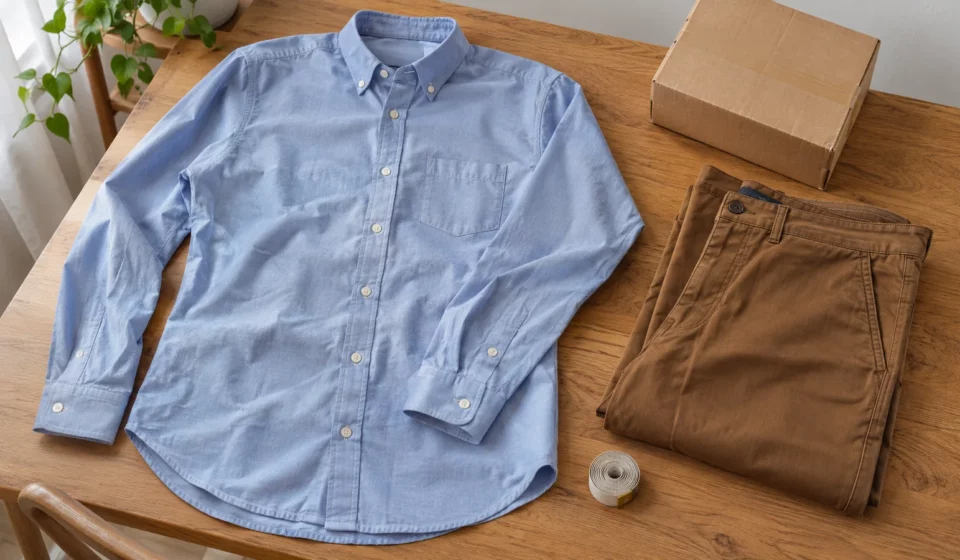

Suppose a shirt listing says “chest 54 cm” and the shirt you like wearing measures 52 cm across the front. Whether that buys you a little extra room depends on where the seller put the tape. If both numbers are flat widths taken at the same point, you have a useful comparison. You can do the same with trousers. Start with a pair you can sit in comfortably and a shirt you can reach forward in without pulling the buttons.
Find the drawing for the size in your basket
Look for the words body measurements or garment measurements above the chart. A body chart describes the person a size is intended to fit. For that chart, follow the arrows on yourself. If your measurements fall in different columns, our guide to choosing between sizes on a women’s chart shows how the cut can help you pick a starting size.
A garment chart describes the finished item. Check the units and whether each arrow goes across a piece laid flat or all the way around it. A label that just says “chest” leaves that question open. Keep the drawing beside you while you measure. Even on the same site, a drawing for a T-shirt may place the arrow lower than one for a dress shirt.
Measure across the shirt in two places
Pick a reference shirt you wear the same way as the one you’re considering. If you want a woven shirt to wear over a tee, try your reference over that tee first. A stretchy base layer can feel just as comfortable at a much smaller width and would give you a poor starting point.
Button the front, lay the shirt face up on a table and smooth out any fabric folded underneath. For pit-to-pit width, put the zero mark where the bottom of one armhole meets the side of the shirt. Run the tape straight across to the matching point on the other side. Leave the cloth relaxed. You can see the endpoints in Proper Cloth’s illustrated shirt measurement guide.
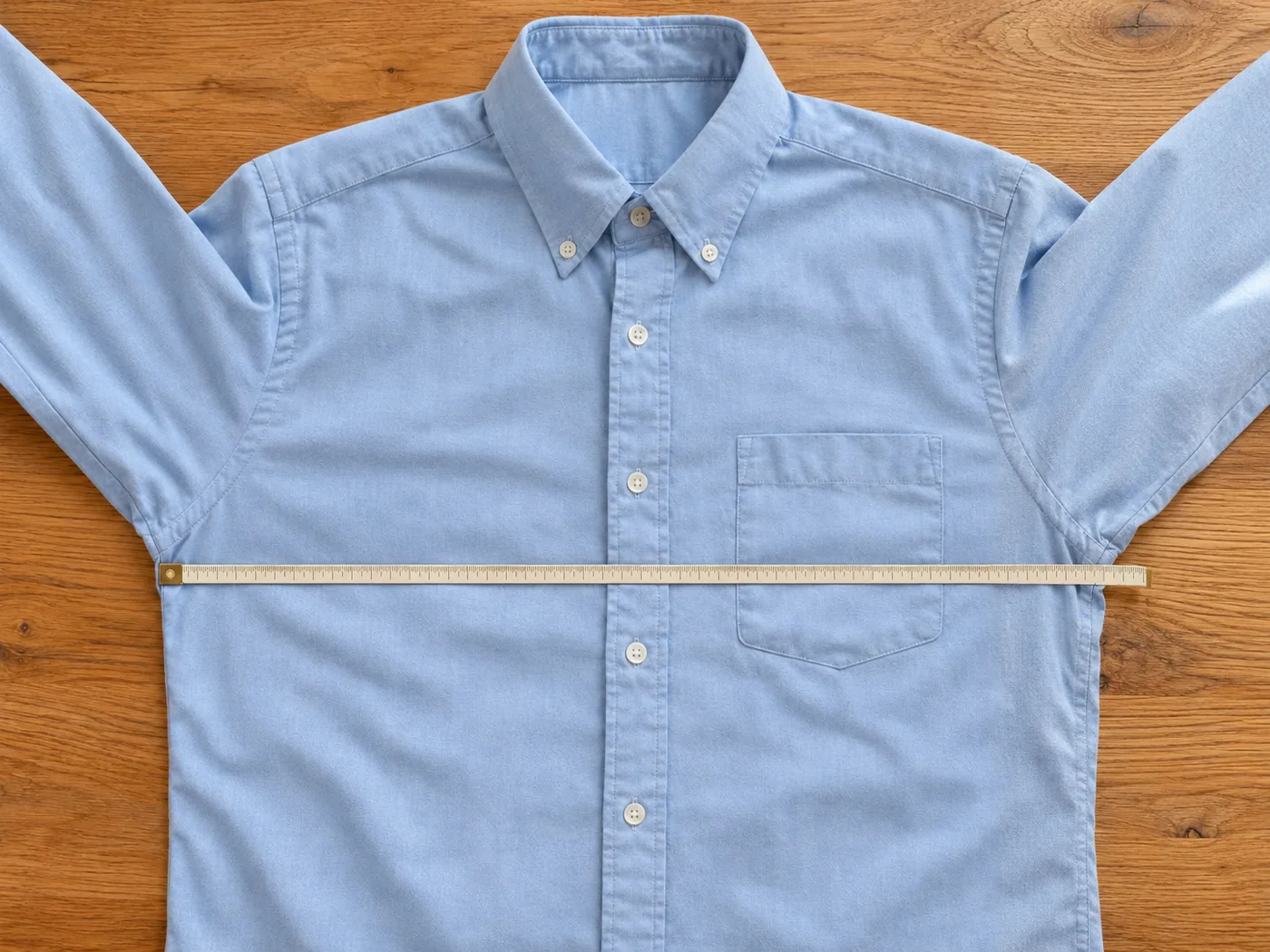
Turn the shirt face down for the shoulders. On a shirt with a seam at each shoulder tip, measure straight across the upper back between the points where the sleeves join. Take a quick photo of the tape in place if the seam is hard to describe. A dropped shoulder puts that point farther down the arm, so use a similar cut for comparison.
What would those extra centimetres feel like?
Return to the two shirts. If the seller confirms that 54 cm is the flat chest width, that gives you an extra 2 cm across the front, or roughly 4 cm around a shirt with equal front and back widths. Think of the shirt you measured. Is there a spot where you’d welcome that room, or is the close fit exactly what you like about it?
Check where the trousers sit and finish
Fasten the waist and zip the fly. To compare inseams, move one leg aside and follow the inside seam of the other from the crotch seam junction to the hem. If the listing gives only an outside length, ask for the inseam. Two pairs can measure the same down the outside and finish differently because one has a deeper rise.
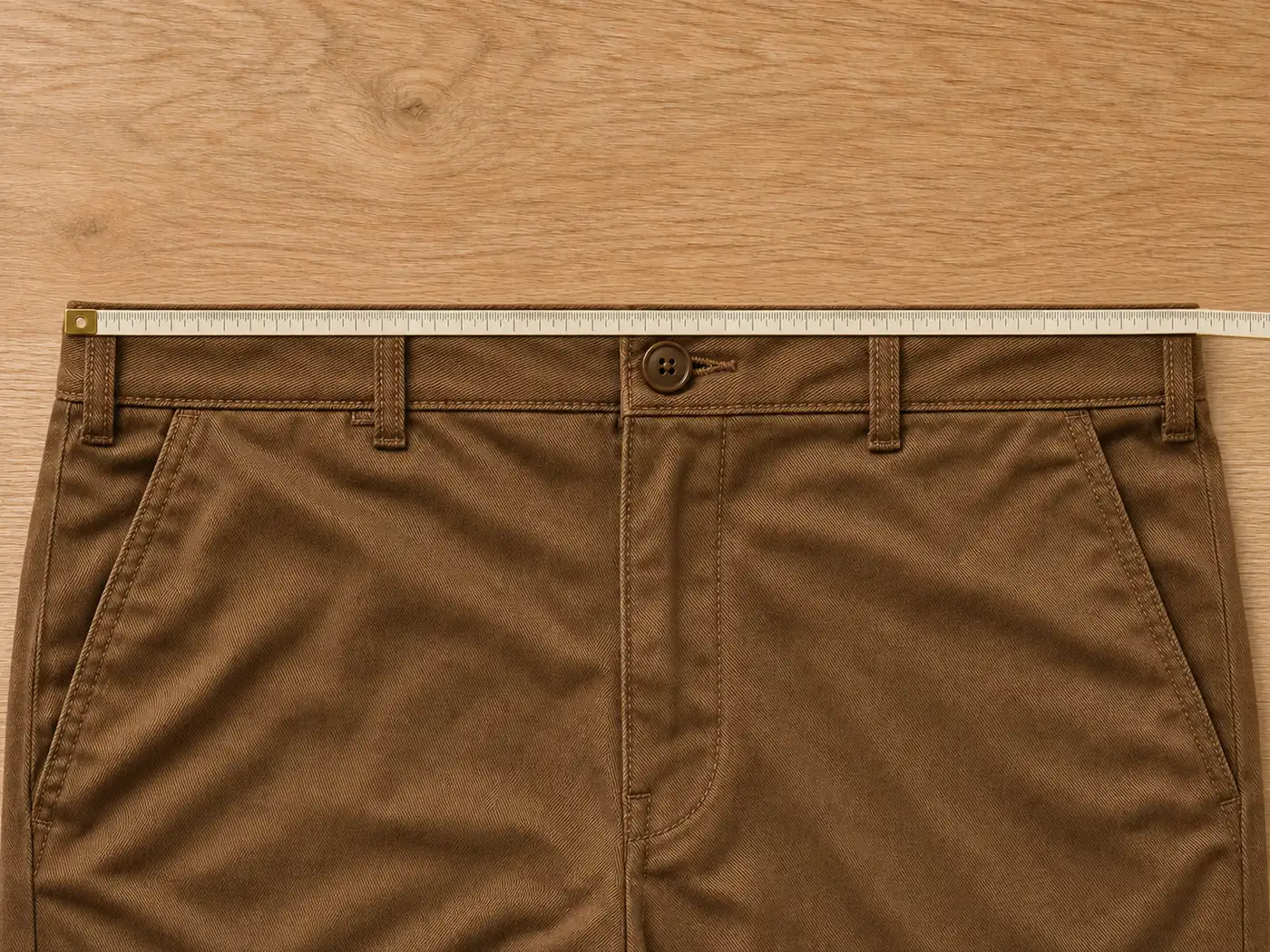
For a straight-across waist measurement, align the front and back edges of the waistband. Lay the tape along the top from one side to the other. If the waist has elastic, record whether you measured it relaxed. Check how the seller handled theirs. For a curved band, ask whether their tape followed the curve or ran straight across.
Keep a card for your next order
Copy these lines into your phone. Give each piece a name you’ll recognise when you open the note again.
- Shirt. Name and cut ___ · flat chest ___ · shoulder width ___ · units ___ · worn over ___.
- Trousers. Name and cut ___ · flat waist ___ · relaxed or stretched ___ · inseam ___ · units ___.
If one missing number would change your order, send a specific question. “For the size medium, could you measure from the crotch seam to the finished hem in centimetres? The chart gives only the outside length.” If the answer is close to your limit, ask how much individual pairs can vary and check the return terms before you pay. When the parcel arrives, keep the old shirt handy so you can compare how the two cuts fit in motion.