A Travel Capsule Wardrobe You Can Pack in Order
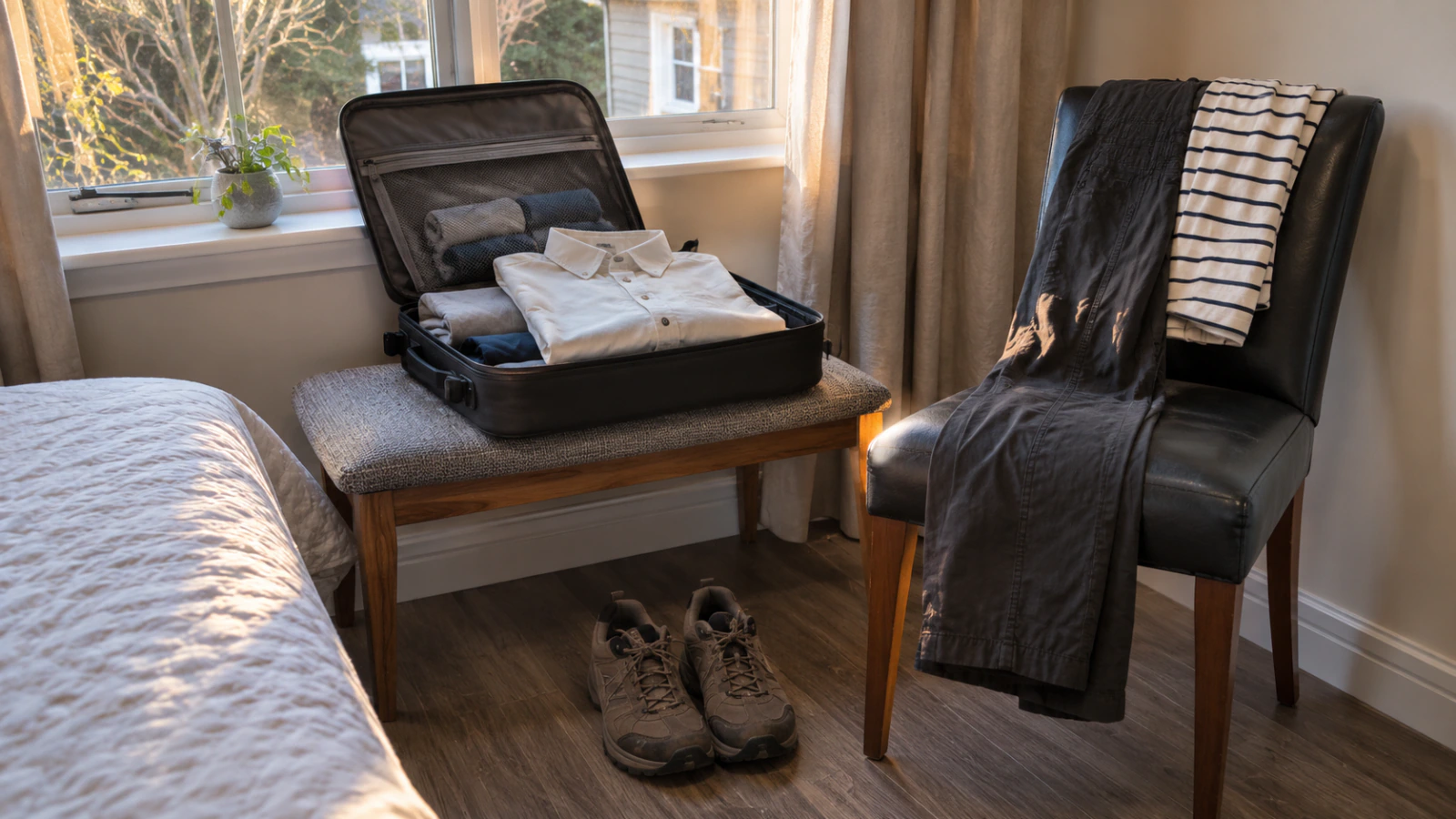
Imagine reaching an unfamiliar station with forty minutes until dinner. You’re wearing the trousers you wanted for the evening. The clean shirt is at the bottom of the case, under your shoes, and the bag won’t open flat on the platform bench. A travel capsule wardrobe works best when you decide two things together. Which clothes will you wear more than once, and what can you actually reach when you need to change? Start with the first arrival and work forward to the next chance to wash and dry something.
Write the trip as a string of changes
A day can contain three different clothes decisions. You might leave a warm house, spend six hours riding and arrive somewhere windy enough to need a jacket while you find the door key. Write the changes down in the order they’ll happen. Include where you can change in private, which bag will be with you and whether there’s a place to leave an extra layer. That last detail has a way of vanishing from a packing list until you’re carrying a sweater through a gallery all afternoon.
Use what you already know about the trip. A dinner invitation with particular dress expectations deserves a complete outfit. A vague possibility of going somewhere fancy deserves a message to your host before it takes up half the case. Check the likely weather and the conditions of the route close to departure. A day in town and a day out on an exposed trail need different planning, even if they start at the same hotel.
How long until the first dry shirt?
Find the first point when a washed garment could realistically be dry and ready to wear. Access to a washing machine late on Sunday doesn’t give you a clean shirt for Monday breakfast if the care label calls for air drying and the sleeves are still damp. Put breakfast on the near side of the wash. Pack what you need to get through it, along with a little slack for the errand or late train that pushes the whole load back a day.
Build the outfits around a repeat you actually enjoy
Choose a base piece you’ve worn twice happily at home. Suppose it’s a pair of charcoal trousers that feel easy on a long ride and look good with your brown walking shoes. Give them a striped tee for the journey, an ivory shirt for dinner and a blue knit for a cool morning. Put the whole combination on. Some collars feel fine alone and bunch the instant another layer goes over them. Five minutes in front of your own mirror can earn back quite a bit of space.
Lay out a second bottom if the trip calls for it. Dark jeans might share the tee and knit but sit too long over the walking shoes. Try the cuff you would wear at home, then sit down. If the extra thickness presses when your ankles are crossed, try a different pair of jeans before adding different shoes. A small wardrobe travels better when you can explain why the pieces go together in terms of your own feet, cuffs and seats.
What would a four-night bag look like?
For an imagined town visit with a casual dinner, four nights away and no planned wash, put the following on the bed. The counts are a starting example. Add what your own hygiene, comfort and activities require.
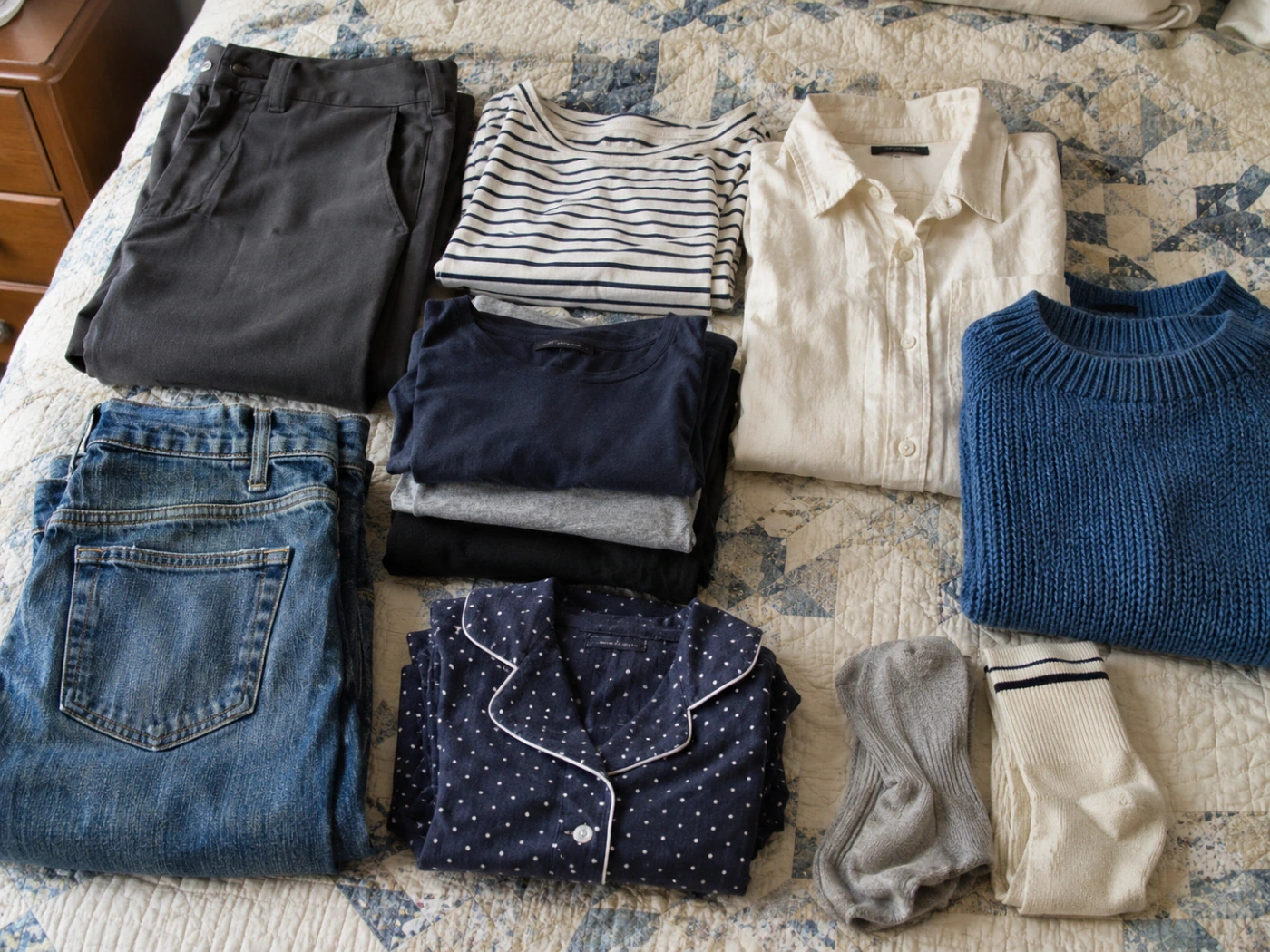
- Travel in the charcoal trousers, one tee, walking shoes and a jacket chosen for the outdoor part of the trip.
- Pack a second bottom, two fresh everyday tops, the dinner shirt and one warm layer that fits under the jacket. Include favourite sleepwear, underwear and socks for the days between changes.
- Give the dinner outfit a rehearsal. Wear the ivory shirt and trousers with the walking shoes. If the venue and your feet are happy, the shoes can repeat.
- Check the return morning. Set aside the clean base layer and socks you’d want after the last evening. Put them back into the packing pile with that job in mind.
If you dislike rewearing a tee, pencil in which fresh top goes on each morning. You may be able to wear the dinner shirt again after a short evening, or you may want an extra tee. Subtract the item you were taking only to fill out an imaginary outfit. There’s usually one still sitting on the bed.
Give the second pair of shoes a route
Put the shoes beside the bag before folding a single shirt. Walk to the kitchen wearing your travel shoes and the socks you intend to take. If the walking day will be long, choose a pair you’ve already worn comfortably for a comparable distance. A pair that fits beautifully for a visit to the dining room has supplied evidence for dinner. The museum queue and the walk back need their own consideration.
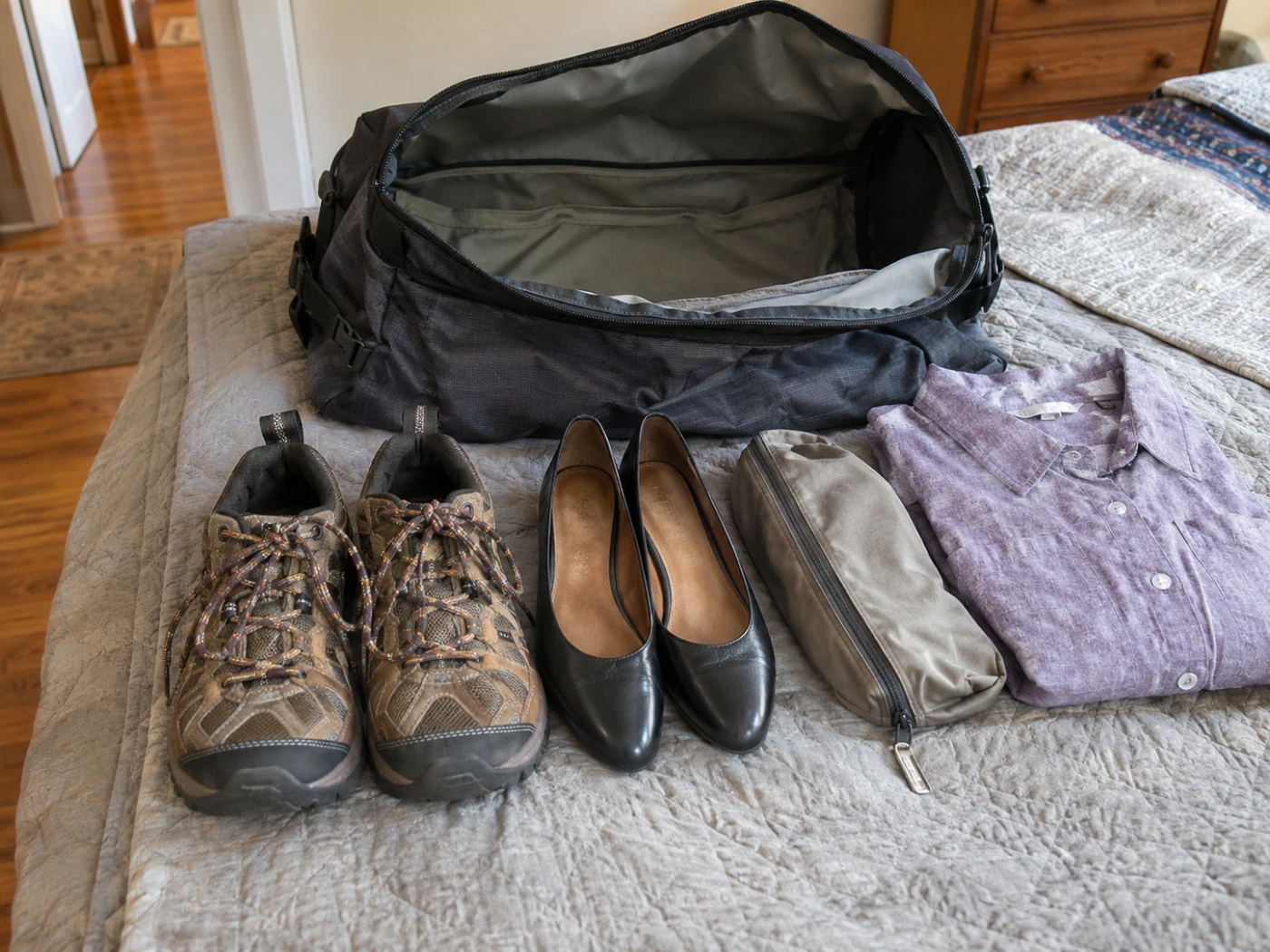
When you choose a second pair of shoes, give it a job. It might be for a wet second morning, an event with specific expectations or an activity the first pair can’t handle. Name which and try it with the outfit that goes with it. Put clean clothing aside and pack the spare shoes in a suitable separate bag. If they get wet on the trip, take them out to dry according to their care directions as soon as you have somewhere to leave them. A two-day shoe rotation for wet weather can help you decide which pair to wear the next morning.
Pack for the order you’ll open the case
Make three small groups on the bed. The first holds what you need while seated, such as a warm layer and the scarf you actually wear. The second holds whatever you need on arrival before you can spread out. The third can wait until you’ve unpacked. If you’re staying at two homes, imagine opening the bag at the first house after everyone else has gone to bed. Give sleepwear, a change of underwear and the next morning’s shirt an easy place to land.
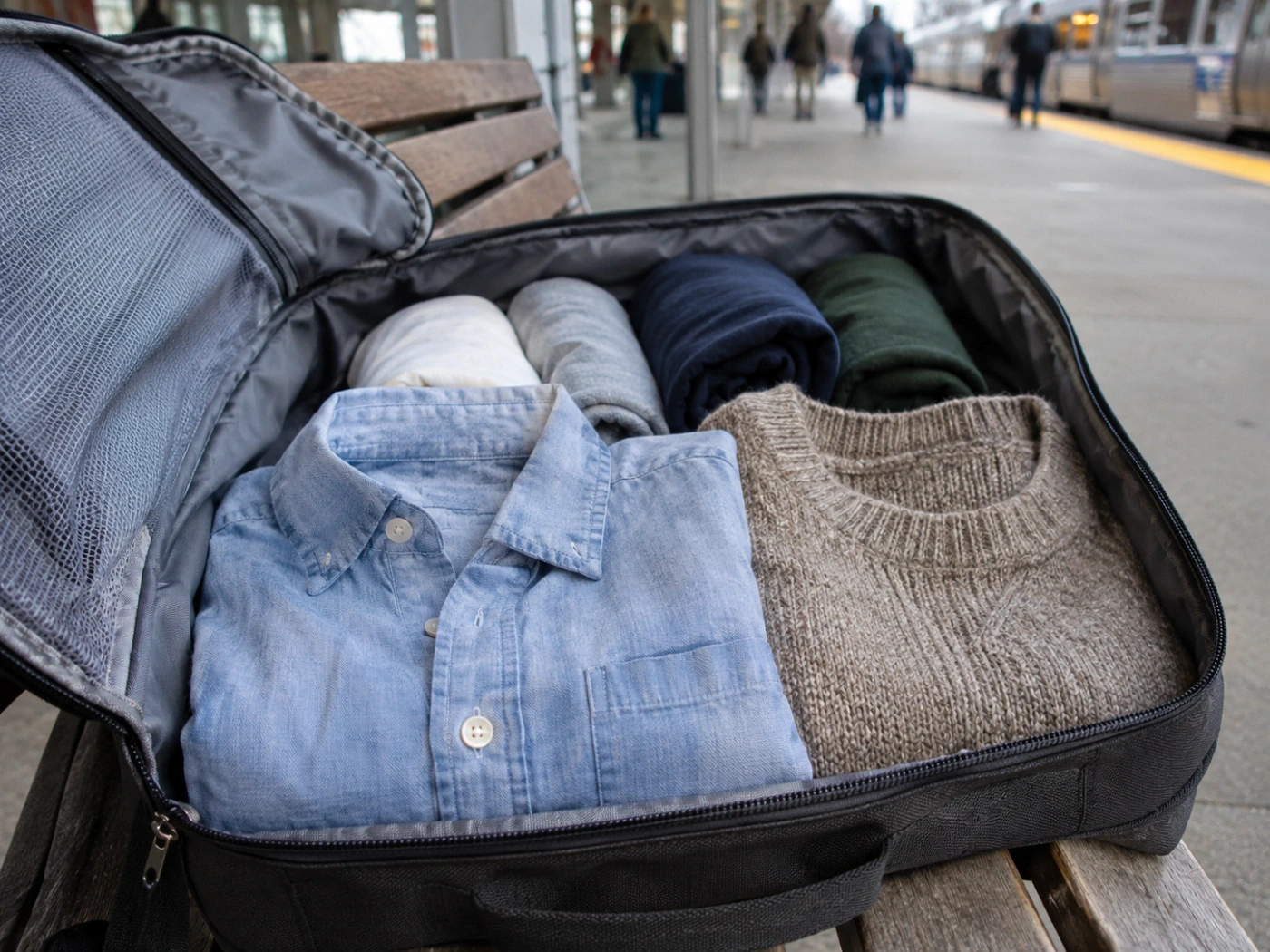
Soft tees can roll into gaps. A woven shirt with a collar may do better folded loosely near the top, where the shoes can’t press into it. Give a shaped bra enough space for its cups to keep their curve and check that closing the bag doesn’t flatten them. For a tailored jacket, try the intended packing arrangement with the empty case first. Open it again and see where the shoulders have ended up. If you can comfortably wear it on the journey, that may free up the most awkward space in the bag.
Give the packed bag a short journey
Close it, pick it up and walk it through a doorway. Try retrieving the arrival clothes without unpacking everything onto the floor. A fabric case that zipped easily while it lay flat can bulge when you stand it on its end. If you’re flying, compare the packed dimensions and your ticket allowance for each leg. For a rail or coach journey, look up the baggage allowance for the service you’ve booked.
Make the last morning easier on the next trip
As you get dressed to come home, notice what’s still folded in much the same shape as when you left. A spare pair of socks for rain you never got may be worth the space next time. A second dinner jacket for a visit with one dinner is a different matter. Make one note about each. “Would pack again for wet mornings” and “prefer the blue jacket with both shirts” are decisions you can use when the case comes down again.
Unpack the damp and worn pieces first and hang or fold the clean ones once you’ve checked them. Keep the short list under a name you can find, such as four nights, train, one dinner. Add the small thing that made the arrival pleasant. Next time it might simply read “ivory shirt behind the zip at the top.” Forty minutes until dinner is plenty when you can put a hand on the shirt.