How to Buy a Suit You Can Wear All Day
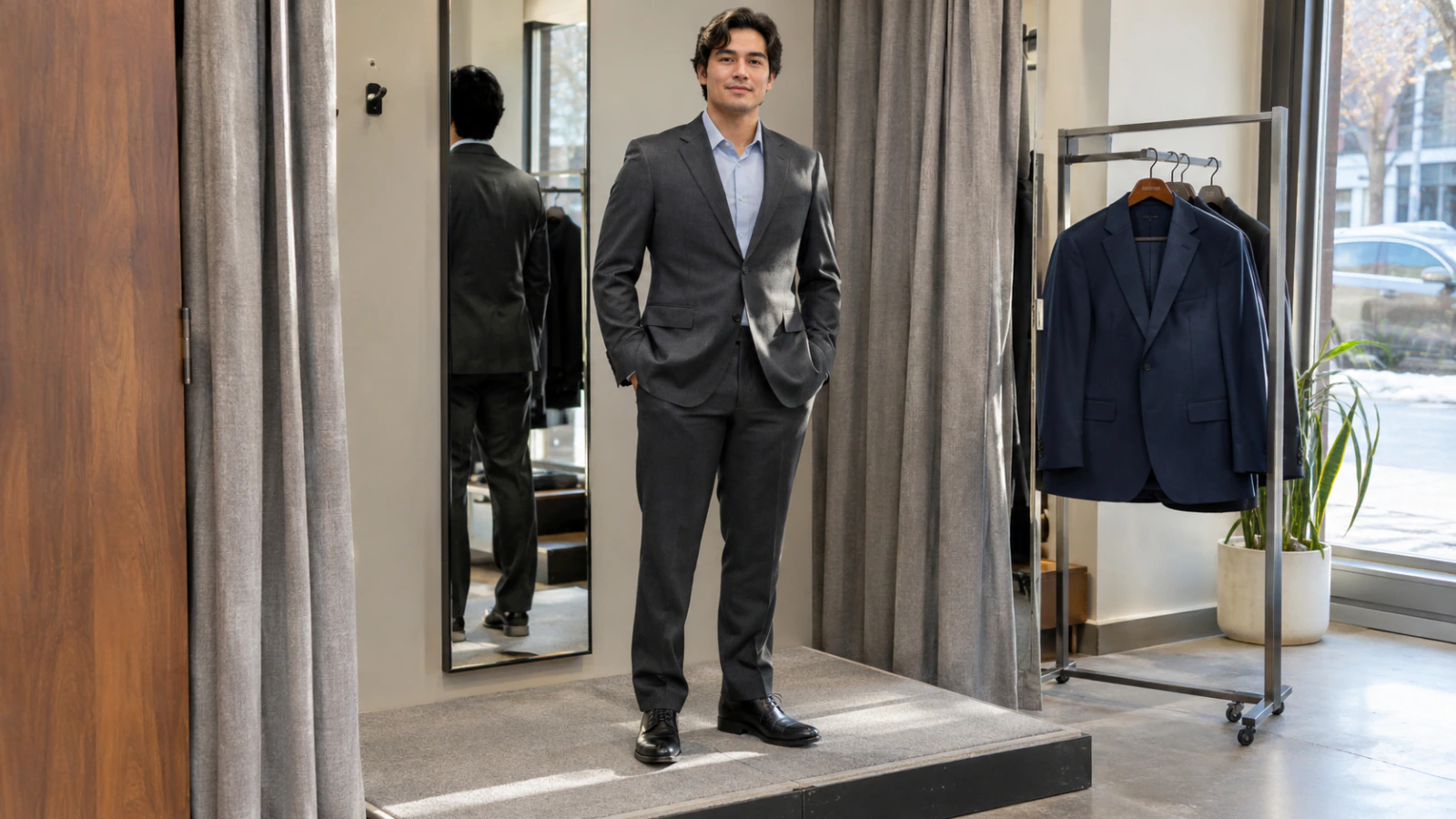
Before you try on a suit, put the shoes you’ll wear with it by the door. Add the shirt, blouse or knit you have in mind, and check the date you need to leave home wearing it. Those three things settle several expensive questions. You can see where the trousers ought to end, find out how much room the jacket needs and work out how much time is available for alterations. Then you can give the suits on the rail a fair try.
Give the suit a place to go
Picture the first outing in a little detail. A winter ceremony might involve an outdoor photograph, an overcoat and dinner in a warm room. A suit for an office presentation may spend part of the morning under a backpack and most of the afternoon on the back of a chair. If one suit needs to cover both, decide which part of each day makes a real demand on it. A matching jacket and trousers you can wear comfortably to dinner may already answer most of the brief.
Check the invitation or workplace expectation before choosing the cloth. A black-tie request changes what you are shopping for. For an event that simply calls for a suit, the navy or charcoal cloth you like in daylight may also work with a shirt you own and quieter shoes for a second outing. Set those pieces out together. If you would need a different shirt, belt and shoes to wear the suit as shown, include them in the cost of that choice.
Look at a pair as well as a set
Some suits sell as a fixed pair in a particular jacket and trouser size. Others sell as separates in matching cloth. Ask before you commit to the jacket. If the shape feels right at the shoulders but the companion trousers cut into your thighs, try the jacket alongside a fuller trouser from the same suit range. Check both cloth references. Two pieces called midnight blue can come out of different fabric books. If you also want to wear the jacket on its own, try it as a blazer with jeans or grey trousers while you have your usual shirt on.
Choose the cloth with the whole jacket in hand
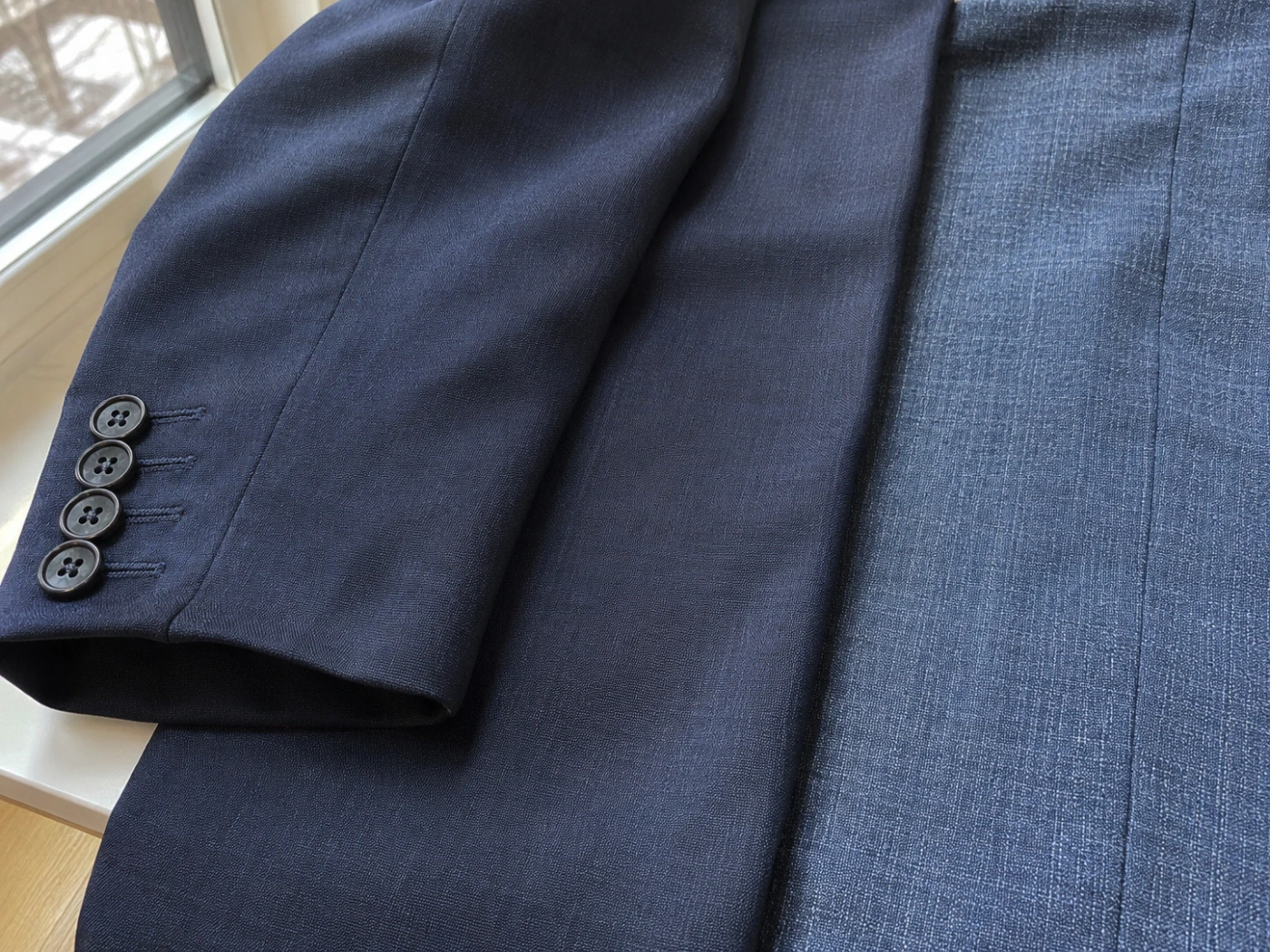
Hold a sleeve near the window. Look along it and then across it. A subtle grey check might be easy to see from the side and nearly disappear when you face the light. Hang the jacket a few steps away. This gives a better idea of how a pattern reads across a room than inspecting a cuff held six inches from your face. Decide whether you still like the effect with the shirt or blouse you brought.
Feel the finished garment with that layer underneath. A smooth sleeve lining can help a shirt slide into place. A jacket with less lining through the back can feel different across your shoulders, especially over a textured knit. Look inside to see where the lining actually ends. Descriptions of the outer fibre alone tell you little about how all those layers will feel on the commute.
If you like the softness of flannel or the creases in a linen sleeve, put the trousers on too. Take a proper seat, stand and look at the pair in the same light. You may enjoy a relaxed sleeve and prefer a crisper trouser front for an event with photographs after dinner. Ask to see another cloth in a similar colour. The colour stays in the running while you settle the question about the surface.
Check the jacket before worrying about sleeve length
Let the shoulders settle and leave your arms where they fall in conversation. With a conventional two-button jacket, fasten the upper button. With an overlapping front, ask which inside and outside buttons hold the front in its intended position. Look at the lapels as you breathe. If the front pulls open across the chest, try a different size or cut and see what changes at the shoulders as well.
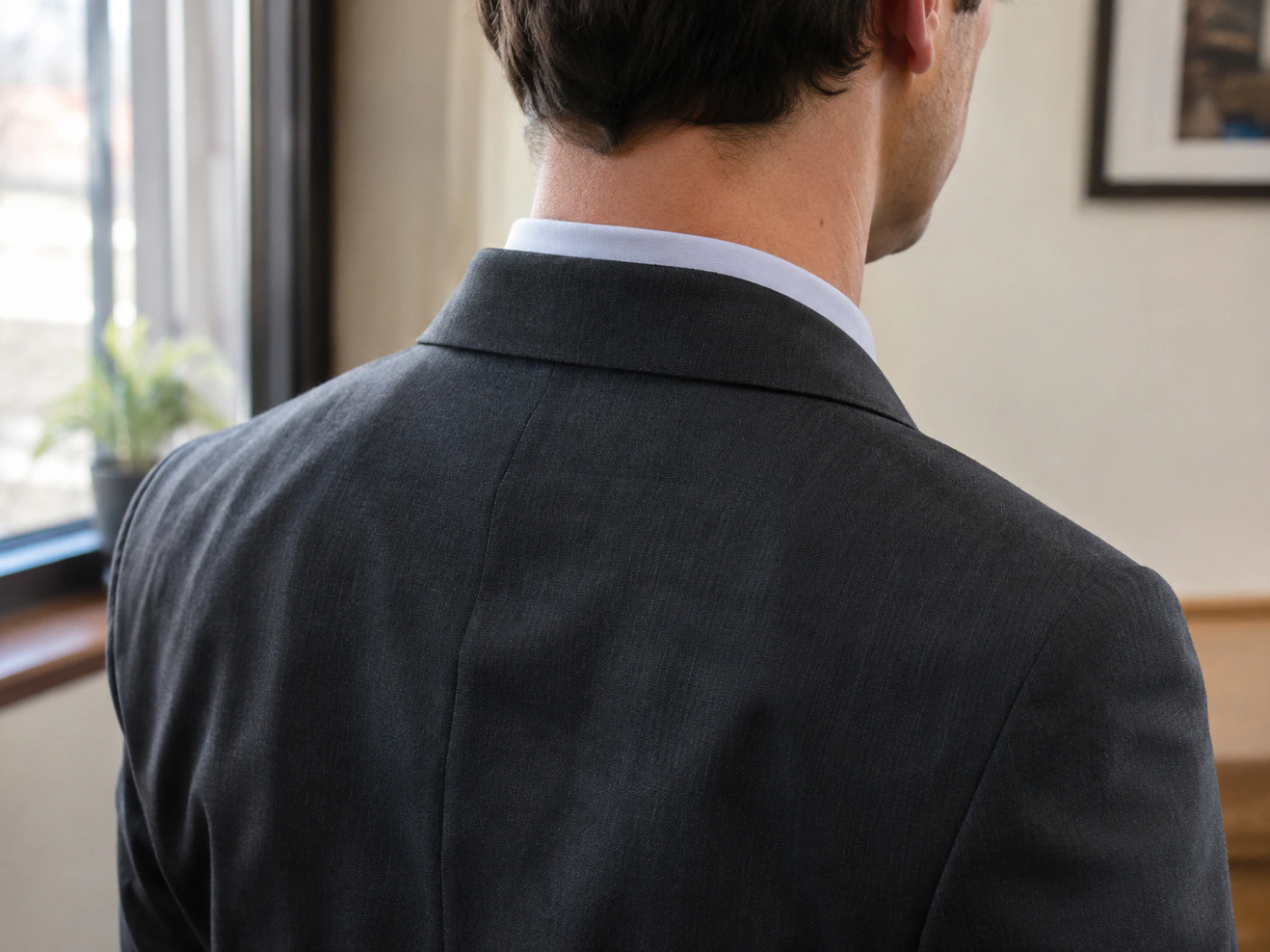
Give the back of the neck a separate look. A second mirror or a companion can help you see it without turning your head. A small gap that appears while you reach and closes when your arms come down is different from a collar that stands off your shirt throughout the fitting. If the gap stays, check the suit’s fit before discussing alterations. The jacket beside it may sit closer at the neck and still give you the reach you want.
Try the pockets from the inside
Put your usual phone in the pocket where you would carry it. Fasten the jacket and step away from the mirror. Does the weight bring one side of the front down? Move the phone into a different pocket and look again. For a dinner where the jacket comes off at the table, decide what will happen to that phone then. A comfortable suit can still leave you in need of a small bag.
Inspect a second jacket if the sleeve twists at rest or the vent spreads while you stand easily. Tell the fitter which detail you want to compare. “The right sleeve twists with my arm hanging down” gives the fitter somewhere to start. It also leaves you free to choose the first jacket if the second gives up the chest room you liked.
Give the lower half its own fitting
Take the jacket off and set the waistband at the height you want to wear it. Start with empty pockets and enough space to sit. Does the fastening hold without the belt taking over? Can you take your full stride and stand up without hauling the legs down? If you’re trying a matching skirt, see where the lining and vent finish as you sit. Put the jacket back on afterwards to see where the two pieces meet.
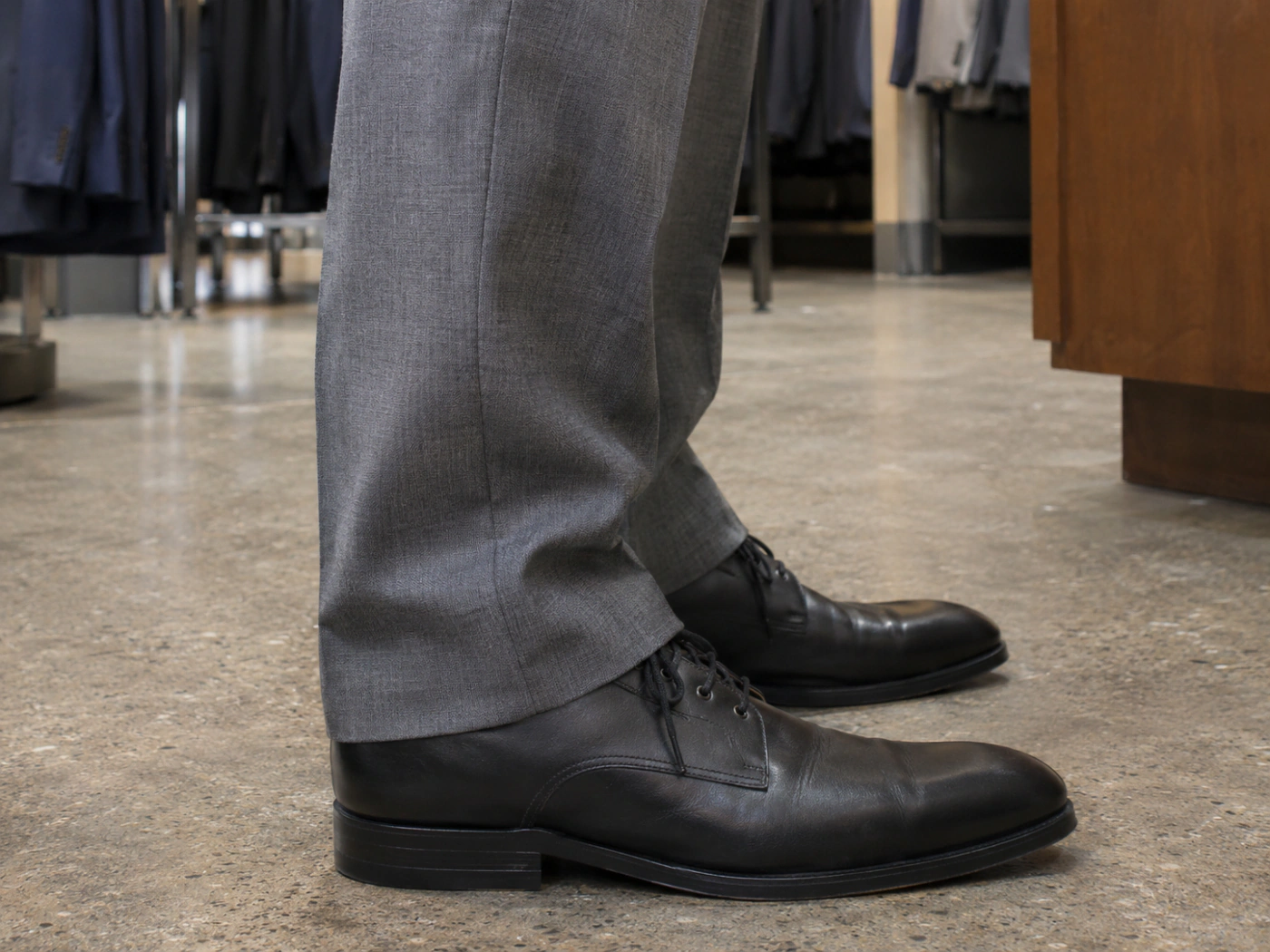
Step into the shoes you brought. The break is the fold in the front of a trouser leg where the cloth meets the shoe. A narrow opening may catch high on a boot. A wider opening can fall farther over the same shoe. Ask to see a proposed length clipped up, then look at it with your weight on both feet. The fitter can check the back edge against each heel while you face forward.
If the price includes a hem, ask which finish is covered and when the work will be ready. A plain hem, a turn-up and a hem that preserves the maker’s original detail can involve different work. Get your chosen finish written against the correct pair if you have ordered two.
Price the suit you can actually wear
Ask for the total with the changes identified at the fitting. Two small adjustments may leave a ready-made suit well within budget. A low ticket price is less persuasive if the shoulders need extensive work and the trousers would still be uncomfortable. Ask the fitter which change they would try first and whether it is possible to see that result before agreeing to the rest.
Take a short record to the till or the next shop.
- Cloth and sizes. Note the cloth number, jacket size and length, and trouser or skirt size. A picture of each ticket is handy if the pieces sell separately.
- Work and timing. Record the proposed changes, quoted total, date of the next try-on and the day the suit needs to travel.
- Terms and care. Ask when alterations affect returns and how the maker recommends cleaning the matching pieces.
- First outfit. Note the shirt and shoes used at the fitting and where you plan to carry the things you’ll have with you.
At collection, put the same pieces on again. Fasten the jacket, move your arms, sit, stand and walk in the finished hem. Check the side and the specific change you paid for while the fitter can see the result. If the suit gives you an easy seat at dinner and still looks the way you hoped when you stand to greet someone, you know exactly what you are taking home.