Commissioning a Bespoke Suit in Canada, From First Visit to Collection
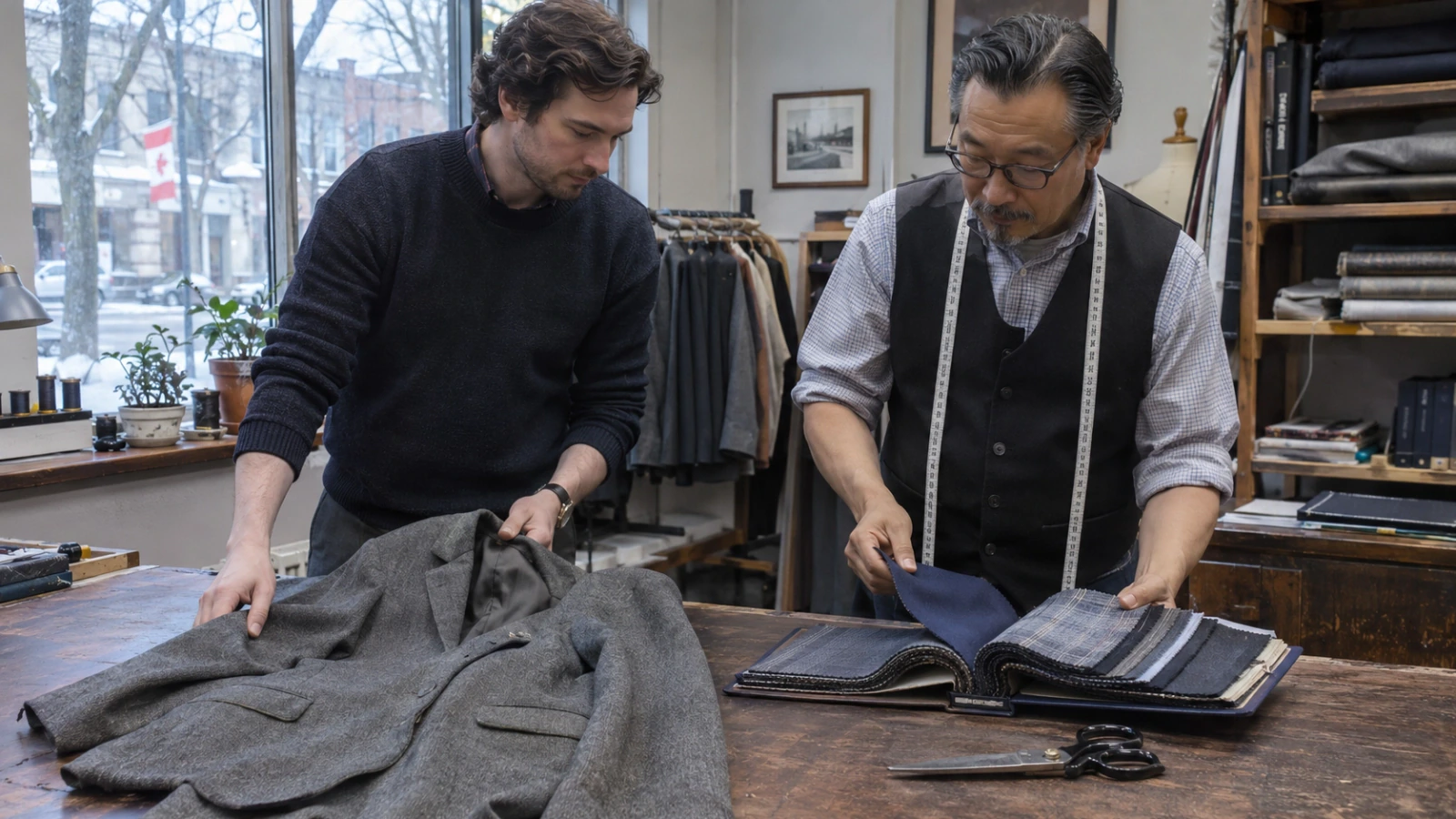
Imagine taking the train into town to choose cloth for a wedding suit. You know the date of the wedding. The date the tailor needs is the Thursday before it, when you leave for the ceremony. Write that one down first. To commission a bespoke suit in Canada, choose a maker whose way of cutting, fitting and finishing the suit works with your calendar as well as your budget. The cloth book can wait until you know who will see you in the suit and what they can still change at each visit.
Work back from the day you need the suit
Put the travel day, a collection appointment and room for a further fitting on the same calendar. Ask the shop which dates it can offer and which depend on cloth arriving or a cutter coming back to town. A visiting tailor with a fitting day near your office might be convenient on the first visit. Find out where the second visit would happen if your schedule changes.
Describe two occasions the suit should cover. Perhaps you have an August wedding in Ottawa followed by autumn board meetings in Calgary. Note which parts of those days you expect to spend outside, in a car or sitting in a warm room. A general request for a Canadian four-season suit gives a cutter little to go on. The ten minutes you plan to walk before each meeting and the overcoat already in your closet give the cloth choice somewhere to start.
Bring a garment with one detail you’d like to keep. It might be a jacket that leaves space for a full breath, trousers that stay comfortable through a train journey or a waistcoat with a pocket in just the right place. Wear it while explaining the detail. A hand slipping easily into the pocket will tell the maker more than the word “comfortable” on its own.
Ask what the cutter starts with
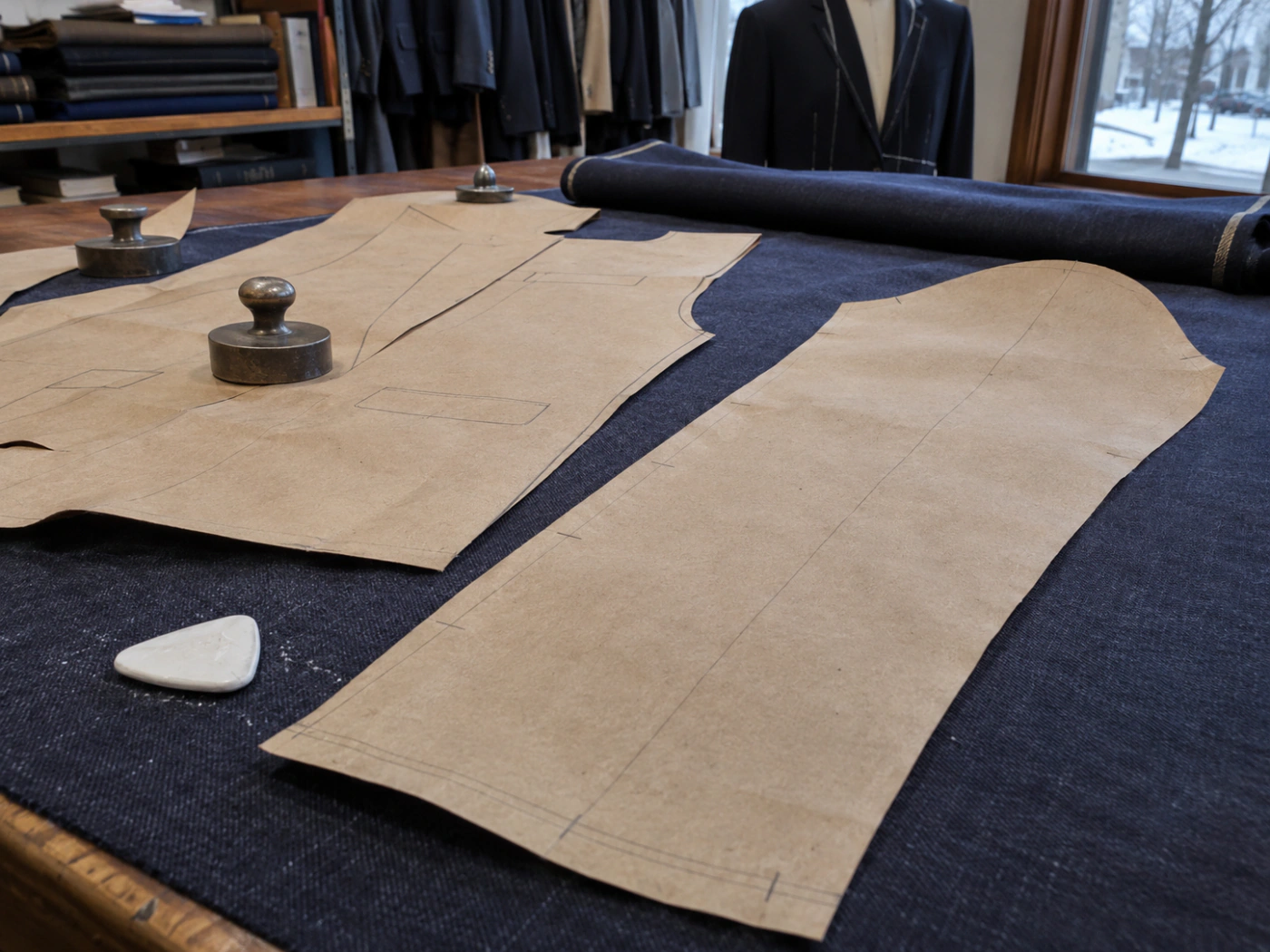
A bespoke commission generally starts with a pattern made for the individual. In made-to-measure, the maker usually adjusts an existing pattern to the order. The practical question is which changes the person taking your measurements can specify, and when someone can judge the result on you. Get the shop to walk you through one jacket, from choosing the shape to putting your hand through a finished sleeve.
If a jacket off the rack nearly works, try the whole suit with your usual shirt and shoes before the consultation. You might want the same soft shoulder with a little more room through the back. Bring that detail to both shops and ask when you could try on their version. The answers give you something to compare besides the names on the price lists.
Find out who sees the fit
Ask who records your measurements, who cuts the cloth and who makes decisions when you try the garment on. Those may be three different people. If one shoulder sits at a different height, how does that observation reach the cutter? If a sleeve needs turning at a later visit, who checks the result with you? The answers tell you how the shop handles the thing you brought your old jacket in to show.
Look at a sample of the shape the house likes to make. Notice the shoulder, the point where the front fastens and the width of the trousers. If you like a generous, soft line and the samples you’re shown are narrow and structured, ask to see a finished example closer to your brief. That conversation costs considerably less before anyone cuts the cloth.
Read a swatch as a piece of a whole suit
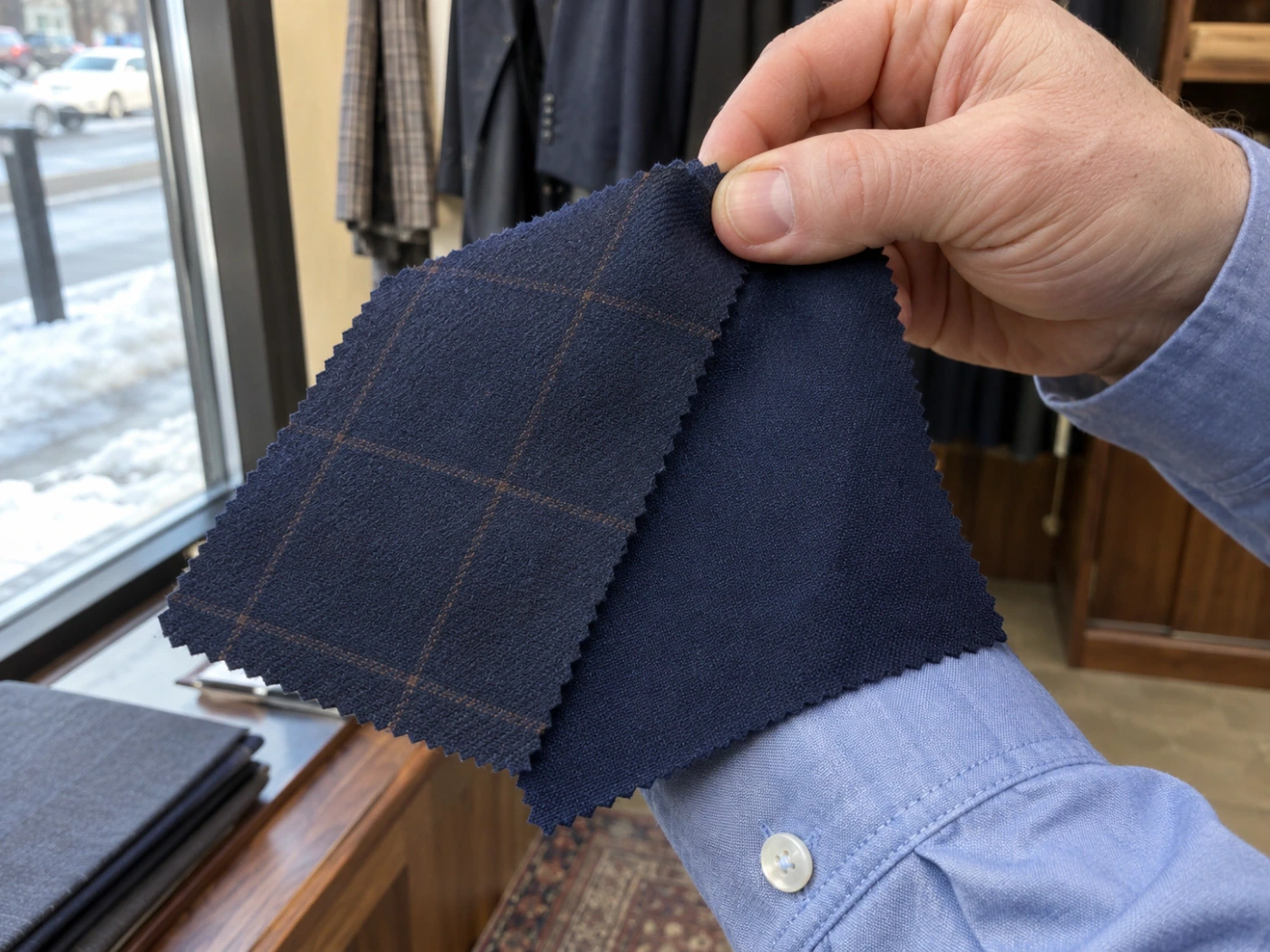
Take two or three swatches to the same window. Lay them over your shirt sleeve and move a few steps from the glass. On a small square, a brown thread running through navy may barely show. Ask if there is a larger length, a sample jacket or a photograph of that cloth made up. A pattern that repeats every few centimetres will look different right across the chest.
Get the cloth reference and ask how the proposed jacket is lined. Feel a finished sleeve over the shirt you brought. Ask whether another lining or construction would change the feel across your back. If there is an overcoat in the picture, try it over a sample suit jacket with roughly the shoulder you are ordering. Its armhole will get a vote in how easy a January commute feels.
Think about a second pair of trousers while the cloth is available. Look at your last suit. If the knees and seat wore through while the jacket still had years left, ask for two prices, one with the second pair and one without. If you wear a suit twice a year, an extra pair may spend a long time on a hanger. Ask whether reserving cloth is possible, what a reservation covers and how long the shop would hold it.
Write down the order before paying the deposit
The order needs enough detail for someone else at the shop to pick it up on a busy day. These items give you and the fitter something specific to refer to later.
- The jacket, trousers and any waistcoat or spare pair, with the cloth reference for each.
- The shape and details you chose, including the fastening, pocket you care about, lining, waistband and hem finish.
- The price in Canadian dollars, what it covers, applicable taxes, deposit and balance, plus shipping or travel you expect to pay.
- Who will meet you, which fittings are included, the expected collection date and how an extra correction would be handled.
Ask which choices can still move at the first fitting. A trouser hem may remain open while the position of a pocket is already settled. Mark anything waiting for a decision and agree when you will make it. Keep a copy of the order and a small swatch if the maker offers one. A saved photo of the cloth reference takes very little room in a phone.
Let the fitter see an ordinary afternoon
At a basted fitting, temporary stitches hold some of the garment together while the cutter examines its shape. Ask what will be ready to try and which parts can be moved safely. Bring the shirt, shoes and usual underlayers. Use these jacket and trouser fit checks to decide what to show the cutter at the fitting. Stand as if you’re waiting for someone at the station. Lifting your chest for the mirror can hide the very difference the maker is trying to see.
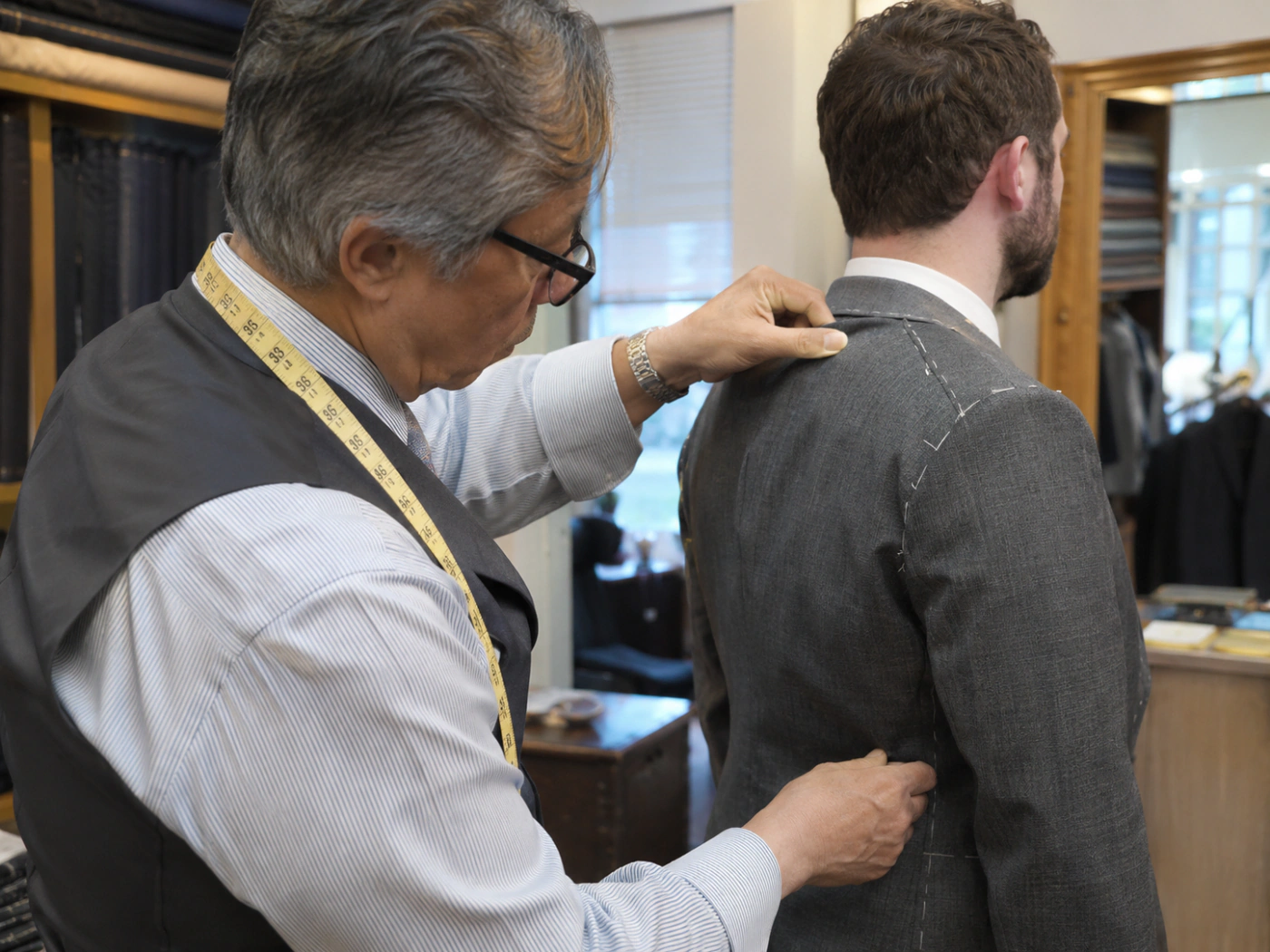
Start with the two things you came in wanting to change. Tell the fitter where you feel pressure and at what moment it starts. If your trousers were ordered for long meetings, ask when you can try sitting. If pinning makes that impractical today, carry the question forward to the next fitting. Record the next check while it’s still obvious which sleeve, pocket or trouser leg you mean.
Before the garment bag closes
At collection, put every ordered piece beside the order sheet. Wear both pairs of trousers if you ordered a spare. Look at the back of each hem in the shoes used at your fitting. Try the jacket pocket with the glasses case you had in mind. Give the agreed correction its own turn in the mirror before getting caught up in the pleasure of seeing the whole suit finished.
If anything needs another visit, put the item, proposed work, cost and date in writing. Find out which pieces go home today and who will call when the others are ready. Ask whom to contact about cleaning and pressing the cloth after the first few outings. When you pack for the wedding, the bag should hold a suit you’ve already worn in a chair, with the right shoes, your glasses close to hand and a morning to spare before the train.