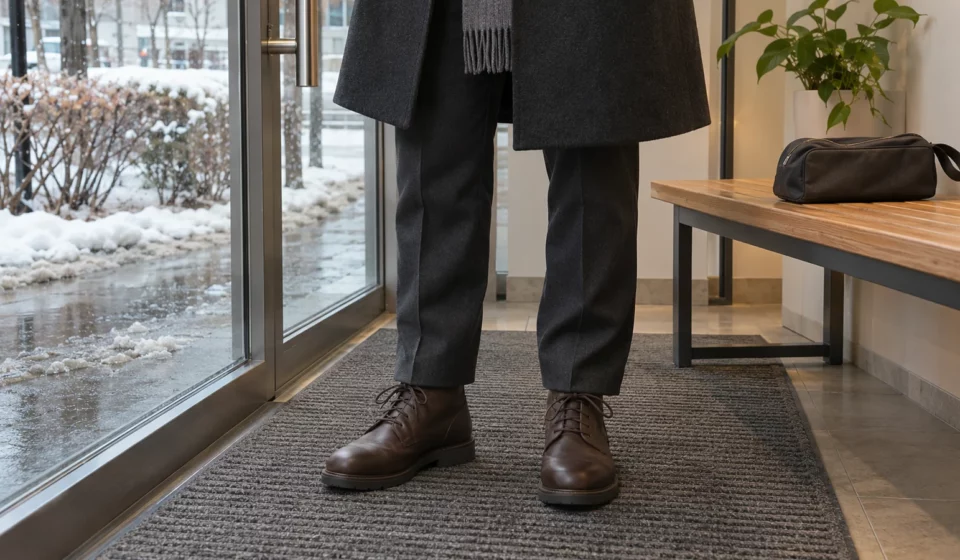

Say it’s nine minutes from the station to your office, and the longest minute is the one spent looking for a way through the slush at the crossing. A dress boot can take you straight to a meeting if it suits that stretch and feels good under your work trousers all day. If you regularly arrive with wet cuffs, or the meeting calls for the black Oxfords you already own, wear winter boots on the walk and keep the Oxfords at work.
What’s between the station and the mat?
Think of an afternoon thaw in Toronto. You might have a covered concourse for most of the trip and one corner where meltwater collects behind a ridge of snow. Someone leaving the same station by another exit might have six exposed blocks. Which bit left a splash mark on your trousers last time? Include the walk back, especially if the temperature is expected to drop before you head home.
Look at where water could reach the boot. A low side zip, the base of an elastic panel and the top of a loose tongue are all worth finding. Read what the maker says about those parts on the exact pair. For example, Blundstone Canada’s specifications for the 2081 Chelsea boot list waterproof leather, coated elastic panels and sealed seams. If another pair just says winter-ready, ask whether its seams and side panels get the same protection.
Ice grip is a separate question. A photograph of a deep tread tells you its shape. For a route that freezes over, look up the model in KITE’s Rate My Treads footwear ratings. Its SnowFlake rating covers ice, while its WaterDrop rating covers wet surfaces. Use the result for the model and surface you expect to encounter.
Take your work trousers to the bench
Try both boots with the socks you’ll wear on the walk. Lace or fasten them as usual. Walk around indoors and sit down as if you’d just found the last seat on the train. Your toes should have room to move. Notice whether the boot top digs into your shin as you bend your ankle. If you’re choosing shoes for a week of commuting, give the wet walk and the long indoor stretch a turn each.
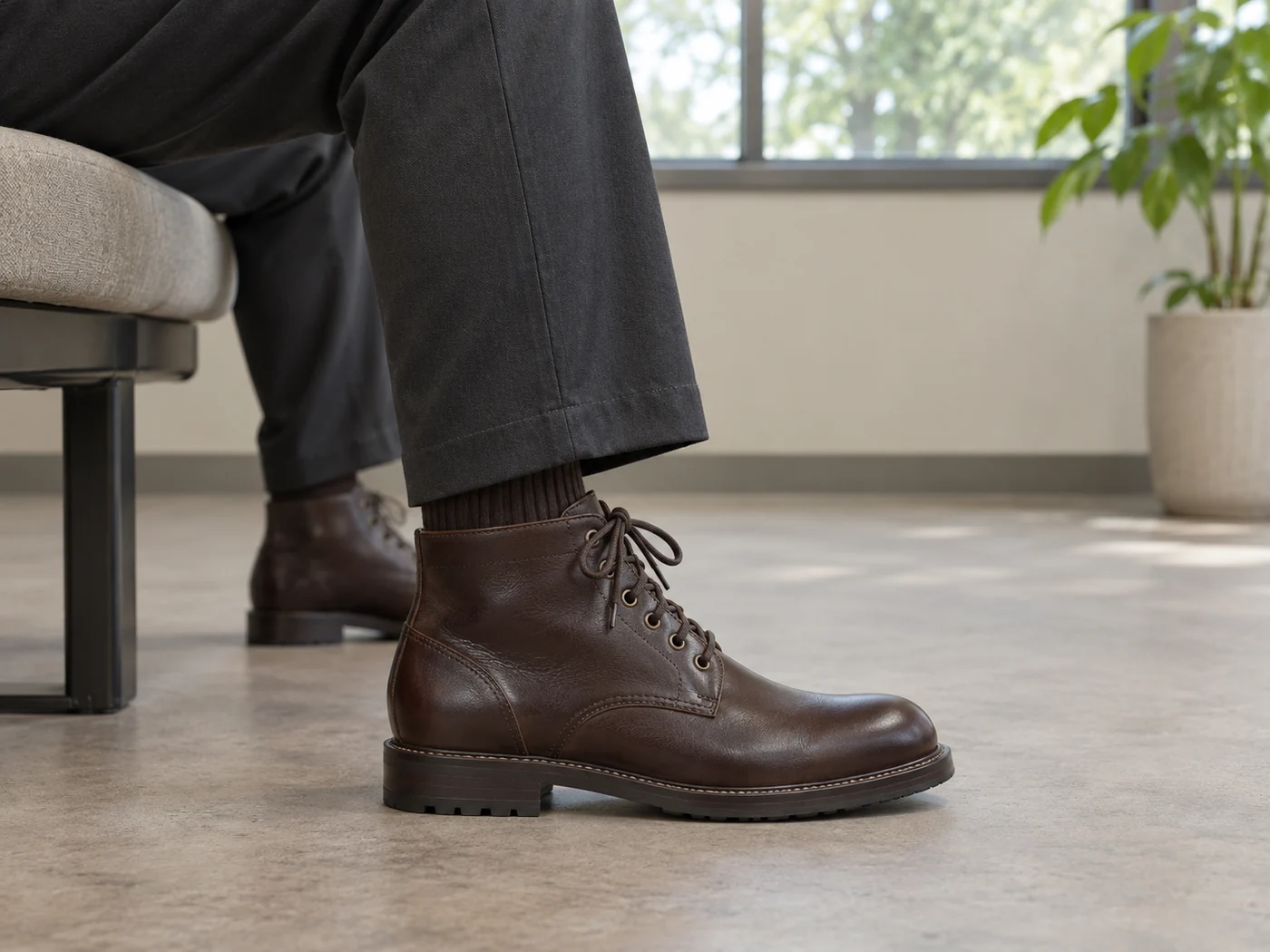
Stand up and leave the trouser legs alone for a moment. The hem that rode up while you sat should fall back over the boot. If one leg stays perched on the pull tab, ease it free and try another few steps. A straighter trouser leg or a boot with a closer-fitting top may solve that hitch. At the back, check whether the hem clears the ground before you commit good suit trousers to a wet pavement.
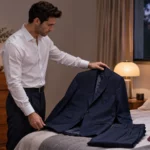
For a day of meetings, try the whole suit with the boots and take a seat opposite a mirror. That strip of sock below the trouser hem is what someone across the table will see. If you like the combination, keep the boots on indoors long enough to decide how the lining feels in a heated room.
Where will the office shoes go?
- In a locker or your own desk drawer. Leave the Oxfords there with clean socks, and wear the weather boots both ways. Take the Oxfords in on a dry day so they’re there when you need them.
- In your bag. If you share a desk, try packing your shoes alongside lunch and a laptop. A pair that fits only when lunch stays home makes a rather expensive habit of the café downstairs.
Choose a seat near the entrance for the change. Stand wet boots on a tray where they can air during the day, with space clear for people walking past. If tomorrow also looks wet, a two-pair rotation for consecutive wet commutes can help you decide which pair needs to come home tonight.
At the end of the walk
Check the care directions for your particular upper before reaching for a cleaner. Blundstone, for instance, directs owners to dry the 2081 away from a heat source. At home, take the boots out of the bag and give them a place to dry away from the radiator. Put a dry pair of socks in the empty shoe bag. Tomorrow, the state of the crossing can decide the footwear. The socks are already taken care of.