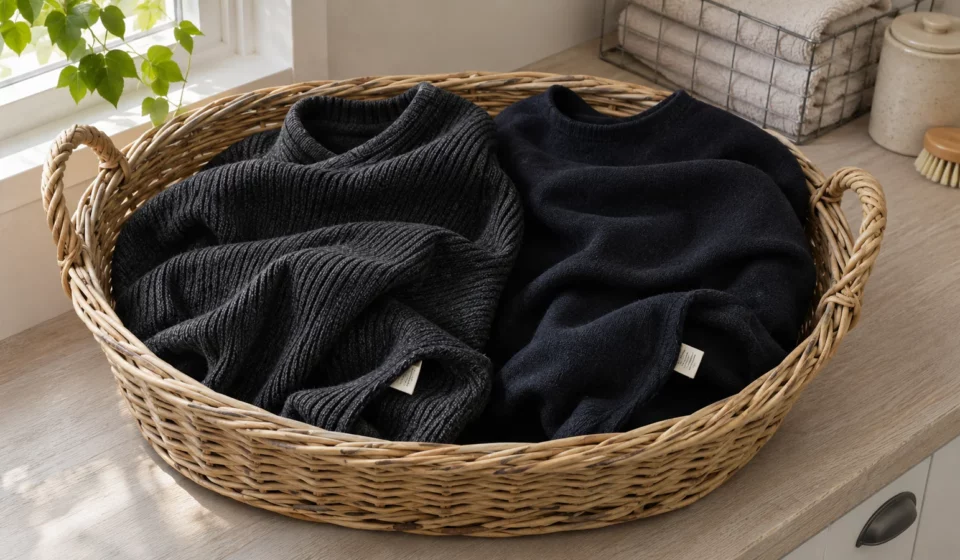

Two black sweaters can feel almost the same in your hands. Suppose the smooth sweater can go in the machine, while the ribbed crewneck you wear with jeans calls for hand washing. Both tags say to dry flat. Before either sweater gets wet, read its whole label and decide two things. What wash can it share, and where will you put it when the water drains? That difference is worth checking when you choose knitwear for your usual wash day.
Find the whole set of instructions
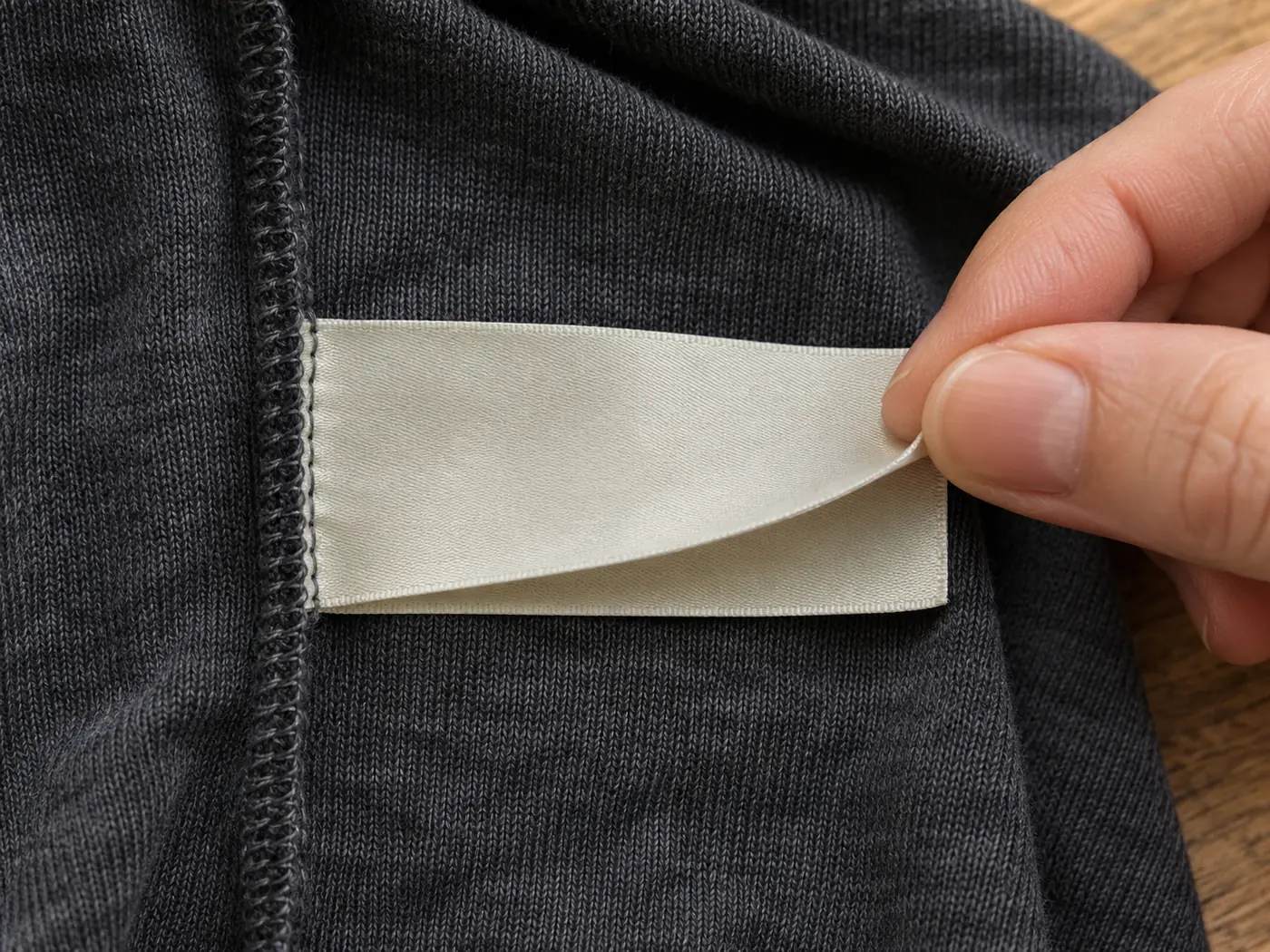
Feel along the inside side seam and unfold the tag. If several little leaves are sewn together, turn them over. You might find the symbols on one face and a direction such as wash separately on the next. Read the words for the garment as well as the fibre list. Two sweaters with the same fibre content can still carry different instructions.
Read the tub and the bars underneath
Look first for a tub. A number inside gives the hottest wash water the garment can take, in degrees Celsius. If you see 30, a normal 40°C load is too warm. Then run your eye along the bottom of the tub. One bar underneath calls for a mild wash and two for a very mild wash. Check both controls. Even a cold cycle can move the clothes quite vigorously. Keep the two settings together when you sort the next load by its care labels.
For the smooth sweater, suppose the tub says 30 with one bar. Look in your machine’s guide for a mild program at 30°C or cooler. A hand in the other sweater’s tub sends that one to the basin. A crossed-out tub rules out washing, including by hand. If your label uses dots or you can hardly distinguish a line from a fold, compare the actual mark with Canada’s illustrated care-symbol guide.
Where will the sweater dry?
Flip the label far enough to see the whole square. A circle inside it means tumble drying. Dots inside that circle give the heat limit, and a cross over it means keep the garment out of the dryer. A single horizontal line inside the square gives a different direction altogether. It asks you to lay the piece flat.
Make room for both sweaters on a flat drying rack before you start. Spread each one out with its sleeves supported and ease the hem back to the shape you like wearing. In a small apartment, one sweater may take up the whole rack. It’s perfectly reasonable to leave the second one for tomorrow. If the smooth sweater shares a wash with dryer-safe tees, lift it out first while you can still see which black garment is which.
Check the triangle, the iron and the circle
A crossed-out triangle means leave bleach out, including any in a stain treatment. Two diagonal stripes inside a triangle allow oxygen bleach only. For a marked cuff, read the product ingredients before treating it. Once the sweater is dry, check the little iron before pressing it. Its dots set the heat limit, and a crossed-out iron means skip pressing.
A circle on its own belongs to the professional cleaner. Letters such as P or F inside it tell the cleaner which processes are suitable. Look back at the tub to decide about a home wash. If it’s crossed out, take the garment and its label along when you ask about cleaning. For variations such as professional wet cleaning or drying in shade, use GINETEX’s current symbol chart.
Sort the basket while it’s dry
- Wash together. Put the smooth sweater with dark tees whose labels allow the same mild, cool wash. Give the sweater its own place on the rack afterwards.
- Give it a separate turn. Leave the ribbed crewneck beside the basin. Follow its hand-wash instructions when you have a free drying space.
- Set it aside. If a tag is missing or unreadable, look up the exact style with the maker or show it to a cleaner before choosing a treatment.
If someone else usually moves the load along, leave a note on the machine. “Smooth black sweater goes on the rack” will save them from having to unfold a damp little tag with a basket balanced on one hip.