
The best part of an old pair of jeans might be how easily you can bend to lace a boot. If a new pair buttons just as easily but bites into your thighs the moment you sit down, take two cuts into the fitting room. Start with a pair that feels good at the waist. Keep that waistband height as your reference while you find out where you want more room.
Give the two pairs a fair try
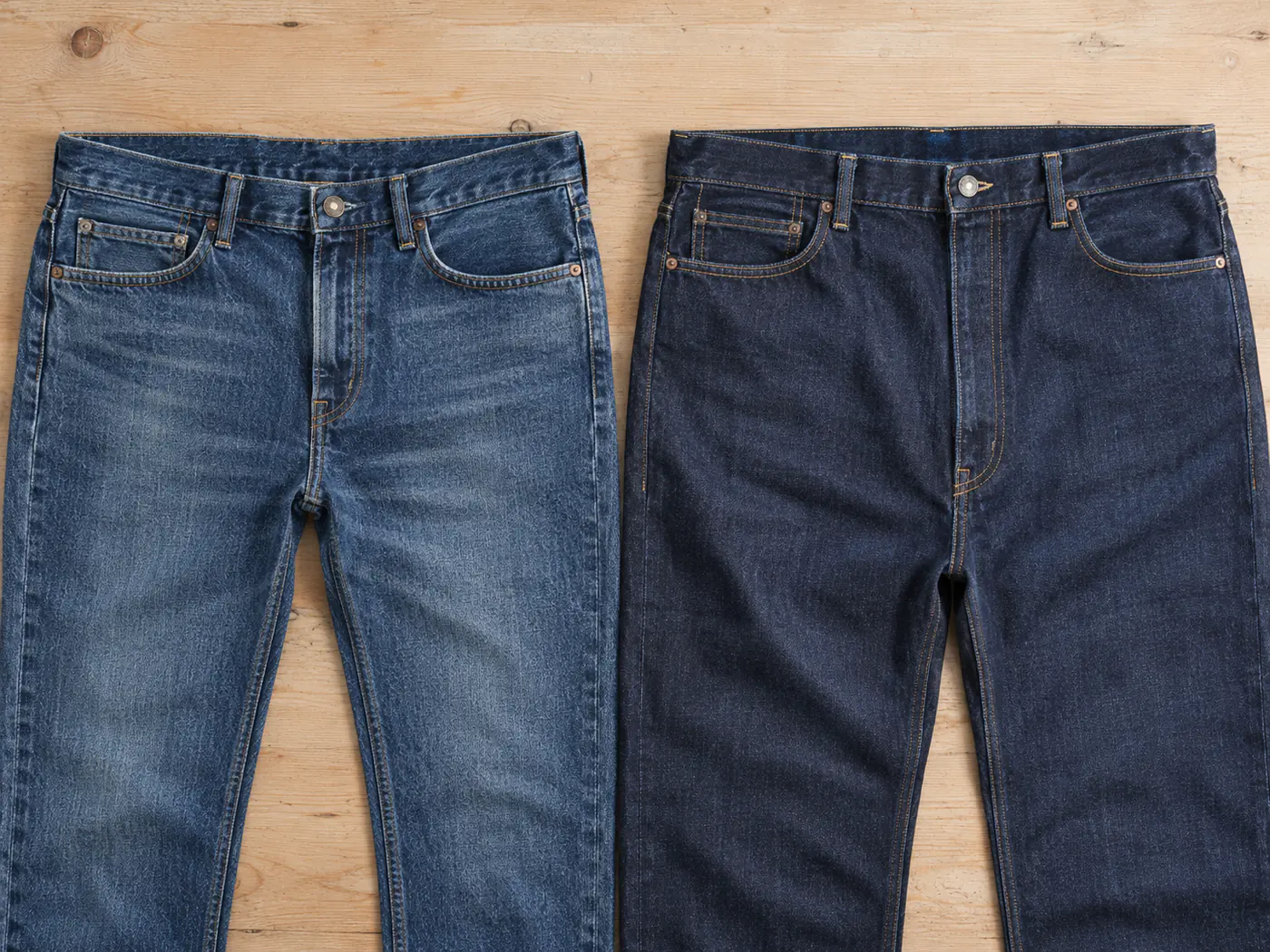
Say you like the look of straight jeans with a rolled cuff. Take a straight pair and one described as fuller through the seat and thigh, such as an athletic taper. You can still have a narrow hem with a roomy upper leg. Check the description for the part you care about. The word tapered tells you that the leg narrows towards the ankle. It leaves the amount of space at the thigh open.
Start close to the same waist measurement. Where you can, pick two pairs with a similar weight and amount of stretch. Check the fibre labels and give the fabric a gentle pull across the thigh. If one pair stretches much more, you can still compare how they feel. Just keep that difference in mind when you look for another pair online.
Find the waistband you can leave alone
Empty the pockets, tuck up the front of your shirt and fasten the jeans without a belt. Walk a little, then let the waistband settle. Notice where it lands against your shirt at the front and how much it covers at the back. If you have to hike one pair up to make its waistband meet the other’s, you’ve already learned something about the rise.
The front rise runs from the crotch seam to the top of the waistband at the front. Lay the two fastened pairs side by side, waistbands level, and look at where the inside leg seams meet. One join may sit lower. When you put that pair on again, see whether the extra depth feels welcome or leaves cloth hanging between your legs.
Try the journey home
Stand comfortably and glance at the front pockets. A pocket mouth that opens can be part of the way it’s sewn. If it also pulls hard against your hand when you reach inside, notice whether that pressure eases in the fuller cut. Turn sideways in the mirror to see whether the cloth lies comfortably over your seat.
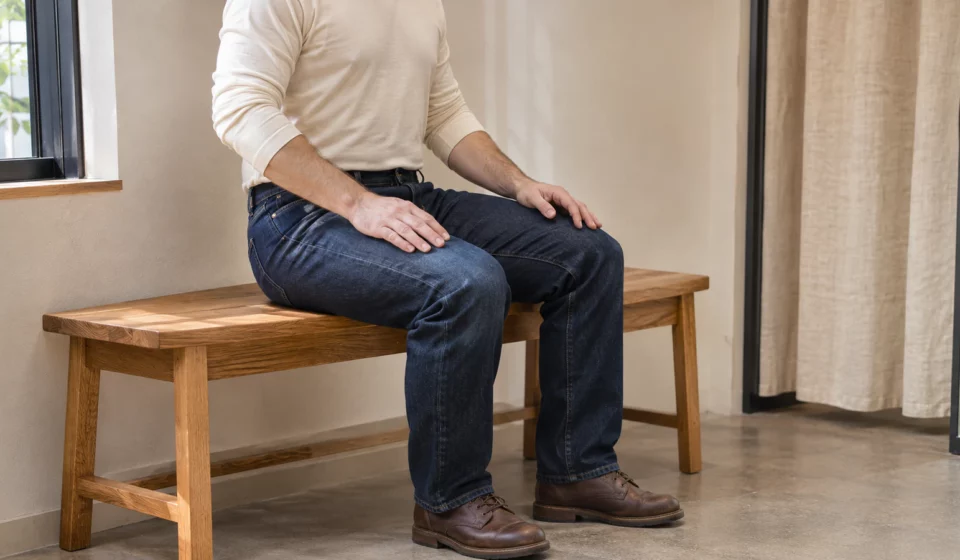
- Sit. Use a bench or a firm chair. Lean forward as you would to get a bag from the floor. Feel for a band of pressure across the tops of your thighs. Does the back waistband travel down far enough that you want to pull your shirt over it?
- Take a step. Stand up, walk a few paces and lift one knee as though stepping onto a bus. Look for room to finish the stride. Soft folds at a bent hip are ordinary. Having to tug the leg down after every step would get tiresome.
If the waist stays put and the fuller cut frees your thighs, try that cut with your usual shoes before deciding on a hem. If both pairs slide down at the back when you sit, compare one with more back rise. If both waist and seat feel tight, take the next waist size through the same two movements. You can leave a pair on the rail when solving the thigh problem means cinching a loose waist.
Keep the numbers from the pair you liked
At home, fasten the comfortable jeans and lay them flat. Measure the front rise along the fly. For the thigh, follow the seller’s method and write down both the width and where you took it. For example, Blue Owl measures straight across the leg one inch below the crotch in its jeans measurement guide.
Add both numbers and their units to your flat waist and inseam measurements. Leave yourself one line about wearing the jeans, such as “room to sit by the train window, cuff falls neatly over my boots.” That gives you a way to find the shape again after the name on the label has slipped your mind.