Build a Work Capsule Wardrobe Around Your Actual Job

Imagine getting to the office on a wet Tuesday. Your blue shirt has travelled beautifully. Your right sock is damp, and the trousers that looked so good with loafers at home have been dragging behind your rain boots since the station. Start a work capsule wardrobe with that Tuesday. Put together a few complete outfits for the job, the journey and the time you have to look after them. The number of pieces will follow. You might need a second pair of socks long before you need another blue shirt.
Give the week a job description
Pull up the last ordinary week you worked. If every week is different, use the next few shifts you actually know about. Write down where you got dressed, where you spent the longest stretch and what you were doing when you last wished you could change. A teacher who spends an hour on a low chair and a designer who presents samples at a counter could both call their workplace casual. Their trousers will have quite different afternoons.
Put a star beside the day with the least room for improvisation. Maybe the client arrives ten minutes after you do. Maybe you go straight from a late shift to picking up a child and have nowhere to leave a spare pair of shoes. Make that your first outfit. The clothes that get you through it comfortably are strong candidates for the rest of the week.
Find out what your particular workplace asks of you. If a tour takes you out of the meeting room and onto a working floor, ask the host about required clothing, footwear and equipment before choosing the outfit. For an interview, a quick note asking what the visit involves can settle whether a jacket has a job that day.
Build one complete outfit from the floor up
Start with the shoes that can do the journey
Take the pair you would willingly wear on the walk home and put them on with work socks or hosiery. Now add a bottom you like. Look behind both heels. Sit, stand and walk to another room before you decide where the trouser hem should meet the shoe. If the trousers catch under a low shoe, compare the same outfit with a straighter pair from your closet. The shoe has already earned its place by getting you to work.
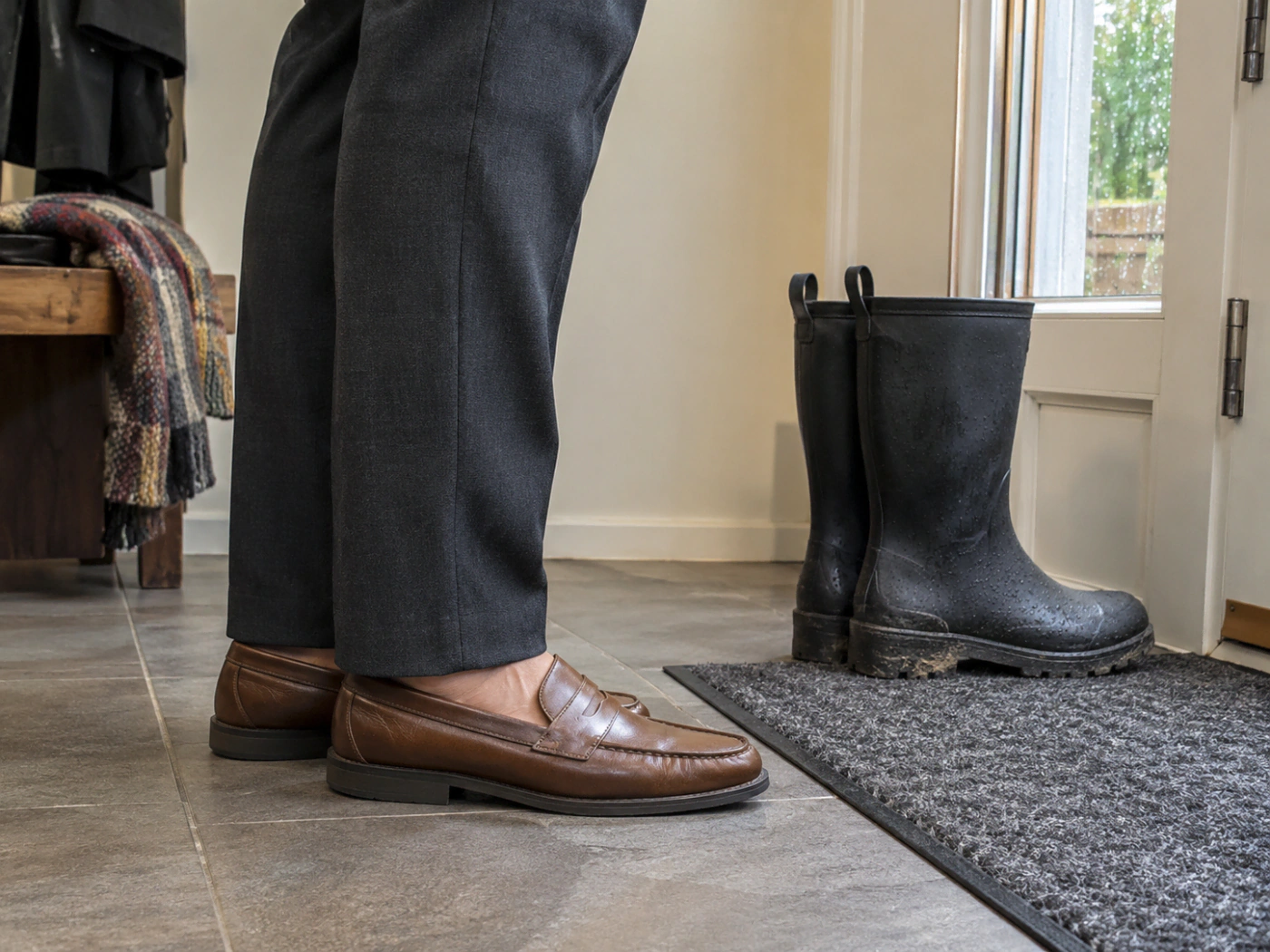
A change at the office can make sense, particularly through a slushy winter. Give the second pair an actual address. Is there a locker, a dry spot under a desk or just a bag you carry between rooms? If you share a desk and take everything home, walk around the kitchen with the loaded bag. A clean pair of loafers feels rather less convenient beside a laptop, lunch and a water bottle.
Choose a top you can wear with the jacket off
Suppose you start with charcoal trousers, brown loafers, a blue shirt and an olive jacket. These work outfits built from separates show how a skirt and trousers can share the same jacket. Put the jacket on a chair. Reach across a table for your notebook and imagine spending the next hour in the shirt. Check the cuffs where they meet your hands and whether you like the collar open. If the whole outfit depends on keeping the jacket fastened, it may suit a short presentation better than an afternoon in a warm room.
Try the same trousers with a knit or blouse you already wear on days off. A narrow cream stripe can look quite at home below olive lapels. If you enjoy a bright pink shirt, try it while the shoes and trousers are still on. A work capsule gains very little from a row of quiet colours you pass over whenever the laundry basket gives you a choice.
Give the pieces a second day
A useful way to spot a gap is to take the most productive garment off the rail. Suppose it’s the charcoal trousers. They’re at the cleaner on Wednesday. What would you wear with the blue shirt then? Dark jeans may be fine on an editing day. A straight navy skirt might be the better answer if you’ll spend the morning with a client. Put both on with the work shoes before adding either to your list.
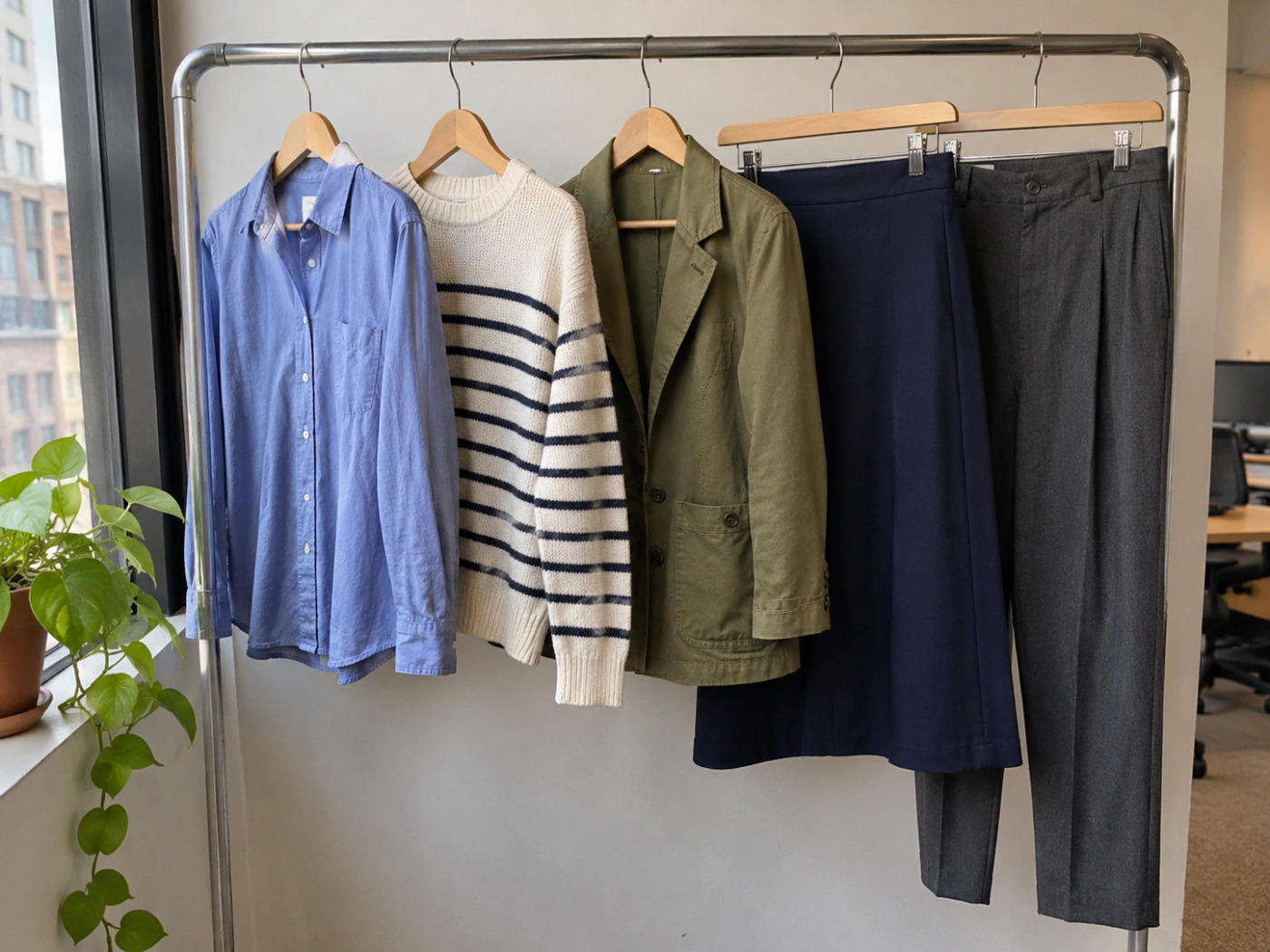
Try this little rotation for a week with three office days. Adapt the combinations to what’s on your rail and what the workplace asks.
- Monday, at a shared desk. Charcoal trousers, a cream stripe and the olive jacket. Put the jacket over your chair while you type. Keep it handy for the room by the window.
- Wednesday, presenting. The navy skirt or a second pair of trousers, the blue shirt and the same jacket. Wear the outfit to a mirror and point to something up high. Check that the shirt stays where you want it.
- Friday, with dinner afterwards. Bring back the charcoal trousers if they’re ready. Wear a soft pink top and the loafers. A small earring or a change at the collar can be all the difference you want for dinner.
Now imagine Wednesday’s meeting moves to Monday. Can the shirt go with the charcoal trousers? Does the cream stripe work with the navy bottom when the jacket comes off? The swap tells you more about how your wardrobe works than the fact that every piece looked good together on a bed.
Put washing and drying on the calendar
Write down when each piece is ready to wear again. A shirt that comes out of the wash on Thursday night may still be hanging damp when you leave on Friday. If you iron it, allow for the morning when the ironing board is under a stack of towels. There’s nothing ambitious about choosing a shirt you can prepare on the evening you actually have free.
Keep a clean reserve for the job that matters most to you. It could be a plain top left at work for a spilled coffee. If most days involve changing out of cycling clothes, it might be an extra pair of socks at the bottom of the locker. Mark the day to bring the reserve home and replace it. Otherwise you may discover a single clean sock just as the lift doors open.
What can stay at work?
Set aside ten minutes with the policies and storage space you actually have. A pair of indoor shoes can make several hems work. A cardigan can cover a chilly room, provided it fits over the top you wear for meetings. An entire second wardrobe in a shared coat cupboard is likely to spend the week getting in someone’s way.
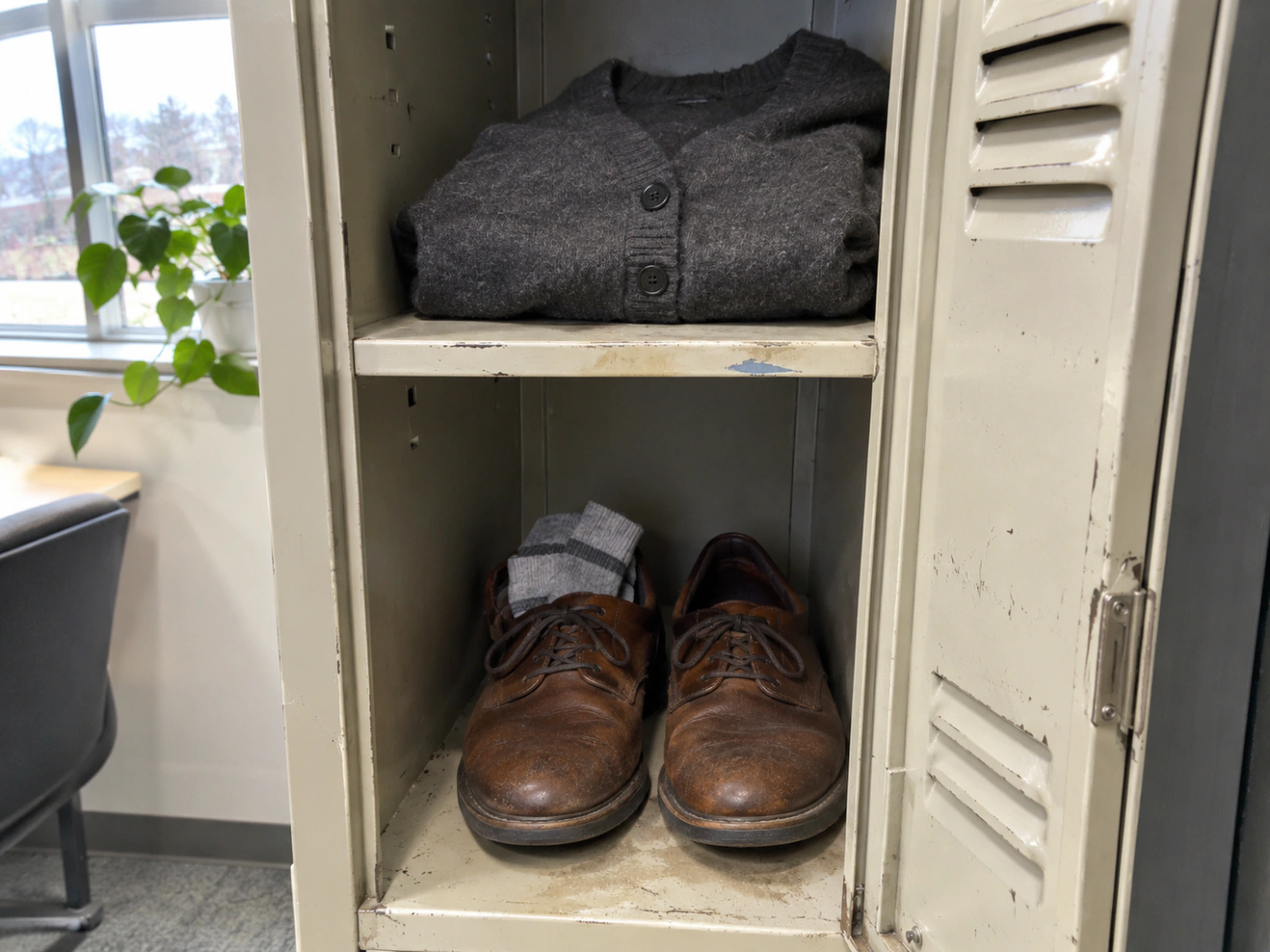
If you can leave one item, think back to the problem that interrupted the most days. For a cold desk, try the cardigan for a week. For a long cycle commute, try the shoes. Put a reminder beside your keys for the day either one needs washing, airing or taking home. One solved nuisance is enough to judge whether the arrangement earns the space.
Spend on the gap you can name
Look at the mornings you have covered. “A top to go with the navy skirt when the blue shirt is drying” is a shopping brief you can use. Take the skirt to the shop or keep it beside you when you open the parcel. Sit the way you do at work and try your coat over the result. A top that only goes with the skirt once you buy a different jacket is quite a different proposal.
You may already own the better answer. A hem you meant to shorten, a blouse with a loose button or a pair of trousers hanging behind a garment bag can all be tried with Wednesday’s shoes before money changes hands. If the outfit works, write the combination down while you’re wearing it. A quick photo from the shoulders to the shoes will do.
For the next workday, set out one whole combination and put the things that have to travel beside your bag. Once you’ve worn it, leave one honest note. “Pink shirt comfortable without jacket through a long meeting” tells you exactly what to repeat. So does “leave dry socks in the locker.” One of those may cost you nothing at all.