What to Wear Under Clothes That Cling, Dip or Show Through
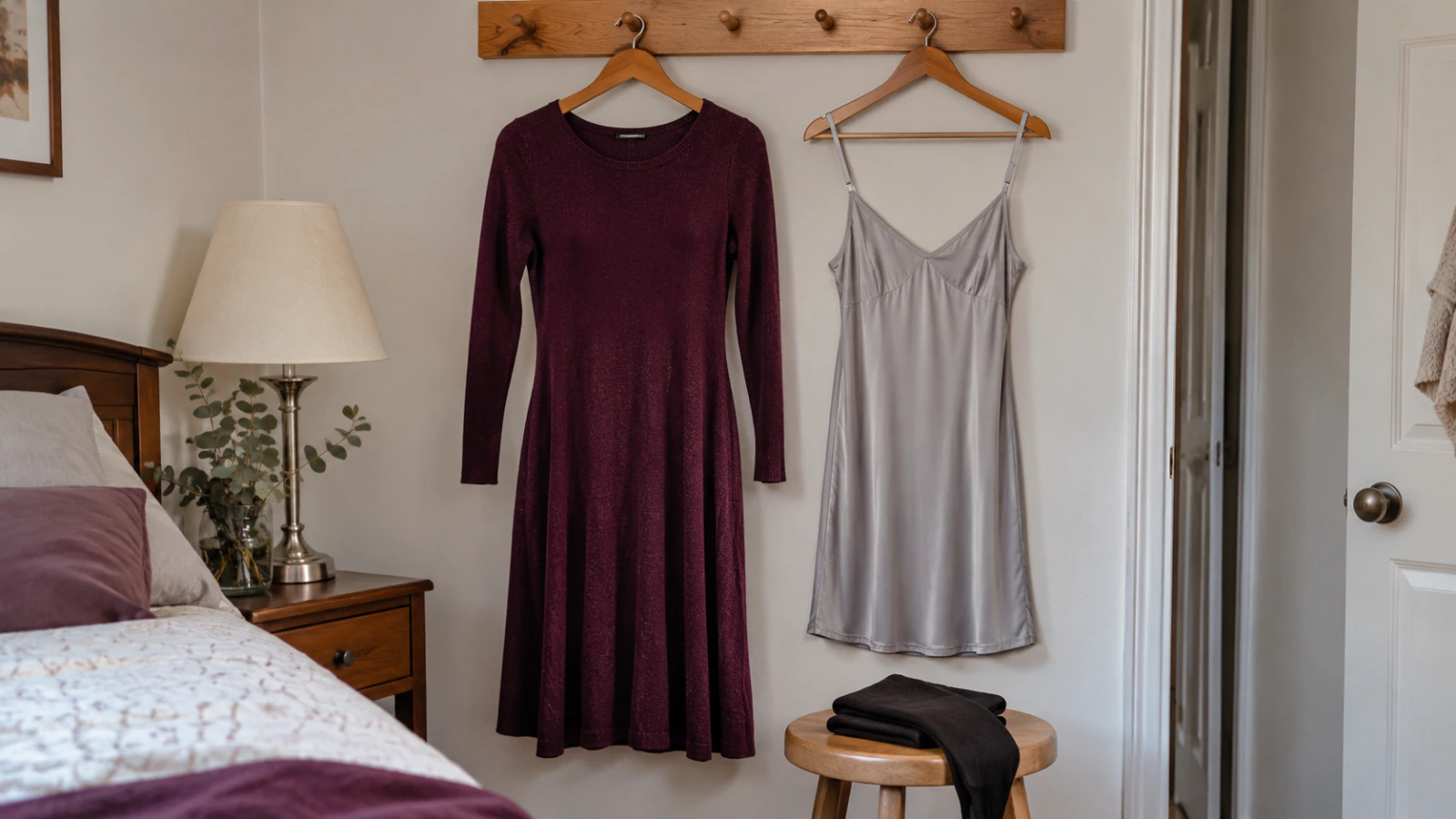
The plum dress feels soft over your shoulders and lovely through the skirt. Halfway across the room, it begins to climb your tights. You might try a slip, change the tights or decide you like the dress best with bare legs on a milder day. What to wear under clothes starts with a small question like that. What would you like this outfit to feel like, and which part do you want to show?
Start with the least complicated combination you would normally wear. Put on the outer clothes over comfortable underwear, stand by a window and move the way you expect to move today. You can then decide whether you want extra warmth, a smoother surface, more coverage or a little colour at the neckline. Each gives you a different reason to reach into the drawer.
Give the outer garment the first turn
Lay the shirt or dress on the bed with its back facing you. Follow the edges with a finger. Does the back sweep in between the shoulders? Is there a slit in the skirt, or a row of buttons that stops well above the hem? Turn it over and notice where the front dips when you pick it up. You now have a rough map of the places an underlayer could show.
Put it on and take a seat near the light you’d usually dress in. Look at one edge you care about, then put your attention elsewhere. Reach for a book on the table, cross one leg if that’s comfortable and stand up. See what’s changed. A strap might only appear as you reach, or the lowest edge of a slip might be visible through a walking slit for a few steps. You get to decide whether either of those things needs attention.
Choose the change you actually want
- If colour shows through, hold another clean shade under a single thickness of the same fabric. Try it on if you like the difference.
- If an edge leaves a ridge, find the seam, band or binding beneath it with your fingertips. Compare a softer edge or one that ends somewhere else.
- If two fabrics catch, take a few steps in the underlayer alone, then again in the whole outfit. Notice which layer moves first.
- If you want more warmth, add the light layer you already own and fasten the outer garment over it. Give both a turn in a chair before committing to the extra fabric.
Under a pale shirt, compare colour and texture separately
A white shirt can reveal a pocket simply because the pocket puts two layers of cotton over one patch of the front. Hold the loose tail up to the window and fold it back on itself to see the difference. A bra or undershirt can make a similar patch of colour, with another line at the edge. Address whichever one you mind. If you enjoy a dark camisole visible through a pale shirt, you may just want its neckline to sit evenly.
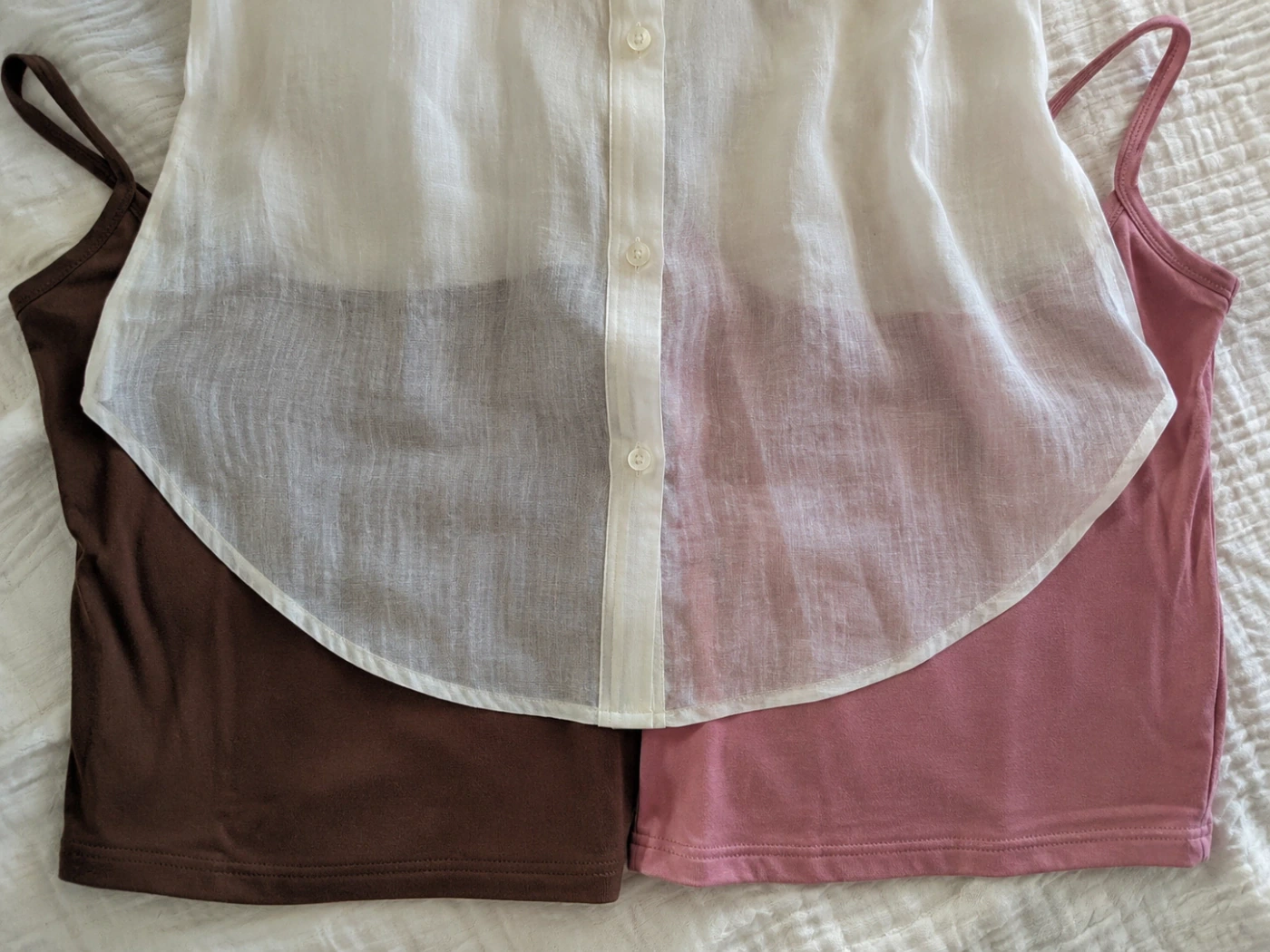
For a quieter effect, try an underlayer close to the colour of your skin beneath that particular shirt. What a shop calls nude could be several shades away from the colour you want. Hold a few pieces you own against your chest and bring the shirt front over them in turn. Fasten the shirt fully for the one you prefer. A patch that looked strong through cloth held tight in your hand might soften when the shirt hangs freely.
The remaining line might be texture. A lace flower, the upper rim of a moulded cup or the end of a short sleeve can catch the light even in a close colour match. If it interests you, compare two pieces with similar colour and different finishes. If the original one feels better on your skin and you like the shirt enough as it is, you have your answer right there.
Fit the bra before judging the blouse
Put the bra on alone and see whether it feels comfortable when you sit, turn and reach up. A band that works its way up the back or a cup edge that digs in will give you something to adjust all day under any blouse. Bring the outer garment to a fitting if a particular neckline or armhole is the reason you’re shopping.
Follow a neckline all the way round
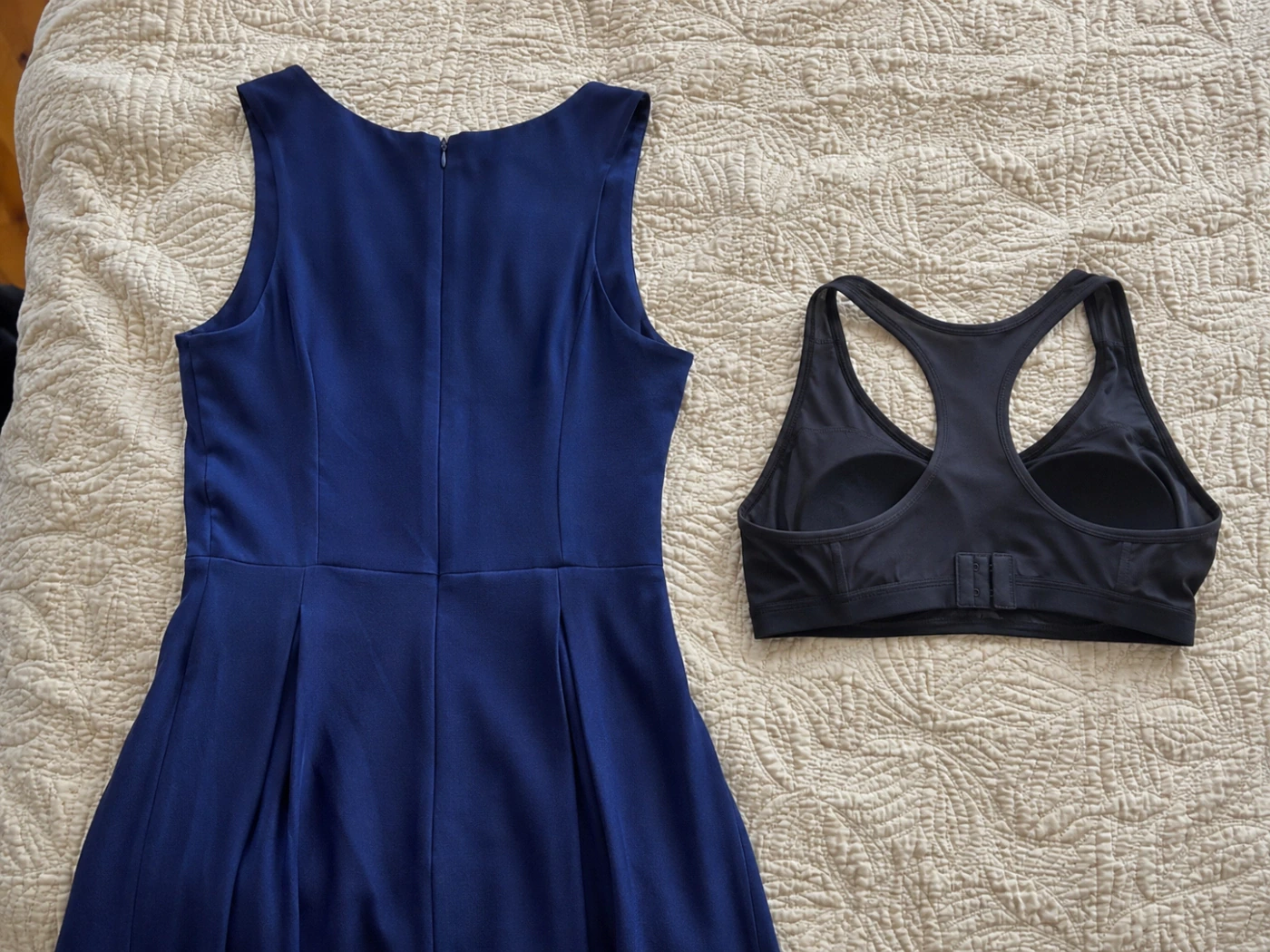
Suppose you’d like to wear a sleeveless dress that has wide shoulders in front and narrows between the shoulder blades. Your usual bra straps might fit under the front very neatly and show an inch at the back. If the colour looks good there, take the dress for a walk round the room. You might find you like that glimpse in motion, too. For a concealed strap, try a bra designed with a compatible back shape and see how both the front and back feel with it fastened.
An undershirt beneath an open-collar shirt deserves the same full turn. A crewneck can create a little crescent of white at the throat. A V-neck may sit below the opening until you undo one more shirt button for the trip home. Check with a jacket on if you’ll wear one. The jacket can draw the shirt fronts towards each other and change how much of that pale crescent you’ll see across the dinner table.
Give skirts and dresses a surface they can move over
Try the plum knit dress over your usual tights. Walk to the end of the hall, stop and look at the skirt before you smooth it down. If the hem is caught across one thigh, ease it free, add a smooth half slip and take the same walk. Does it fall back when you stop? Sit down too. A half slip adds a second waistband. A full slip hangs from the shoulders and can be a pleasant choice when you’d like to keep the waist clear.
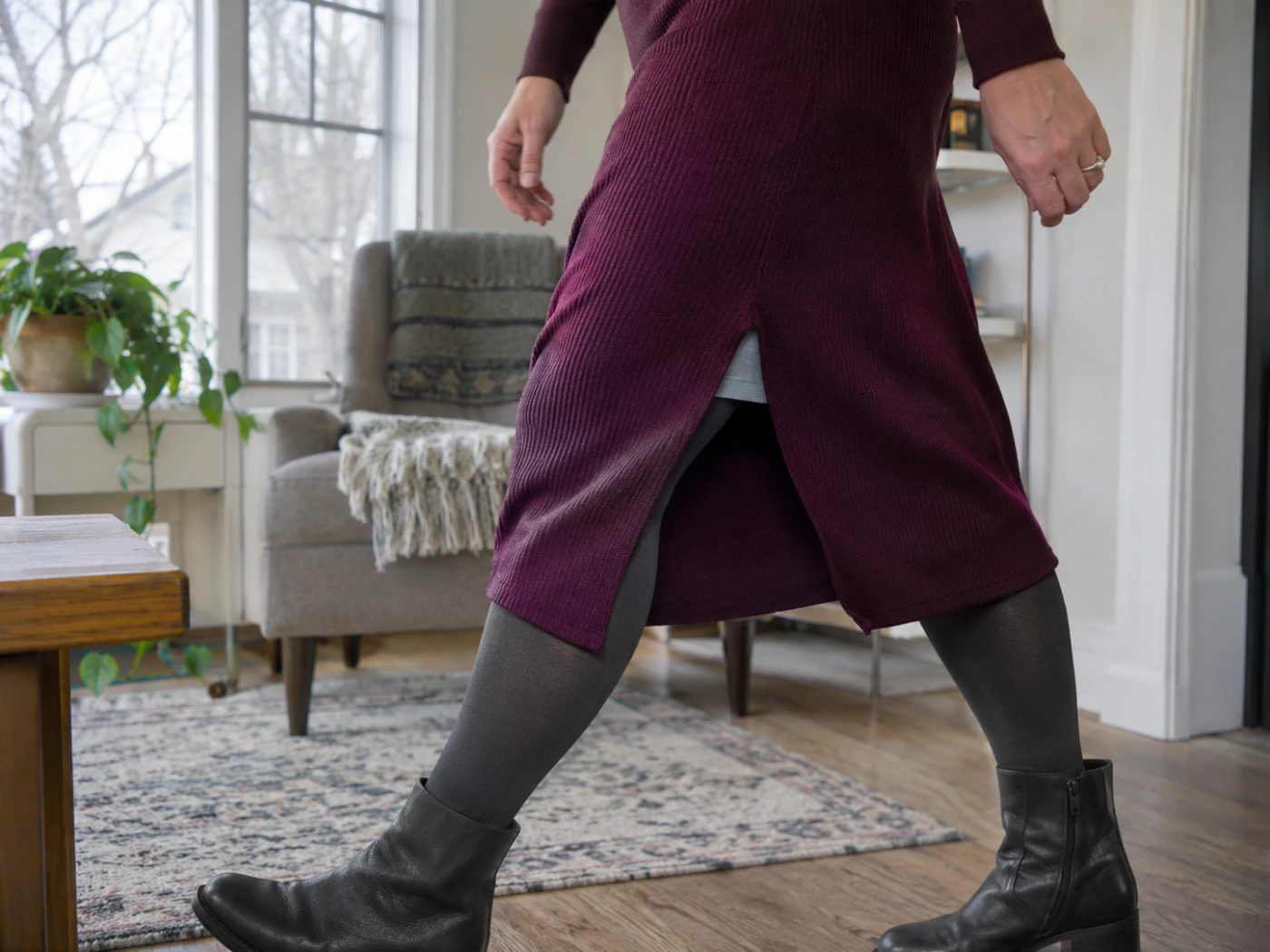
Choose the length with the outer garment on. Walk upstairs or take a long step as you would into a bus. A short slip can leave the lower part of a long skirt in contact with your tights. A longer one can appear at the slit. Which matters more for this outfit? You may like a little lace visible at the bottom of a plain skirt while preferring a completely clear slit in the dress you wear to work.
For a picnic or a long walk, a pair of soft shorts under a skirt may give you the coverage you want on a low seat. Check where both leg openings come to rest after a few steps. If they roll to the same spot every time, compare a pair ending higher or lower. Leave a comfortable amount of room at your waist for lunch with both waistbands in place.
Sit down in the trousers before adding another layer
Pick up the fitted trousers or winter wool pair you’re dressing for. Put them on over familiar underwear. Does the waistband feel easy when you lean towards your shoes? Can you lift one knee comfortably? When you check the fit of your trousers, use the underwear you plan to wear. A pair that just fits on its own may feel quite different over thick tights or long boxers. Try each extra layer with the pockets emptied so you can feel what’s happening at the hip.
A longer boxer leg puts its hem farther down the thigh, while briefs leave the trouser fabric a clearer run there. Feel under the pocket and behind the leg after you’ve been sitting for a minute. If a ridge has appeared, stand and smooth the underwear once. Does it stay put on the next sit? You could keep the longer pair for jeans with more room through the thigh and choose briefs for the closer trousers.
Save the outfit, including the bits underneath
Put your usual shoes on for one last try. Tights that feel lovely to the knee can introduce a toe seam exactly where a loafer presses. Footless leggings leave you free to choose a sock, though their ankle hems may meet under a high boot. Move the two edges apart, walk a little and remember which arrangement you’d repeat.
Hang or fold the clothes as you normally would and jot down the combination if it took a few tries. “Plum dress, grey full slip, smooth black tights” saves you from rediscovering the right length in a hurry. Leave a little space for a second answer. The same dress with bare legs and a blue strap peeking out might be the one you want when it’s warm enough to leave the coat at home.