Plan a Wardrobe You Can Get Dressed From
You probably know which trousers you hope to find on the drying rack. They have pockets you can reach from a chair, or a waistband you forget about by breakfast. That pair is a fine place to begin planning a wardrobe. Take it down, dress for a day you actually have coming up, and watch where getting dressed gets difficult. A wardrobe plan can be as small as a record of the outfits you can count on, one piece you’d like to wear more, and the next expense that would make a difference.
Start with three days you dress differently for
Choose three recent days that asked different things of your clothes. A Tuesday at a desk, a Thursday on your feet and a Saturday with family will tell you more than three Tuesdays that went much the same way. Write down where you went, how you got there and the part of the day when you wanted to change. Getting caught in the rain counts. So does taking off a jacket the instant the bus doors close.
Give each day a whole outfit from the closet. Include whatever touches your skin and the shoes you’d reach for at the door. If the Thursday clothes are in the wash, that’s worth writing down, too. A pair of trousers you wear twice a week can support several outfits and still be the single reason half your clothes seem unavailable on wash day. If that sounds familiar, plan a week of outfits around laundry day before deciding what else you need.
What would you wear again tomorrow?
Try the most familiar outfit first. Stand in your usual patch of morning light and find one thing you enjoy seeing. Then sit down somewhere you’d ordinarily sit. Maybe the soft blue collar looks lovely with the grey knit, but you’ve turned the cuffs back so many times they’ve become two fat bracelets. Try just the shirt sleeves rolled once before the knit goes on. If that solves it, put the combination on your list with the sleeves already figured out.
Keep a short description where you get dressed. A picture works, but “blue collar out, sleeves folded once” will do the job even when your phone is charging in another room. The details that help are often just outside a photo anyway. It was the pocket on the left that held the transit card.
Find the pieces that let the rest come out
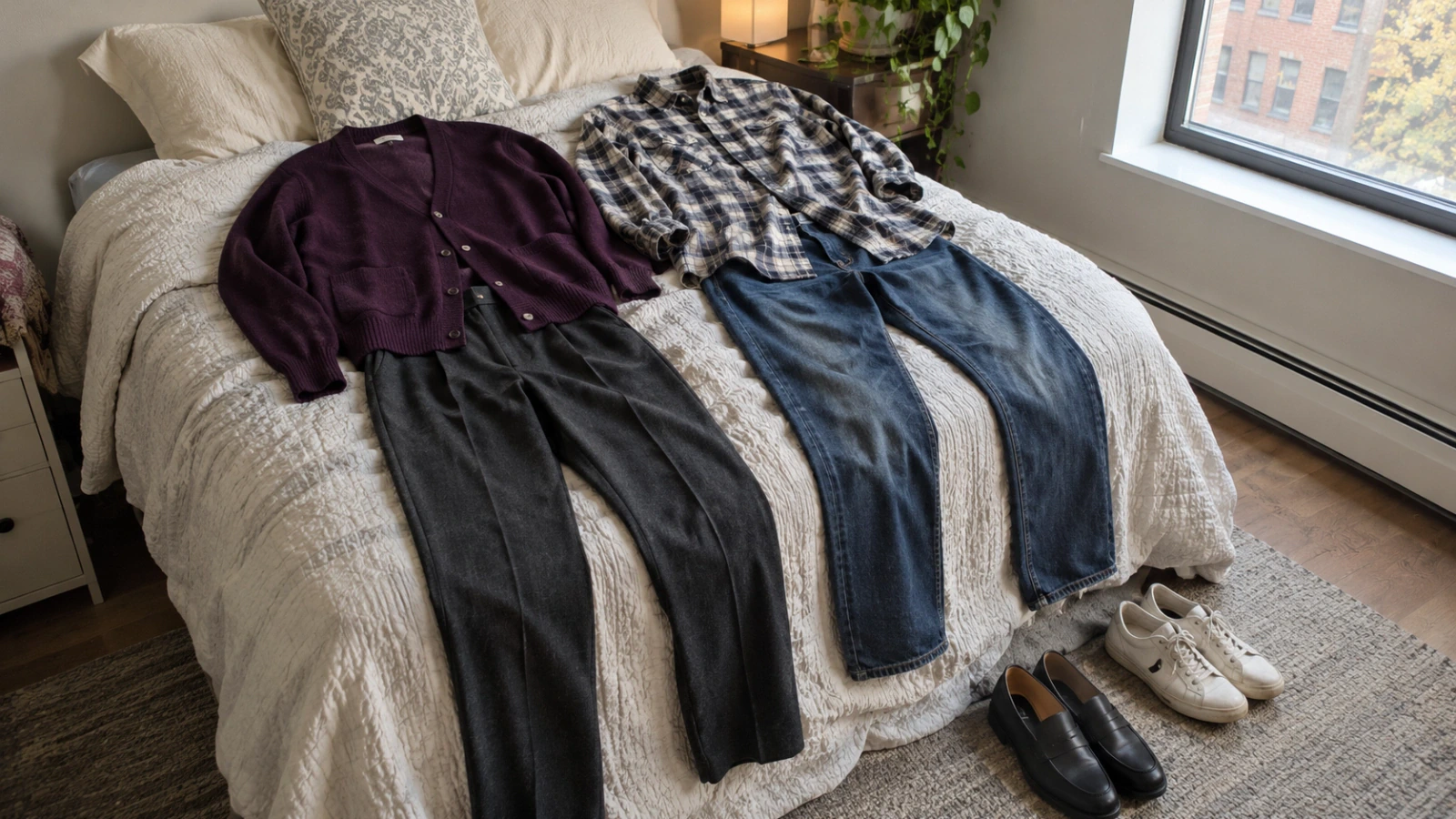
Lay two outfits beside each other. Suppose the first is a plum cardigan, white tee, charcoal trousers and loafers. The second is a checked overshirt, the same white tee, jeans and trainers. Pick up the cardigan and put it beside the jeans. Leave the pieces there long enough to picture yourself in them. If the loafers look right with the jeans but the exposed strip of sock feels odd, fetch a pair of socks you like with both.
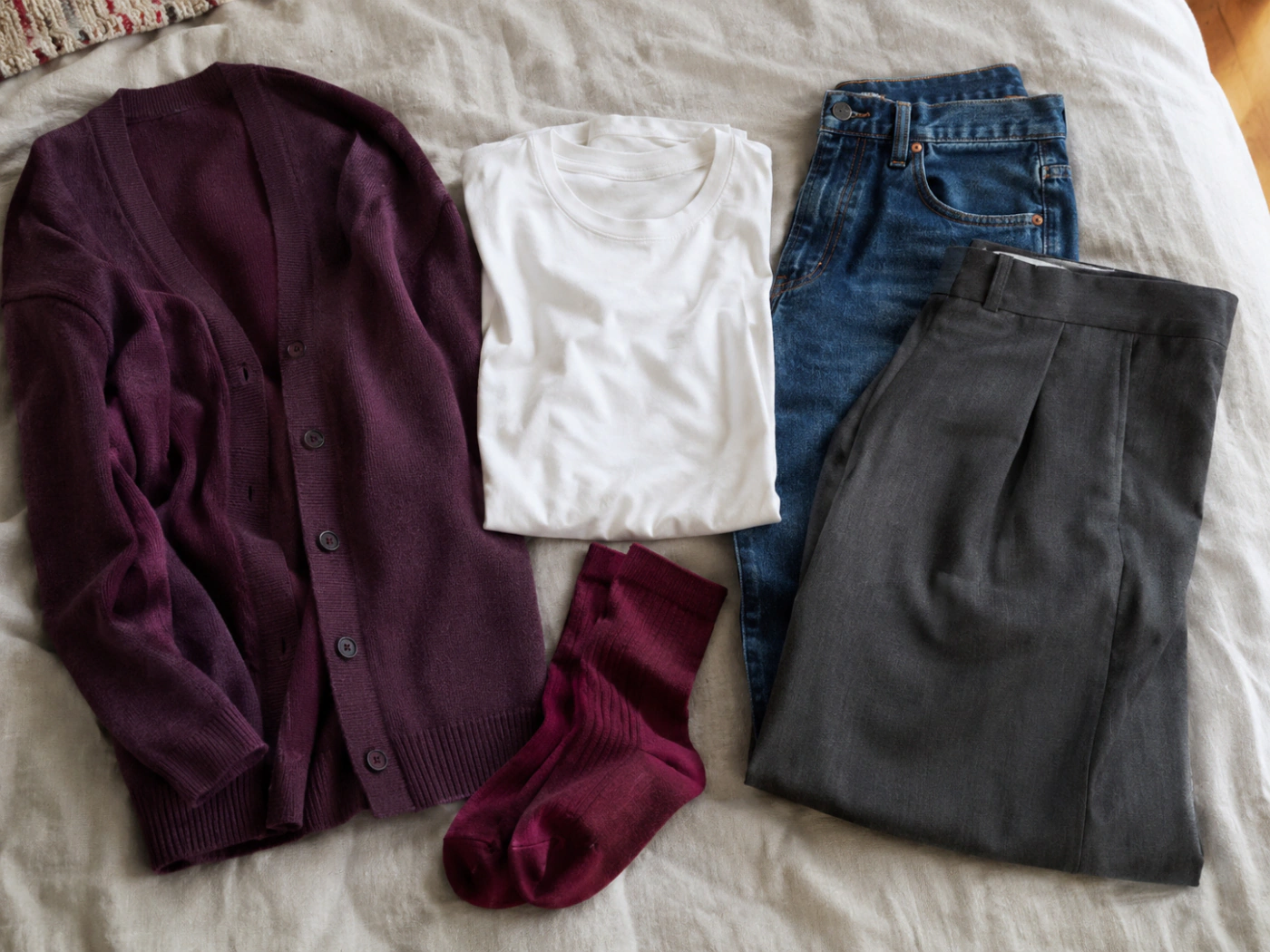
That small swap identifies the clothes that earn their drawer space in quiet ways. You might enjoy wearing the same tee twice in a week and own only one that sits properly under both top layers. Before adding another cardigan, check how often the tee is available. Equally, a much-loved print can belong in your wardrobe with just one good partner. Enjoy the outfit as a pair if that’s how you like to wear it.
Give an awkward favourite one outing
Pick a garment that catches your eye more often than you wear it. Start it off with clothes you’d reach for without thinking. A rose-coloured skirt might get the navy jumper and ankle boots you usually put with jeans. Take a short errand in it. See whether you like the skirt when your hands are full, the wind catches it or you stop for a coffee.
Afterwards, write what would make a second outing welcome. A loose bit of lining can go on a repair list. If you wanted the rose colour but spent the whole time holding the skirt down, you have an idea to try with a scarf or shirt you already own. The skirt has told you something even if it goes back on its hanger.
Make space for the clothes that fit today
Reserve the easiest reach for pieces that let you dress comfortably now. Other sizes, clothes with memories and special-occasion pieces can have their own places. You might like the good red jacket where you can see it every day. You might be happier giving it a labelled cover at the end of the rail. Choose according to what you’d enjoy seeing first thing in the morning.
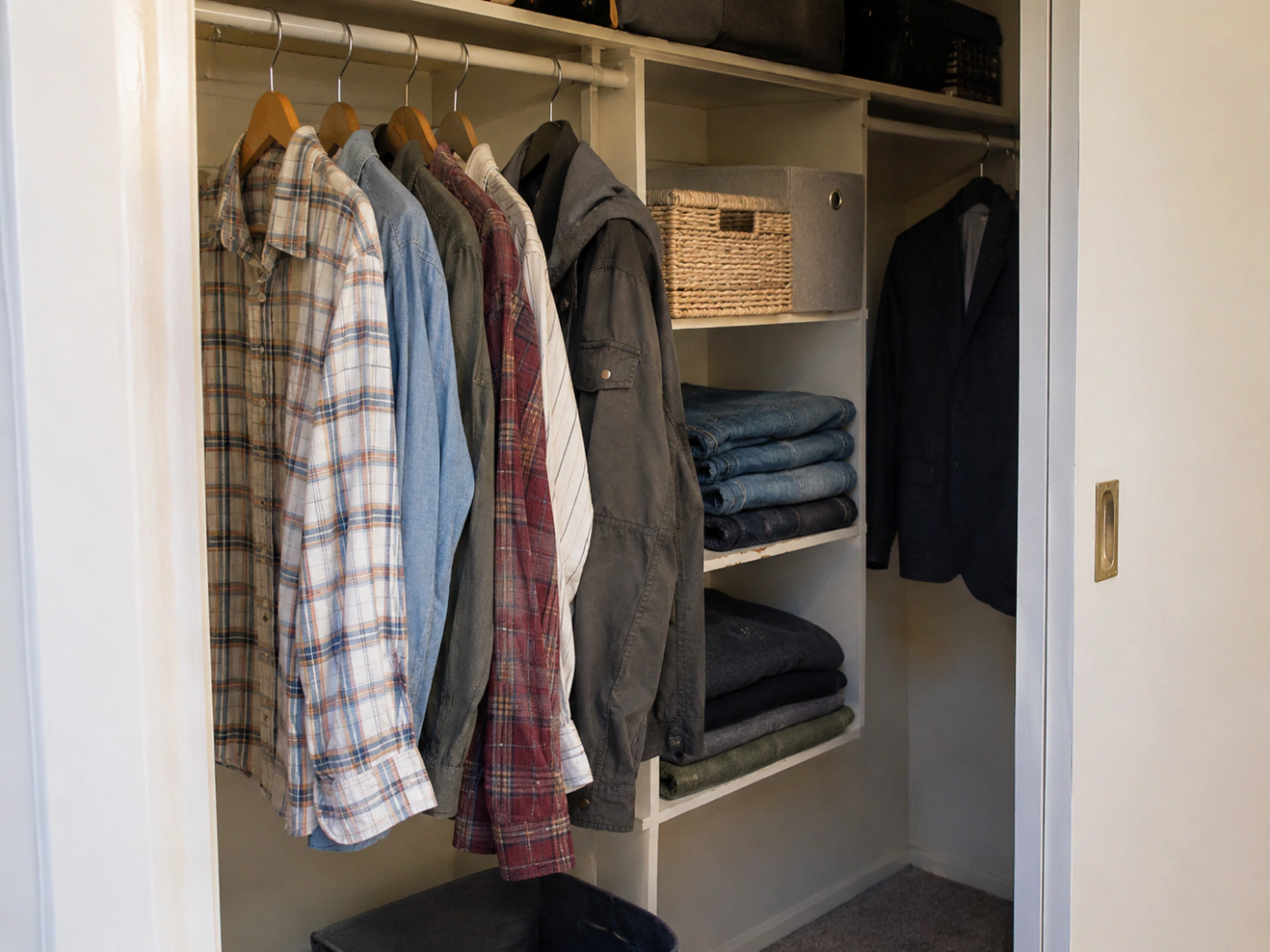
In a shared closet, try one short stretch of rail for each person’s next few days. Open the door all the way and reach in with one hand. A shirt behind the door track is a poor candidate for a hurried morning, even when the row looks tidy from the bed. Move that shirt forward and give the awkward spot to something you take down less often.
Before you put the seasonal pieces away, take a photograph or jot the contents on the lid. One labelled photo of an out-of-season box can save you the trouble of pulling everything out again when the first cool evening arrives.
Separate a missing outfit from a missing purchase
When a day on your list is still difficult to dress for, finish this sentence on paper. I could wear these clothes on Thursday if I had… Let the answer be quite ordinary. “A clean top that covers the camisole straps” is specific enough to walk back to the drawer with. “More work clothes” leaves almost everything in the shop looking possible.
Look for four ways to finish the outfit, in the order that costs you the least effort.
- Bring a piece into reach. Move the clean blue shirt from the ironing pile and see how its collar looks under the jumper as it is.
- Change the combination. Try the trousers with the shoes you usually save for a dress. Check the hem after you’ve walked across the room.
- Book one repair. If the pocket lining is the only reason you leave the trousers behind, ask what mending that pocket would involve.
- Describe a possible purchase. Write the colour range, how much room you want at the hip and which two things you’ll wear it with. Take that description shopping.
Leave room on the page for something you’d simply enjoy. A green scarf can be a perfectly reasonable use of the money you’ve set aside for pleasure. Keeping it on a separate line helps you decide whether you’d still be happy with the scarf if the pocket repair had to wait.
Let the weather change one shelf at a time
A calendar date seldom tells the whole story of your closet. You can spend an October morning in gloves and eat lunch outside in shirtsleeves. Leave a small stretch where two seasons meet. A light layer, the warmer pair of shoes and a jacket that works open or closed may earn that stretch for several weeks.
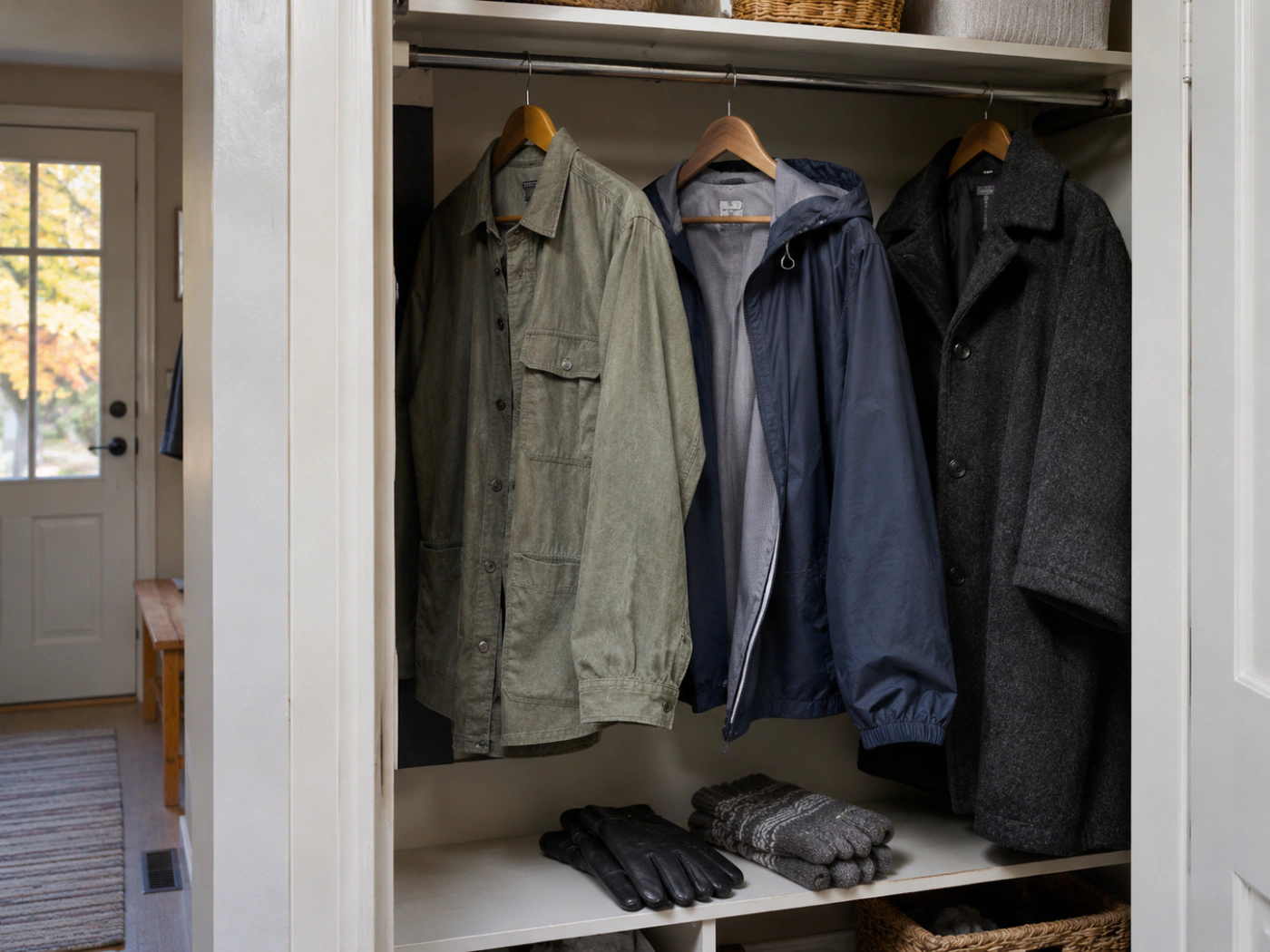
Use the weather to decide what goes back into storage as well. Say the linen trousers still go to your hot office under a longer coat. Leave them on the rail. The bulky sweater you love at a cottage can stay folded away until there’s a time and place you’d want it. Label the box by the pieces you’ll look for, particularly if “winter” would describe three boxes at your place.
Choose the next small change
After a couple of laundry days, take a look at what you wrote. Circle an outfit you wore with pleasure. Underline a difficulty that turned up twice. Put one job beside it that you can finish this week, such as bringing the trousers to the mender on your lunch break or shifting the folded tees to a shelf you can reach.
Set tomorrow’s clothes within reach tonight, right down to the socks. If you can put your hand on the outfit you meant to wear and find a pocket for your keys on the way out, you’ve already made one good wardrobe decision. The rest of the closet can wait its turn.