How to Find Outfit Proportions You Like
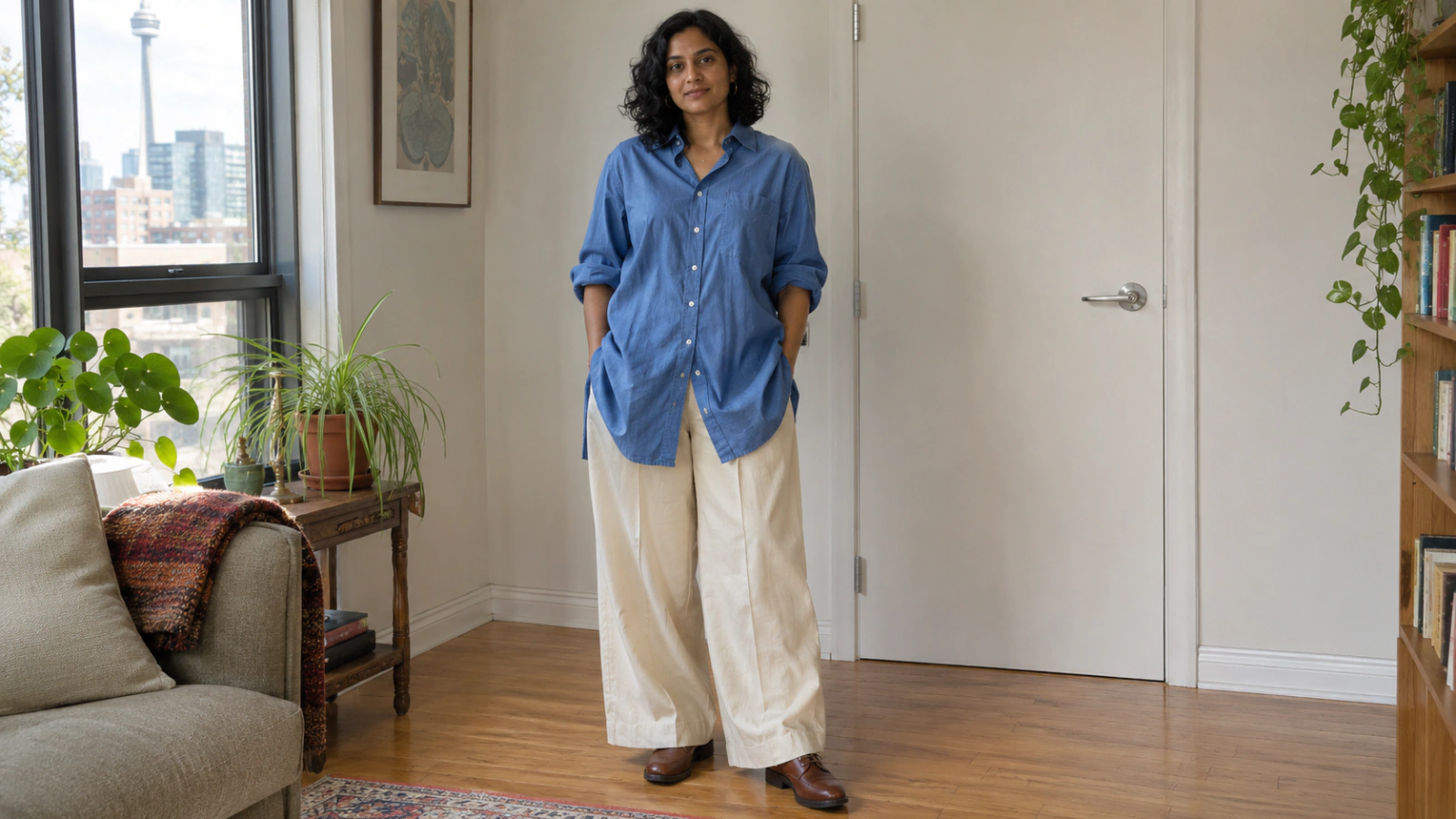
Put a long blue shirt over wide cream trousers and you have two generous shapes, one hanging from the shoulders and one from the waist. Tuck the shirt in and you have a great deal more cream. Either version can look lovely. If you prefer one immediately, look for the place where the blue stops. That meeting point is a good place to start playing with outfit proportions.
You can do the whole thing in clothes you own. Pick the piece you’d like to wear out today, find its partner and put your shoes on. Give yourself enough room to see the outfit from head to foot. By the time you leave, you want to know what length, width or opening made the difference, so you can get there again with another shirt.
Which part of the outfit do you want to see?
Suppose it’s a jacket with deep green patch pockets. Slip it on over a pale tee and straight jeans. Put your hands in the pockets and take them out again. Do you like seeing the big squares against the flat jacket front? Try the jacket buttoned. If what drew you to it was the narrow strip of pale tee between the pockets, open the front. Those are two quite different reasons to wear the very same jacket.
Choose one detail you would miss if it disappeared. It could be the swing at the bottom of a skirt, the curved shirt tails that show below a jumper or a pair of oxblood shoes you waited months to find second-hand. Keep that detail in sight as you change the clothes around it. It’s much easier to decide which jeans to wear once you know you’d like to see the laces.
Take a longer look at the outline
A silhouette is the shape you could trace around the outside of the outfit. Face a plain door and look at the space beside each sleeve and trouser leg. Then turn sideways. A loose shirt can fall straight at the sides and stand well away from the back when its tail rests on a belt loop. Release the caught fabric, let your hands drop and look again before reaching for a different size.
Where should the top finish?
Wear the cream trousers at the height where the waistband settles comfortably. Smooth the blue shirt over them, then pick up the front hem with both hands. Raise it just enough to uncover the pocket openings. Lift it again until the waistband shows. Which view would you like to keep? An extra inch of blue can quiet the line across the middle. An extra inch of cream can show off the pleats you bought the trousers for.
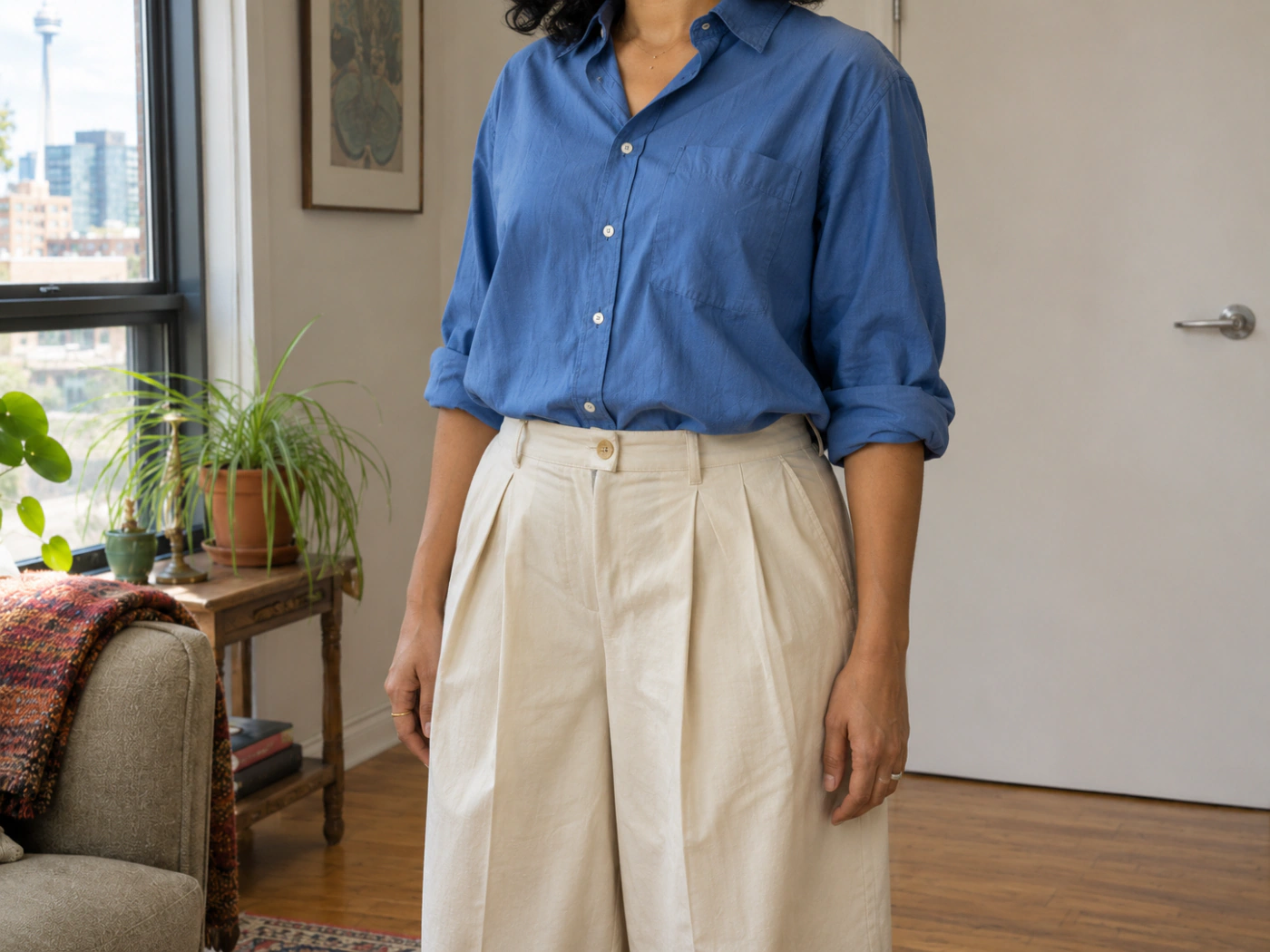
Try the following three arrangements with the same shoes on.
- Shirt loose. Look at the full outline from the side. A curved hem may reveal the pocket at the side even when the front covers it.
- Front tucked. Undo the lowest button if the fronts need room to spread. Ease a little fabric back out, then check whether the side seam still hangs where you like it.
- Fully tucked. Distribute the extra cloth around the waistband. Walk to a chair and sit. If the trousers already feel snug, try a shorter top loose over them for a similar amount of visible trouser.
Leave the favourite arrangement alone for a few minutes. Get your bag or make a cup of tea. A loose tuck that settles a little lower can be quite handsome. If it has to sit at one precise height for you to enjoy it, a top that actually ends there may be the easier choice on a long day.
How much room do two loose pieces need?
A roomy top and roomy bottoms can hang together beautifully. Pay attention to where the cloth travels. Put a boxy, fairly stiff cotton top over loose linen trousers. The top holds its shape around the elbows while the trousers swing as you walk. Now replace it with a soft, long-sleeved knit of a similar length. The knit may fall closer at the shoulders and follow the first folds of the trousers.
If you miss the boxy shape, put the cotton top back and roll a sleeve once. A glimpse of wrist separates the edge of that wide sleeve from the wide trouser leg beside it. Try the sleeves down again while seated. With your forearms on the table and your legs mostly out of sight, the original length may be exactly the one you like for dinner.
What if the outfit feels crowded?
Look for two pieces trying to occupy the same space. A cardigan hem can sit right on the first deep fold of a gathered skirt. Fastening that last button may press the fold flat at the front and send the fullness out at the sides. Undo the button and watch the skirt fall. If you’d like the cardigan closed, try a shorter one that finishes just above the gathers. The skirt gets room to open, and you get to keep your warm sleeves.
Put the shoe and hem in the same picture
Start with the shoes you’d choose for the trip. Let the trouser or skirt hem settle around them and walk several paces. With a midi skirt, compare the boot shaft and the hem as you take a step. Look again when you stop. A straight trouser leg can hang quite differently over a low loafer and a boot with a thick tongue. You may like the little fold at the front over the boot. Check the back too, especially if you’ll be on wet pavement.
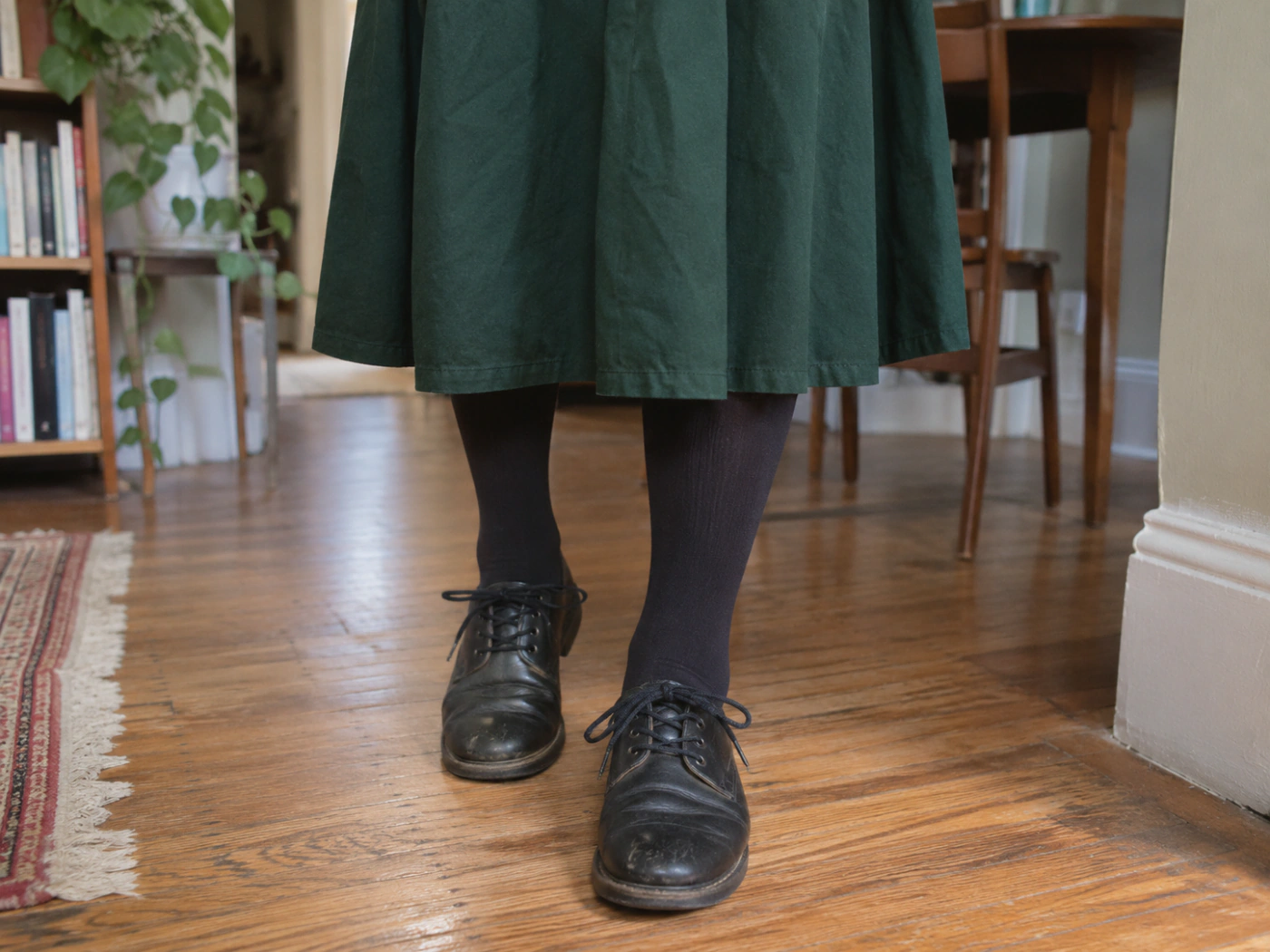
For a skirt, look at both the amount and the shape of the shoe that shows. A deep green skirt with dark tights and black lace-ups might read as a sweep of dark colour. A light sock above the same lace-ups creates two definite edges at the ankle. Give both a turn if you own them. The light sock can pick up a pale collar, or it can be the small unexpected bit you wear entirely for yourself.
Pull out a photograph of a skirt outfit you liked wearing. How much of the shoe shows below the hem? Try the same skirt with a pair of shoes that suits the walk ahead and see whether you still like the line from knee to toe.
What happens when a third piece goes on?
Keep the base outfit the same and lay two possible outer layers over a chair. Say you have a waist-length denim jacket and a long open cardigan. Over a plain dress, the denim puts a clear horizontal edge wherever its hem lands. The cardigan draws a pair of long edges down the front. Stand well back from the mirror and look at how much of the dress you can see between them.
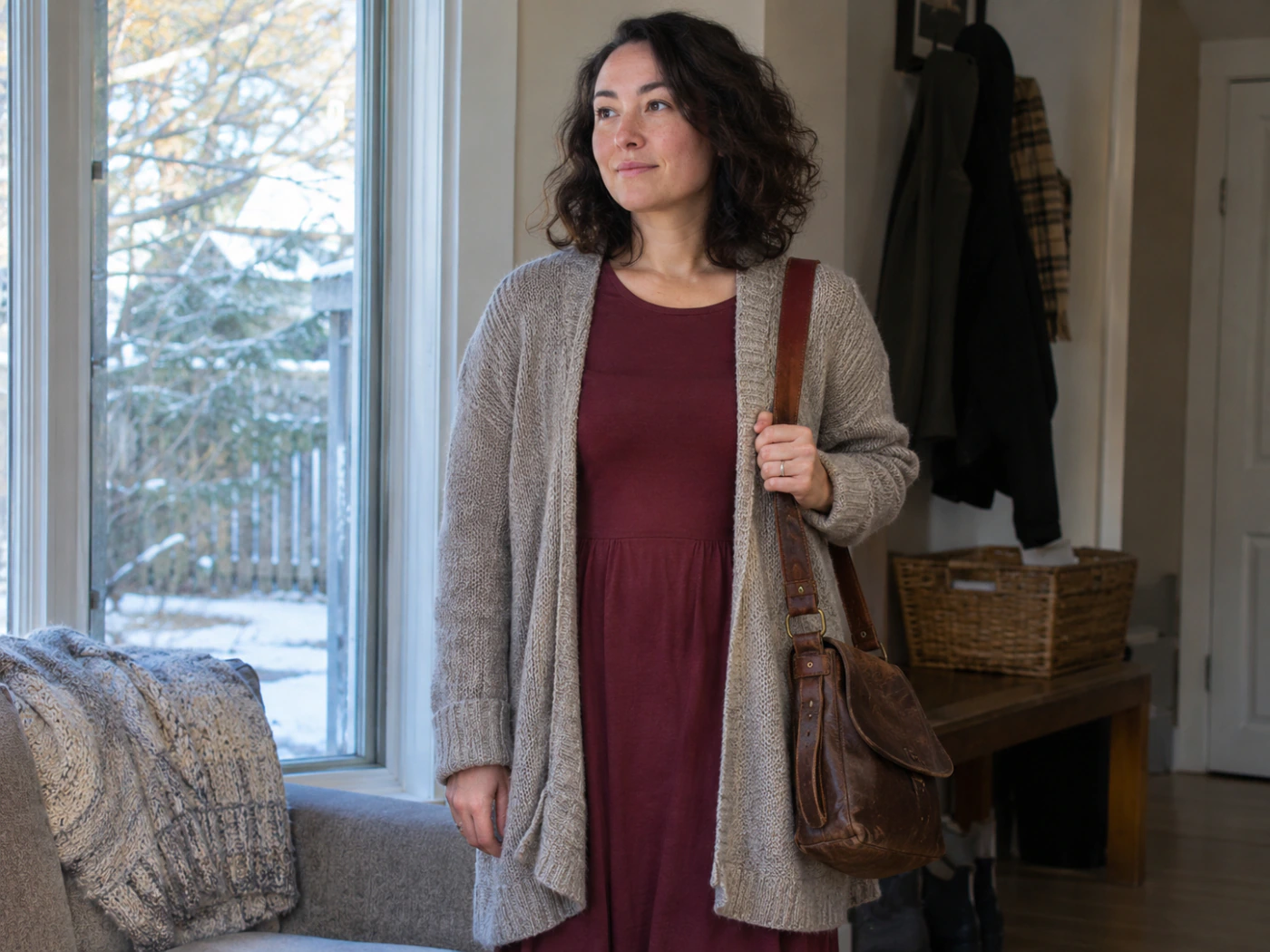
Now carry your usual bag. A strap across the body can pull one panel of that cardigan towards the opposite hip and cover a detail you wanted to show. Slide the strap under the open cardigan if you can still reach the bag comfortably. Or try the denim jacket with the same strap. Its shorter panels give the bag a clear place to sit. The difference might save your cardigan for a day when you’re carrying a tote by its handles.
Keep the view you’ll actually repeat
Take one full-length picture in a favourite arrangement and one from the side if there was a particular fold you liked. Include the shoes. A picture cropped above the ankles won’t remind you why the wide trousers looked so good that day. Add a few words about how you wore the pieces, such as “blue shirt loose, cuffs turned, pocket corners just visible.”
For tomorrow, change one piece and borrow that observation. A striped shirt which comes to the same pocket corners might be right left loose, even if you usually tuck it in. A much longer tunic may give the trousers a different appeal entirely. Take the combination to the door and see whether the shoes, the pocket or that good length of blue still catches your eye.