How to Buy Clothes That Last in Your Wardrobe
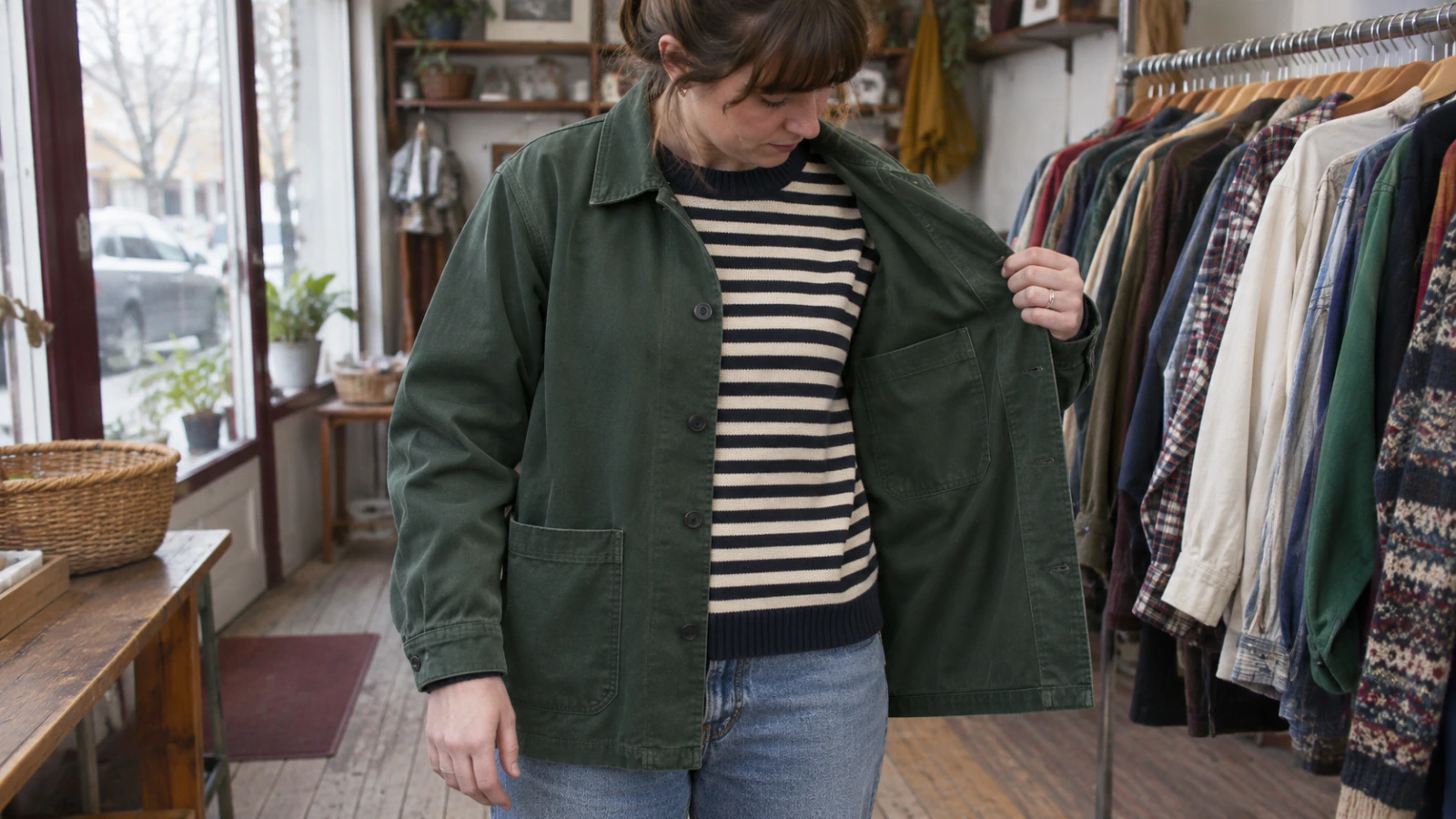
Imagine finding the perfect-looking jacket while wearing the wrong sweater to try it on. The colour is a deep bottle green, the pockets are exactly where your hands want to go and the last bus home leaves in twenty minutes. Would you buy it? Buying clothes that last starts with two separate questions. Will this particular garment stand up to the way you’ll use it, and will you still choose it when it’s hanging beside your old favourites? You can gather quite a bit of evidence for both before the till.
Bring one worn-out favourite to the decision
Think of the last garment you wore enough to wear out. Where did it go first? If the front pocket of your coat wore through, run a hand into the new pocket and look where the bag joins the opening. If your last pair of jeans thinned at the inner thigh, turn that area towards the light. On second-hand denim, look for a change in thickness beside a repair as well as at the repair itself.
Past wear also tells you what you liked enough to put up with. Perhaps those jeans were the one pair you could sit cross-legged in. Try that position in the next pair if you have a clean, comfortable place to do so. A higher price tag does little for the months ahead if the first half hour in the jeans is an argument with the waistband.
Write a description small enough to take shopping
Try “green jacket, room for my striped jumper, inside pocket for a phone, easy to wear on a bus seat.” Bring the jumper if you can. Check the length of your phone against the pocket if you can’t bring both hands free to the fitting room. This short description works at a swap, on a resale site and in a department store. It gives you a way to recognise a good brown jacket, too, if colour turns out to be the one thing you’re happy to change.
Look closely where the garment has work to do
Start with an everyday movement. Fasten the jacket, slide a hand into the pocket, sit down and reach for an imaginary stop request. Where does the cloth come under tension? Take the jacket off and look at that place from both sides. A pocket corner already pulling away deserves a closer look. A little extra folded lining at the back of a tailored jacket can be there to let you move. See how it behaves with the jacket on before treating a fold as a fault.
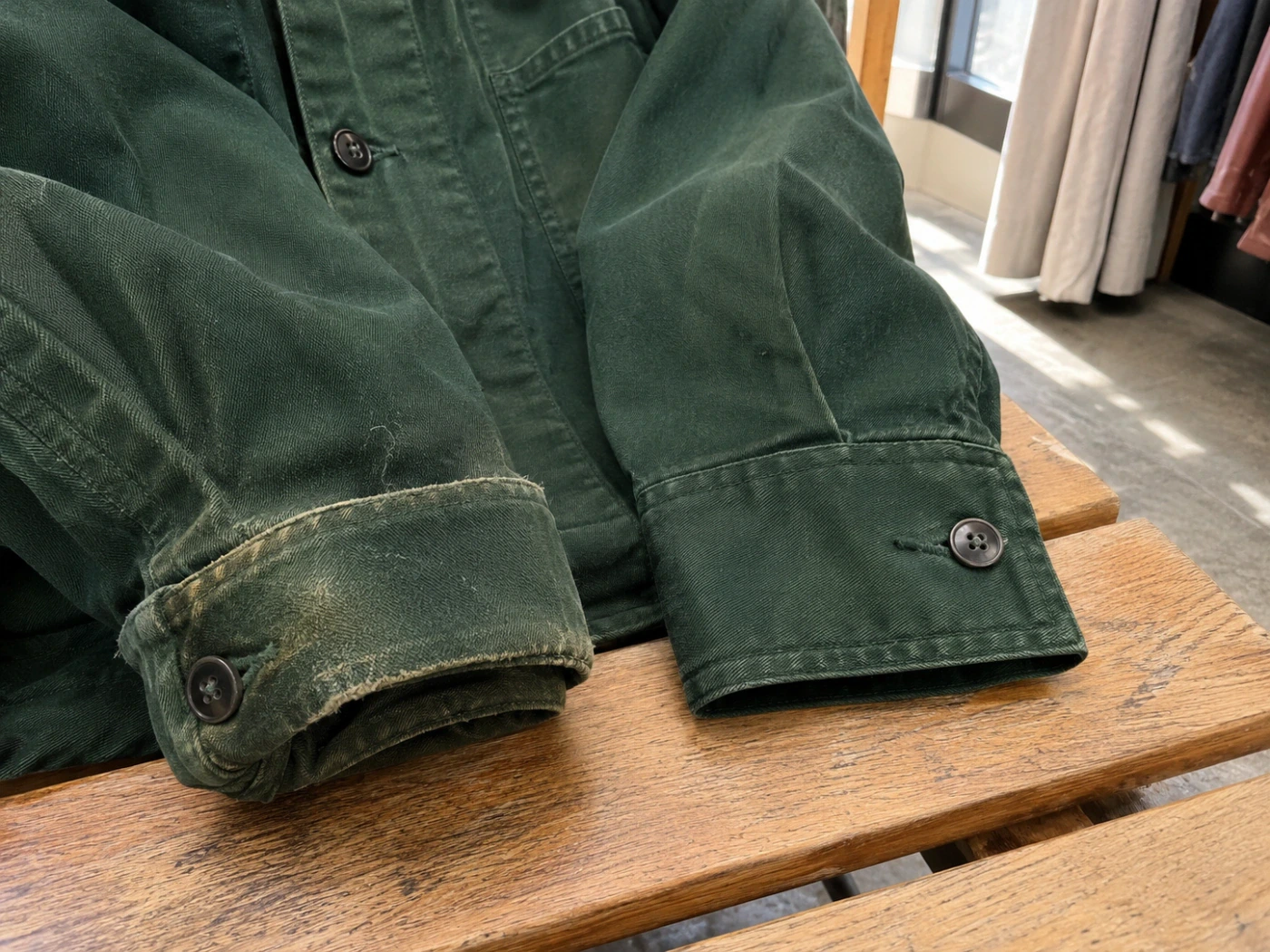
A few observations are more valuable than a universal list of “quality” details.
- Turn a cuff. Look at the edge that will meet a desk or rub against a bag. Compare the right and left cuffs, especially on something someone else has worn.
- Use every fastening you rely on. Draw the zip through its ordinary travel and open the buttonhole with your usual hand. See whether the lining gets drawn in when you hurry.
- Carry something in the pocket. Your own keys or phone will show where the weight lands. Does the pocket tilt out, swing against your thigh or settle comfortably?
- Check the part you can’t see while dressed. A skirt lining might catch at the knee, or the inside of a jacket sleeve might feel rough over bare arms. Give that surface its own minute.
Take these as clues to follow. Neat visible stitching is encouraging. It can’t tell you how the coat will fit over your winter sweater or whether a worn area on the lining can take another seam.
Read the label with wash day in mind
One green overshirt might have a cotton body and a different blend in the sleeves. Check which part of the shirt each percentage describes. Then read the separate care instructions. How would washing and drying this shirt fit into your usual laundry day?
Say one shirt needs to dry flat and the other can hang on your rail. In a home where the folding rack doubles as the only place to dry towels, that difference can decide which shirt will be clean when you want it. If you enjoy giving the flat-dry shirt that attention, keep it in the running. If every similar shirt is waiting in a basket, include the wait in your decision.
What if you’re buying from a photograph?
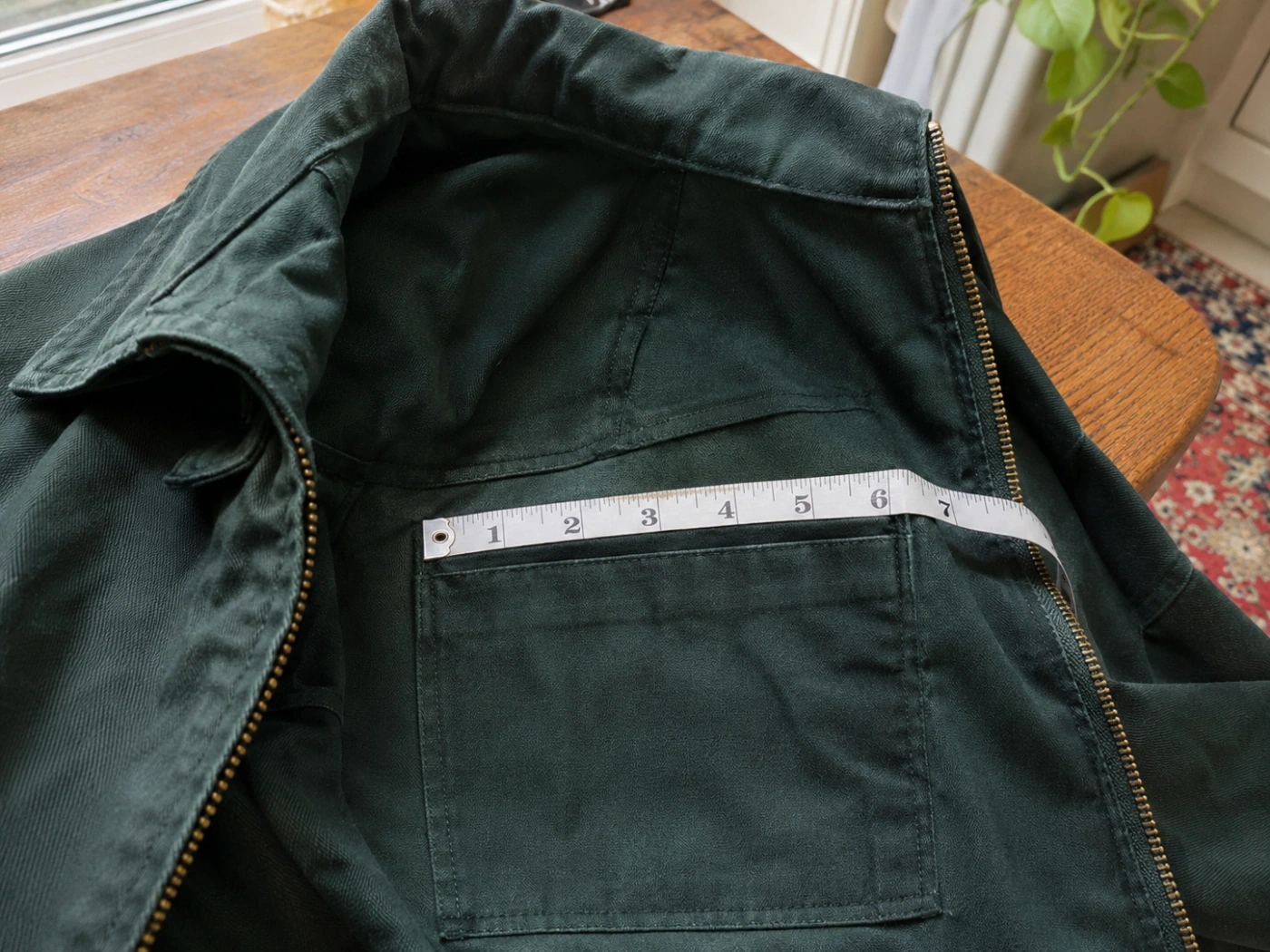
Ask for the single view that would change your mind. For the green jacket it might be the inside pocket with a tape beside the opening, or the cuff turned back in daylight. Give a seller the starting and finishing points of the measurement you need. Compare their answer with a jacket laid flat in the same position at home. A label size alone won’t tell you what happened after years of washing or a previous owner’s sleeve alteration.
Give the price a second line
Write down the amount you’d pay to take the garment home, including delivery on an online order. On the next line add any work it would need before its first wear. A missing standard shirt button might already have a match in your sewing tin. A pair of dress shoes needing new soles calls for a cobbler’s opinion and a quote. A beautifully cut coat with moth damage at the shoulder is a different proposition again. Describe the fault when you ask about repairs. For a winter coat, try a cost-per-wear calculation using the repair quote and the number of days you expect to wear it.
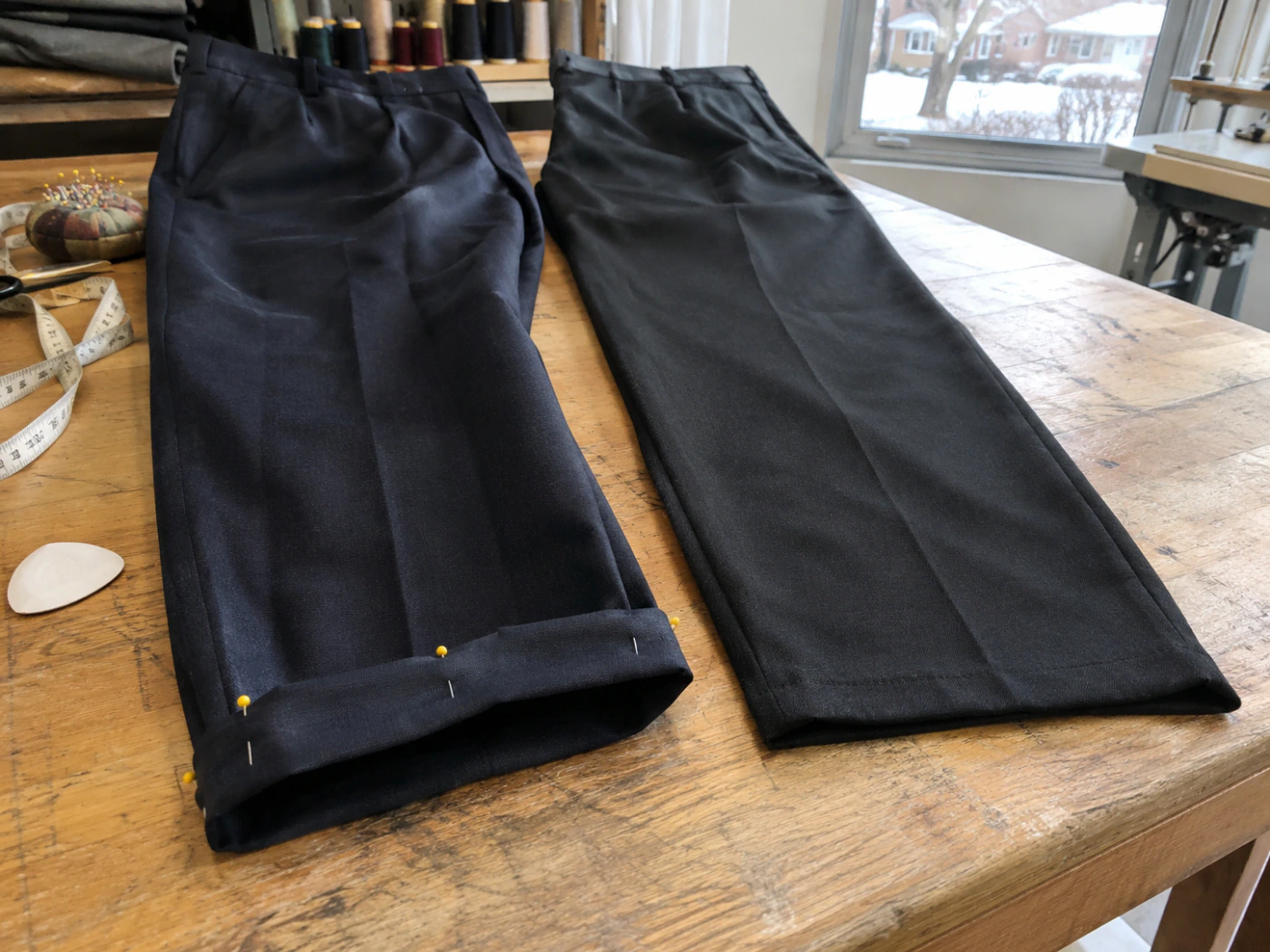
Suppose two pairs of second-hand trousers come to $42 and $65 in Canadian dollars. The first needs a $28 hem in this example. The second already works with your usual shoes. Their starting costs for a wearable pair are $70 and $65. If you prefer the cloth and fit of the first pair and have time to wait for the work, five dollars buys a difference you can name. Replace those example figures with the price and quote in front of you.
When does renting or borrowing make more sense?
A confirmed dinner in a dress code you rarely wear is a good time to check. Set the costs of rental, delivery, return and any required cleaning alongside the cost of a purchase you’d actually keep. Ask when you can try the piece and what happens if the fit is wrong. Borrowing from a friend also needs a little calendar space. Try it with the shoes you plan to wear and agree on care before the evening. A borrowed hem and a steep flight of stairs deserve to meet early.
Decide before the tags come off
At home, give the purchase a dress rehearsal while you’re still within the seller’s return conditions. Read those conditions first, then keep tags attached and protect the garment as required. Retrieve the exact pieces you had in mind. Take a seat in the trousers. Put the actual coat over the sleeves. Leave the outfit on indoors long enough to notice whether you keep reaching up to fix the same collar.
If a surprise turns up, name it in a few words. “Shoulder tight under coat” suggests a second try under another coat you already wear. “Love it as long as I never button it” can be perfectly sensible for a summer overshirt and a poor bargain for a jacket you need at a windy stop. Where the seller offers an exchange, check that the other size solves the problem without moving it somewhere else.
When an old favourite leaves the closet, carry its lessons forward. For resale, show the rubbed cuff and give the actual measurements. For donation, check what the recipient accepts and set aside pieces that need another route. Keep one small note for the next purchase. The pocket was deep enough, the shoulders took a jumper, and bottle green looked good with every scarf by the door. Those are details worth looking for again.