Choosing Clothes That Are Easier to Put On, Move In and Take Off
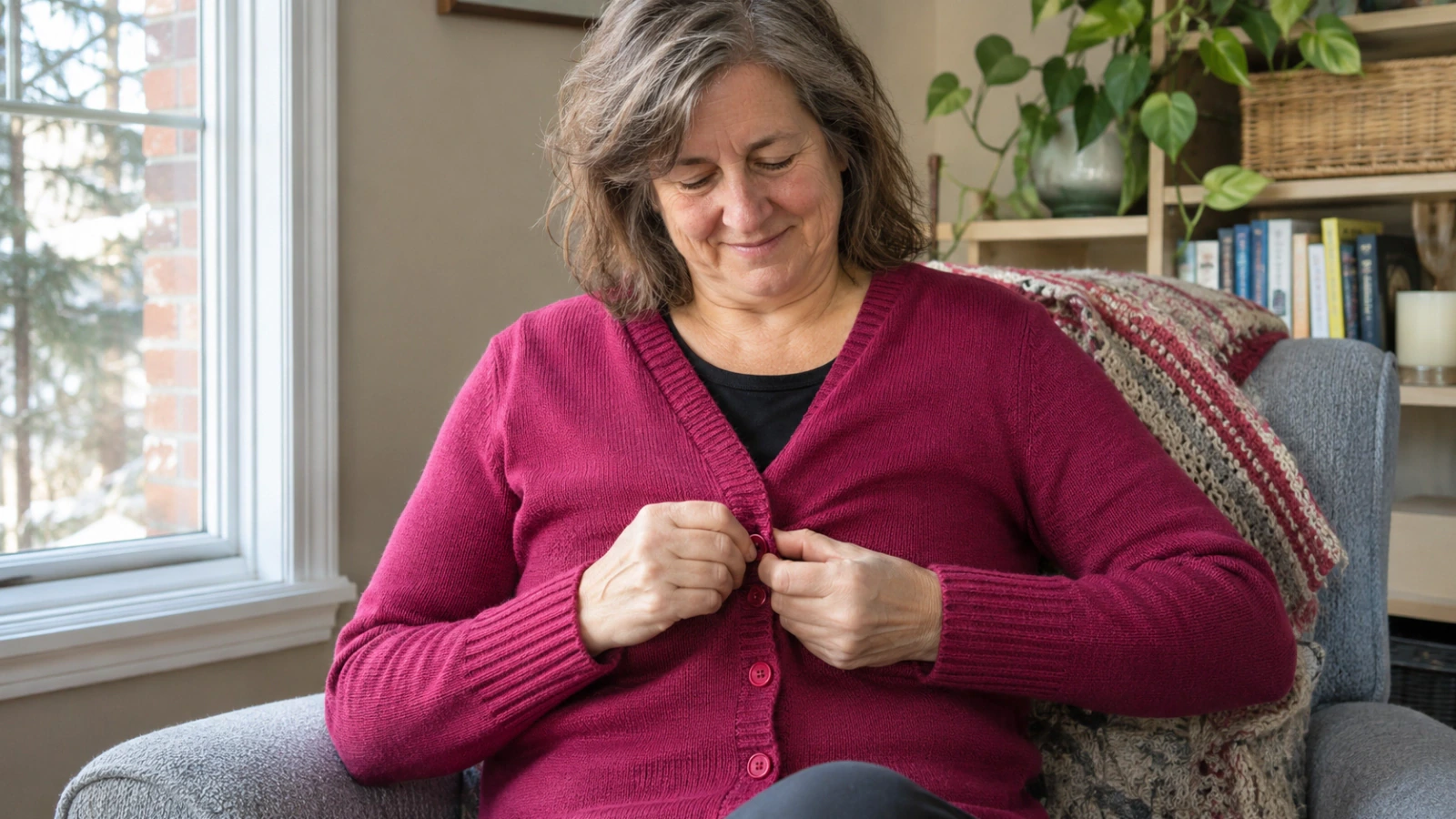
The colour of a raspberry cardigan can be just right and the buttons just fiddly enough that it stays on the hook. Start there when you want clothes that are easier to put on, move in or take off. Keep the detail you like in sight and follow the garment to the moment where it asks for more reach, grip, time or help than you want to give it. That small moment is a much better shopping companion than the word “easy” on a label.
Which part of getting ready would you change?
Think about the last time you chose something else from the closet. Perhaps a shirt felt wonderful once it was on, but threading your arm through a narrow cuff took too long. Or the trousers were simple to pull on in the bedroom and awkward to manage in a small washroom. Those need different changes. Name the part you would like to keep as well. A wide neck might solve the first few seconds of getting dressed and leave you missing the high collar you love all day.
Choose a familiar piece that already works for that particular action. You might have a fleece with a zip you can find by touch, a skirt with a waistband that stays where you set it or a blouse you can undo for nursing while seated. Set it by the garment you wear less. Where are the openings? How wide do they become? What does the other hand do while you fasten them? The answer may be tucked away in the cuff of something you’ve owned for years.
Try the opening both ways
With the garment off, trace your hand’s path from the first fastening to the last. A zip pull with a generous loop may be easy to lift once the bottom is engaged. Starting a separating zip asks you to line up two small parts first. A press stud can be easy to find through the fabric and still require more pressure than you like to close. Put it down if it’s uncomfortable. An easier stud might suit the same knit.
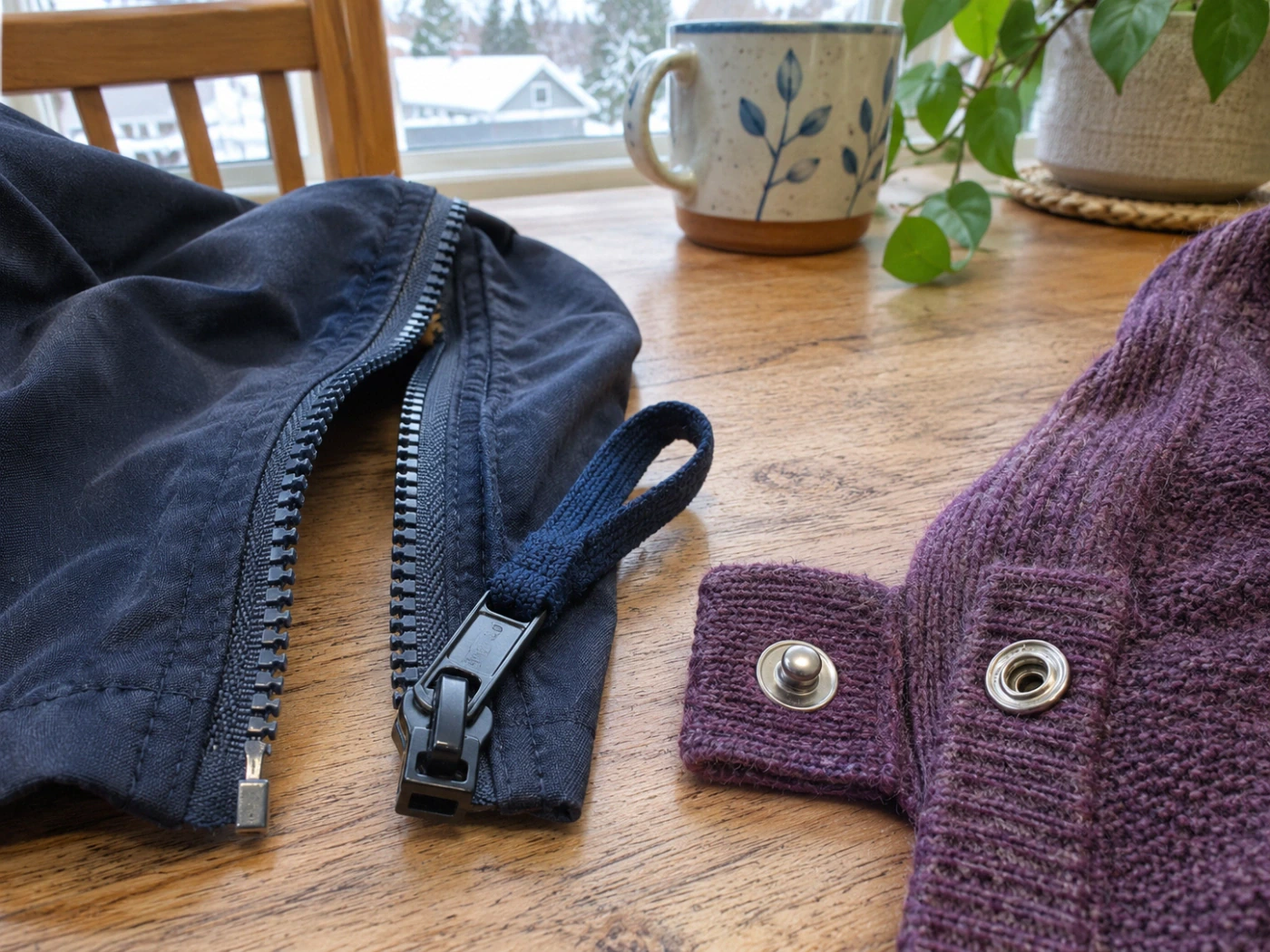
Now try the same thing wearing it, in your usual position. See whether the inside edge rolls away, whether the gripping surface feels slippery and whether opening it again is as easy as closing it. If you love the cardigan but the buttons stay awkward, take it and a fastening you like to a mender. When you ask about changing a fastening, show them how you hold the two edges together. That small movement helps explain what you’d like to keep easy.
Give a seated outfit its own fitting
Try the outfit in the chair or position where you expect to spend time. A waistband can be soft in your hand and feel quite firm when it folds into two layers at your waist. Smooth the front once, then let it settle while you reach for a glass or open a book. Notice the places you can feel through the fabric. A pocket seam, belt end or drawstring knot might be the whole reason you usually change out of something after lunch. If the pressure comes from the denim itself, a seated fit check for jeans can help you locate it.
See where the skirt, shirt or jacket comes to rest. If you want more coverage over your knees, look at the lining as well as the outer skirt. A longer skirt with an equally narrow lining might give you the same tug a few centimetres lower down. If you want less bulk behind you, compare an open-front cardigan with a shorter jacket and notice where each back hem settles against your chair.
Place the pocket where you reach for it
Take the item you actually carry. A small phone in a grippy case and a smooth transit card ask different things of a pocket. Use the hand you normally use and find the opening with the garment on. See whether it stays accessible once the jacket overlaps it. Try getting the item back out too. A deep front pocket can be perfectly secure and put the last corner of your card just beyond comfortable reach.

If you use a mobility aid, bring it into the try-on in the way you ordinarily use it. From your usual position, see where cuffs and hems sit in relation to your hands, wheels, grips or footplates. Keep loose fabric clear of moving parts. A shorter cuff, different pocket or less fullness in one place may let you wear the soft sleeve or swishy skirt you had in mind. The size label can stay the same.
Let one outfit cover a change of plan
A long lunch that turns into an afternoon walk makes a good test of a soft trouser waist. Wear the trousers with a top long enough to give you the coverage you enjoy. Take your usual comfortable steps, then return to the chair. If both the waist and hem need putting back in place, try a different rise or leg shape. Tightening a drawstring until it holds can leave a hard little knot precisely where you least want one.

During pregnancy or after birth, it can help to plan an outfit for the next actual occasion on the calendar. Perhaps you’d like a blue work shirt open over a soft tank for a short meeting. Check both layers seated. If nursing access matters, see how much of each layer you’d have to move, how you’d manage it with one hand occupied and whether you like the coverage from the side. Borrowing or adapting a piece for this stretch of time is a perfectly practical way to keep wearing your usual colours.
Give a one-piece outfit a rehearsal for the room where you’ll change. A jumpsuit may have a lovely wide leg and a zip you can close at home with a friend nearby. In a small cubicle, which part would need holding clear of the floor? Can you manage the zip and the cardigan over it in the order you prefer? Matching trousers and a top in a similar cloth can keep that uninterrupted sweep of colour if separate pieces would be easier to handle.
When someone helps you get dressed
The wearer gets first say about the outfit and the help. If you’re helping, offer to bring a couple of pieces into reach and ask which part they’d like you to do. Holding one edge of a shirt steady might be enough. They might prefer you to fasten the cuff, pass the mirror or give them a minute in private. Pause for the answer, including when the answer changes halfway through.
If you sometimes dress with help and sometimes on your own, try the same opening both ways. A back closure someone else can reach may be awkward on a morning when you dress by yourself. A side opening under the arm you use most may work in both situations. For an adaptive garment sold online, ask for a picture of the opening fully spread on a table, from the inside as well as the outside. You can see where the fabric overlaps and what sits against the skin.
Take three details back to the closet
Before buying a different garment or taking a favourite to a mender, make a short note in the words you’d use over the counter.
- Keep the part that makes you choose it. That might be the raspberry colour, soft collar or deep cuff you like to turn back.
- Change one action. “I can close the front myself if somebody holds the bottom still” gives you a specific opening to compare.
- Try the result in the place it matters. Sit at your table, reach into the pocket or put your coat over it, whichever usually changes how the outfit feels.
Ask a mender if you can handle a sample of a proposed fastening before they alter the garment. Find out how the new piece would feel inside and whether you could keep the old buttons as decoration. Sometimes the answer is wonderfully small. You take the cardigan off the hook for the colour, manage the front the way you chose and get on with deciding what goes with raspberry.