How to Wear a Blazer With Jeans, Trousers or a Dress

Button a blazer over the shirt you mean to wear and reach for the keys on the table. Look at the jacket again when your arm comes down. If the collar settles, the fronts hang where you like them and you can get at your pockets, keep it on while you try the rest of the outfit. A blazer you can wear with jeans, work trousers or a dress has to pass two tests. It has to fit over the clothes underneath, and you have to like the view of those pieces together.
Is this a jacket you can wear on its own?
Take the jacket to a window. Look at the cloth from an arm’s length away and again from the doorway. A soft brown check or a navy weave with a little texture is often easy to imagine with separate trousers. A very smooth jacket may still look like half a suit to you, especially beside trousers in almost the same colour. What matters is the particular pair in front of you. Brass buttons, patch pockets or a label saying sport coat can describe a detail. None can settle whether you like the jacket over your own jeans.
If it came from a suit, put the matching trousers beside it first. Then try the separate pair you plan to wear. When the two navies are close but don’t quite match, make the difference easier to see with stone chinos or grey flannel. If what you liked in the first place was the long line of matching cloth, save the jacket for the suit. When buying pieces meant to match, compare the jacket and trousers as a set in the same light before you take either one home.
Fasten the blazer over what you actually wear
Start with the blouse, shirt or knit you usually reach for. Smooth the sleeves and fasten the jacket at its intended closure. On a one-button blazer there’s only one choice. On a double-breasted one, find the working outer button and the inside fastening that holds the underlapping front. Let the collar rest against the back of your neck and allow both arms to drop. Now you can see what the fronts do without your hands pulling them into place.
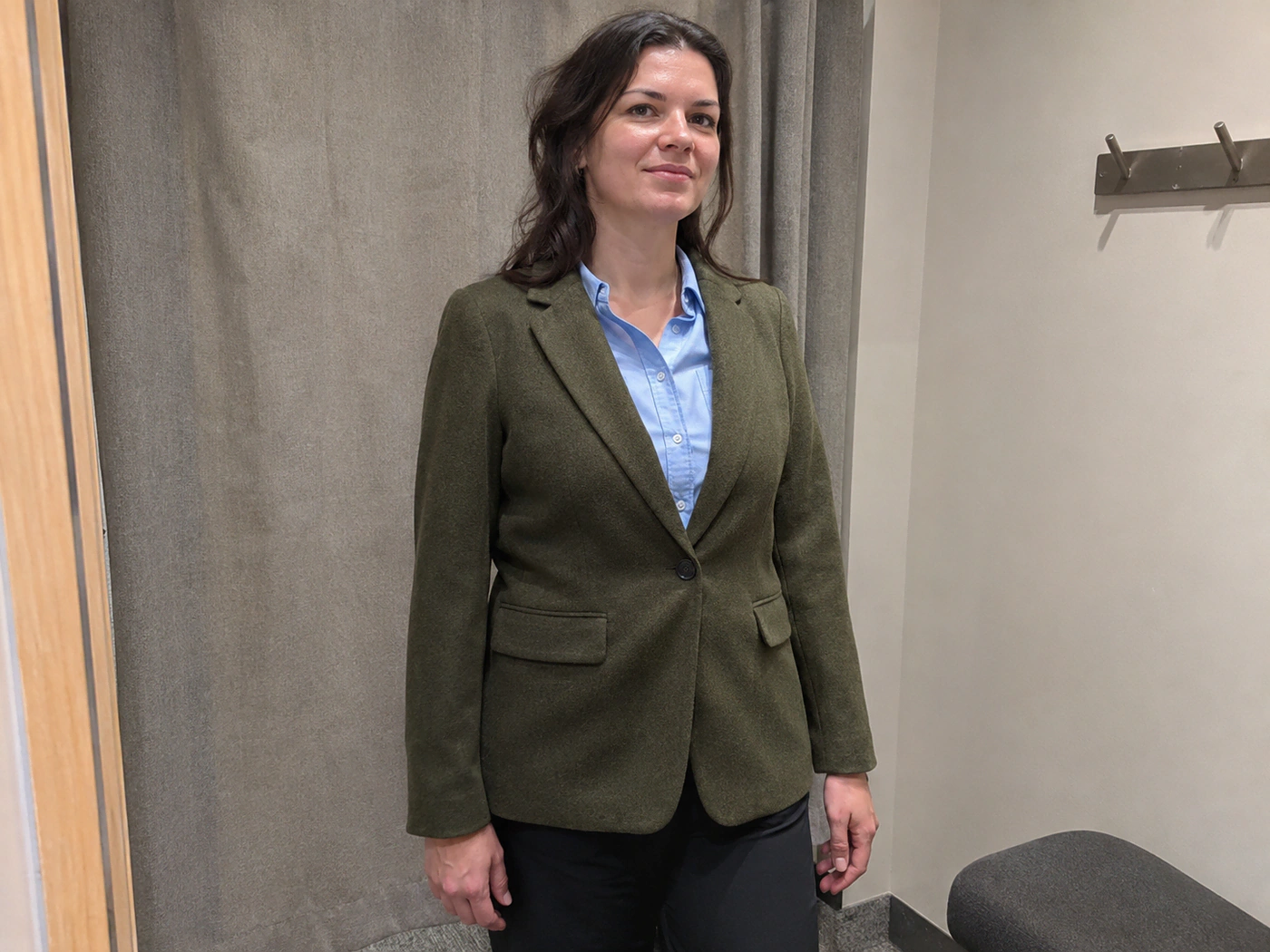
Look from the fastening up to the lapel, the folded edge that runs towards the collar. Does the lapel rest against the shirt, or does it lift when you close the button? Reach to a shelf at a comfortable height, bring your arm back and see where the cloth settles. A fold that disappears after that movement tells you something different from an opening you have to smooth down every time you sit up.
If you like the shoulders but the jacket pulls across the bust or through the back, try another cut over the same shirt. Going up a size may give you room in front and more length at the shoulder than you wanted. Compare the two one shoulder at a time. If you intend to wear the jacket open, give it that trial as well. The fronts should hang in a place you enjoy without a continual tug at the hem.
Put the sleeves through an ordinary workday
Sit at a table, rest your hands where a keyboard would be and reach for a glass. Notice where the blazer cuff ends and whether the sleeve underneath comes along when you bend your elbow. A ribbed sweater can catch inside a sleeve that slides easily over a cotton shirt. Try a finer knit or a roomier jacket sleeve before deciding the shoulder needs work. If you’ll put a raincoat on over the blazer, do that once in the shop. The test takes less time than straightening two sleeves at every bus stop.
Which blazer works with your jeans?
Lay one jacket sleeve across the denim. A brown checked blazer and dark, evenly coloured jeans leave plenty of room for the check to show. With faded blue jeans and the same jacket, the lighter patches at the knee or thigh may draw your eye first. Stand both outfits up with the shoes you’ll wear. A change you barely notice on the bed can be quite clear across a café table.

For a dinner where denim is welcome, try a plain tee and loafers with the dark pair. If you want a collar showing, keep the jeans and shoes and swap only the tee for an Oxford shirt. The heavier collar can sit inside the jacket neckline when you turn your head. If it keeps slipping under one lapel, try the shirt one button more open or choose the fine knit polo you wear in warm rooms.
For work trousers, give each surface a turn in daylight. Mid-grey flannel and a navy blazer make the boundary between the pieces easy to see. Smooth black trousers with a black jacket may call attention to a difference in finish instead. If you like the two blacks together, repeat the comparison with the indoor light you’ll work in. You might prefer a little of the pale shirt visible at the waist when the jacket is open. Wear whichever shoes you can make the whole journey in.
Try the jacket over a dress
Put the dress on first and find the detail you’d like to show. It might be a belt, a line of buttons or the place the skirt starts to open. Slip the blazer on without fastening it. A hip-length jacket over a belted midi dress can frame the buckle between the fronts while the sides cover the waist. A shorter jacket that ends beside the belt leaves the shape of the skirt visible from both front and side.
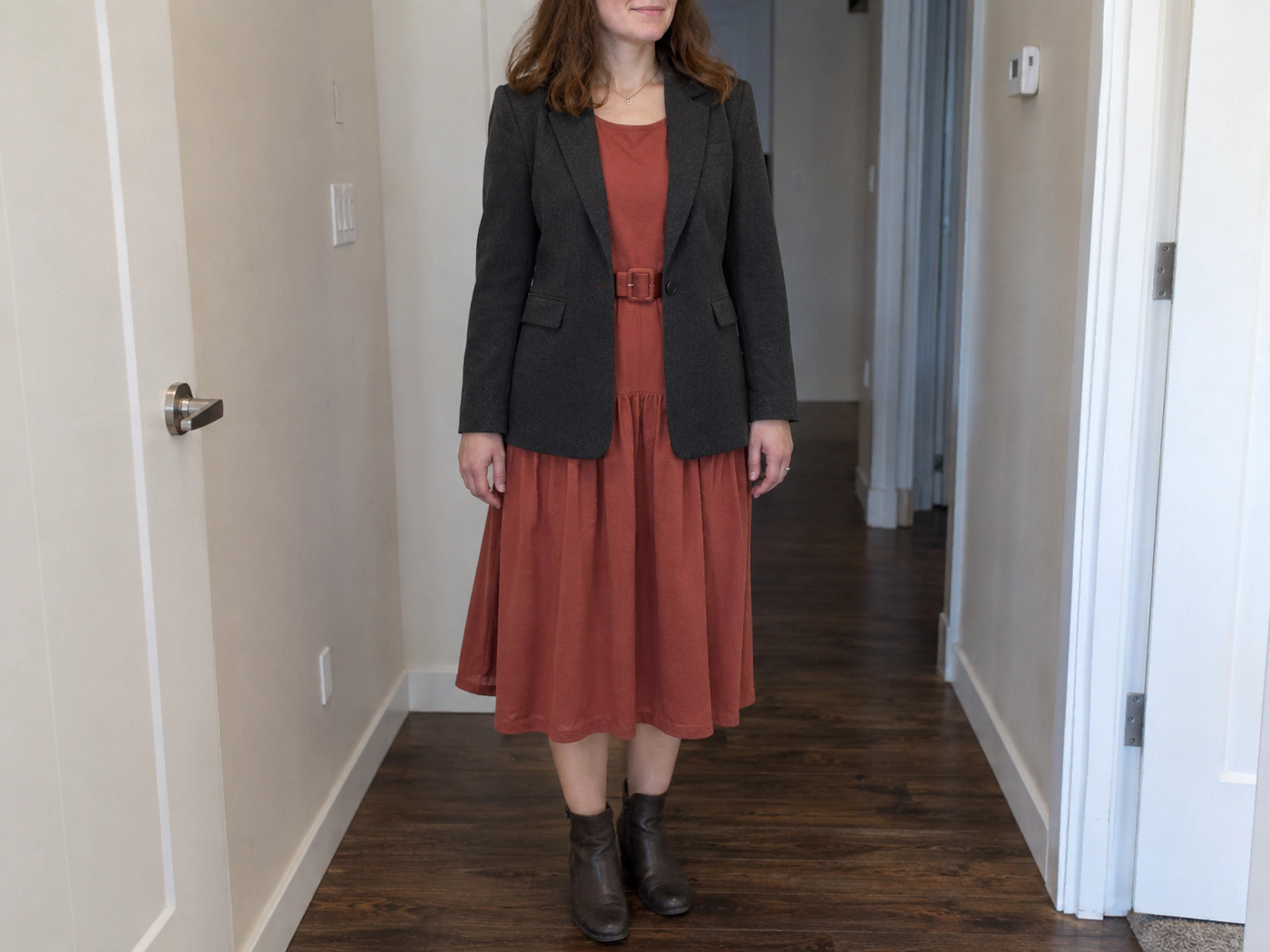
Sit in the combination before choosing the length. Stand up again and look at the back. A jacket hem can catch on a belt loop or rest above a gathered skirt until you pull it down. Try the dress without the belt, if that’s a way you’d wear it, or try a jacket with a straighter hem. The same check works with a tucked blouse and wide trousers. Move just one edge while you compare where the top and waistband meet.
Decide whether a small change would earn its keep
Perhaps the blazer fits and the only thing you keep noticing is the flash of the buttons. Before taking anything off, hold one possible replacement over the original. A dark horn-coloured button can let a fine check show up first. A warm metal button might be exactly what makes a plain navy jacket work with the jeans you wear on Saturdays. Check the outfit from the doorway as well as close up.
If you’re taking the blazer to a tailor, bring the layer and bottom that made you want to wear it. Three observations make for a more useful conversation.
- Show the resting fit. Fasten the blazer and let the tailor see where the fronts and collar sit before you adjust anything.
- Repeat the movement. Reach or sit in the way that first made the sleeve catch or the vent stay open. Point to where you feel it.
- Ask to see the proposed finish. For a shorter sleeve, look at the position of the cuff buttons. For a new front button, try the actual sample through the existing hole.
Back at home, give the blazer a hanger that supports its shoulders. Hang the shirt or dress from the combination you chose nearby, and remember which shoes made the hem sit the way you liked. Next time the message says to wear a jacket, you’ll have a real outfit to start from. All you need to ask the host is whether jeans will suit the room.