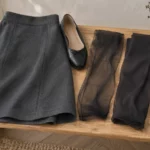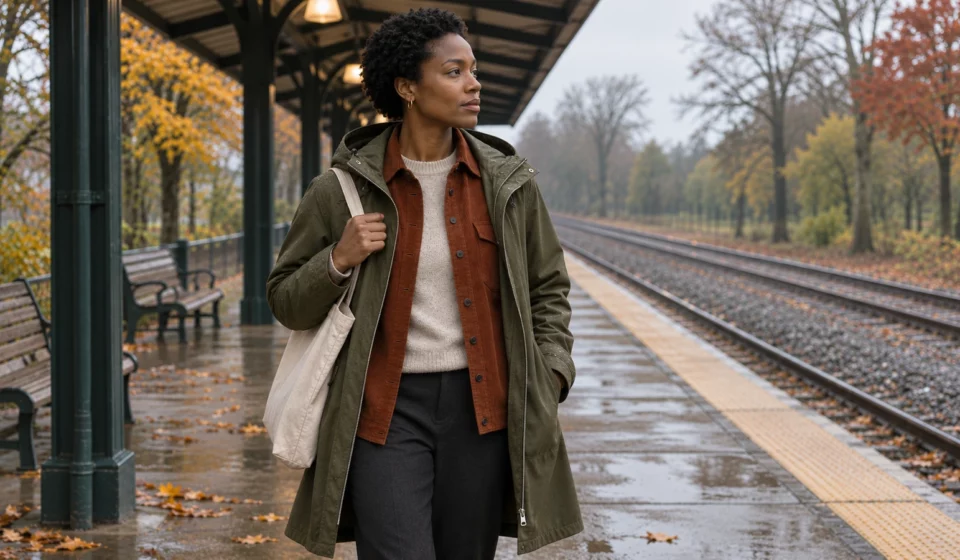

On a cold commute, the most useful layer is often the one you can open with your bag still on your shoulder. Start with a top you’ll be comfortable wearing at your destination. Give it a front-opening layer for the walk and something to keep the wind or rain off you at the stop. On the train, open the outer layer at the neck first. How you feel a minute later tells you whether the whole coat needs to come off.
Count the minutes you stand still
Suppose your trip includes a twelve-minute walk, a five-minute wait on an exposed platform and half an hour on a warm train. The walk and the wait are both outdoors, but they ask different things of a coat. Think back to yesterday. Were you already warm at the top of the station steps? Or was the wind coming in at the neck while you waited? That tells you where the first adjustment belongs.
Give the return trip a line as well. An evening spent waiting for a connection can justify a warmer layer than the morning walk would suggest. If your route changes through the week, put the journey beside each day’s destination. You may want the heavier coat on the late-shift day and the lighter one for a direct trip home.
Dress for the room at the other end
Try a light oatmeal crewneck with dark trousers and the shoes you wear to work. Take a seat and reach forward in that outfit alone. If you’d happily spend the morning in it, that’s your base. If you need a collar for a meeting, make a button-up shirt the base and move the warmth to a cardigan you can remove.
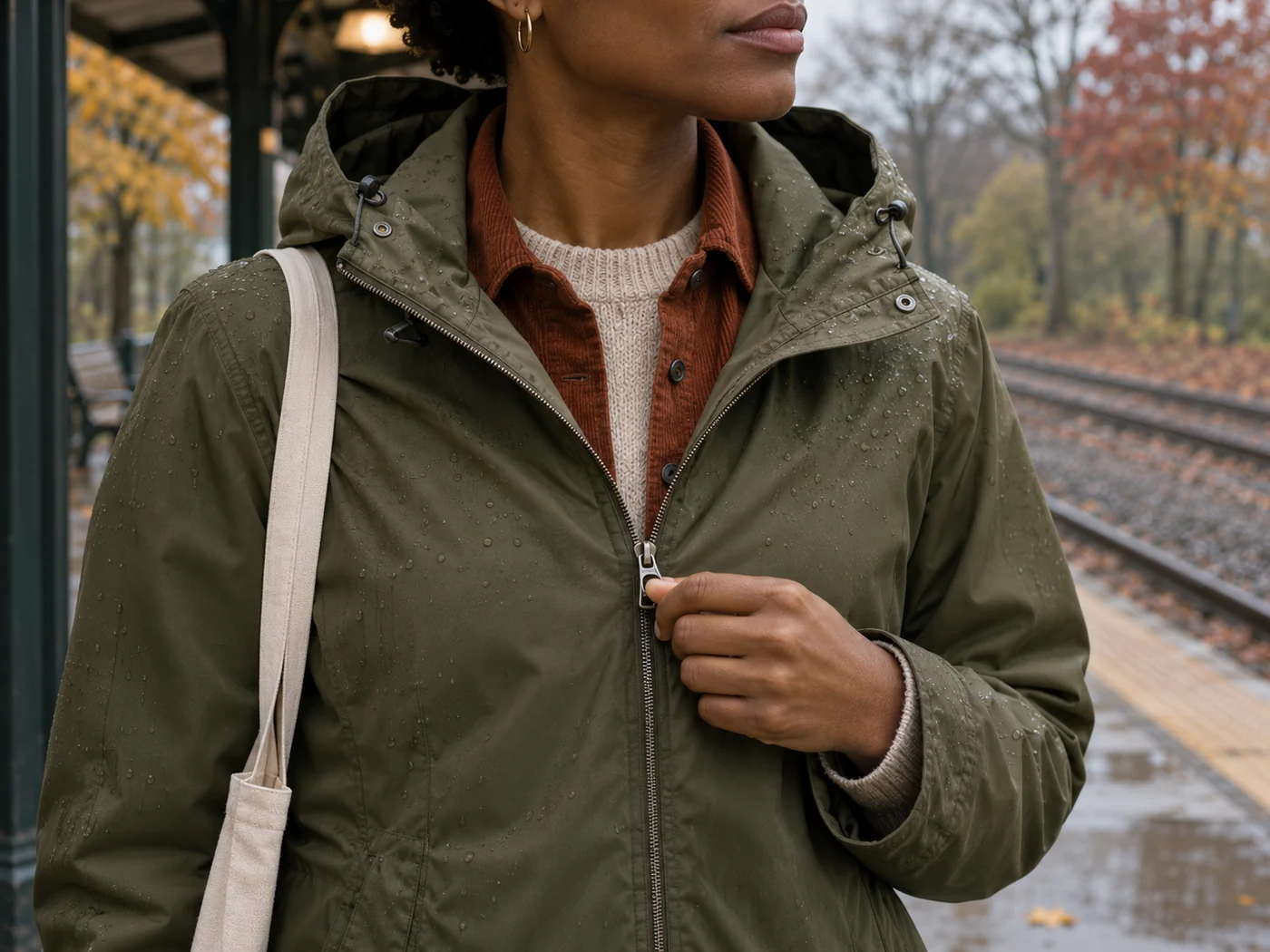
Over the crewneck, try a rust overshirt and a raincoat. The overshirt adds some warmth while you wait. Its front can hang open on the train even if the carriage is too crowded to take it off. At home, put on the loaded bag. Reach for the coat fastening with your free hand, the way you’ll have to at the station.
Give the fastening a job on the route
- On the walk. If the uphill stretch usually leaves you hot, lower the zip a few centimetres before the climb. A two-way zip also lets you open the hem for a longer stride while keeping the collar closed in the wind.
- At the stop. Close the opening again if the wait feels cool. With a buttoned coat, try undoing just the top button once you’re under cover. See whether the collar falls open or whether your bag strap holds it firmly against you.
- In the carriage. Once you have a place to stand or sit, open the coat and the overshirt. An open cardigan underneath is even simpler to loosen. If you’re still too warm, slip off the coat when there’s room to free both arms.
Where will the coat go?
Seated, fold it across your lap with the damp outer face folded in on itself. Standing, a light, dry layer can go in the top of your tote. Try this with your lunch already packed. If the bag is full, wear the coat open and tuck your scarf into a coat pocket. On a crowded ride that can spare you half an hour with a bundle hooked over one wrist.
Change one thing for tomorrow
Check the local weather forecast for the walk out and the trip back. For a mild, wet platform, you might keep the raincoat and leave the overshirt at home. For a colder, windy wait, try a warmer midlayer that still leaves room to raise your arms inside the coat. Keep the base you already know works indoors.
After the trip, jot down where you first reached for the zip. Too warm climbing the steps, fine with the coat open on the train gives you a precise change for the next morning. You can leave the outfit by the door and open the collar at the foot of the steps.